Let’s Talk: Tips for New Managers

A new manager faces important and sometimes jarring differences in their new role. They must focus on not only achieving their own work, but also managing the work of their team, managing the relationships of former colleagues who are now direct reports, and managing projects that have an impact on the organization. One of the keys to becoming an effective manager is the ability to conduct meaningful conversations. Our new First-time Manager program introduces the four most important conversations a new manager can master: goal setting, praising, redirecting, and wrapping up.

Put yourself in the place of a direct report who is beginning work on a new task or project. What questions do you think they would have? Here are four areas of concern that I believe drive people’s behavior at work:

“What are my goals on this task or project?”

“Am I doing the right things to help the team move forward?”

“How did I get off track—and how can I get back on?”

“Now that we’ve achieved the goal, what did we learn?”

The answers to these questions lie within the four types of conversations every manager needs to have with each team member at various stages of work on a task or goal.

For example, when a direct report needs to understand what they are supposed to be doing, they need to have a goal setting conversation with their manager. This dialogue focuses on exactly what the direct report needs to do and by when. It should take place at the beginning of a project or task and should include clear and compelling goals that are written down and reviewed frequently. This conversation sets the direct report up for success, growth, and development.

During the course of the task or project, the manager must give feedback to the direct report about their performance. When the individual is making good progress and doing things right, it’s time for a praising conversation. This conversation helps the person understand what specific behaviors are helping achieve the goal, why they matter, and that they were noticed and appreciated.

When things aren’t going as well in terms of a direct report’s behaviors or actions, the manager must initiate a redirecting conversation. This discussion will guide the direct report back on track toward the goal by helping them know what specific behaviors are out of alignment with the goal, why they matter, and that the manager wants the person to succeed.

Once a project or task is completed, it is important to have a wrapping up conversation. This is the manager’s chance to focus on the outcome, celebrate accomplishments, and acknowledge learnings. Managers see the wrapping up conversation as a great way to keep people energized and to inspire engagement by encouraging their progress and honoring the work they have done.

Have you started conducting these conversations with your team? How’s it going? If you find some of the conversations easier to have than others, that’s normal—but I hope you see the importance of continuing to have each of these important discussions with each of your people. You’ll build their trust and confidence while improving morale and performance—and getting excellent results—all for the greater good.

Meeting the Challenge of Being a First-Time Manager

Congratulations! You got that promotion you’ve been waiting for. You are a first-time manager!

My guess is that you earned your promotion by being a high achiever—and that’s fabulous. Keep in mind, though, that the skills that helped you succeed as an individual contributor are not necessarily the same ones you will need to achieve success as a manager. That’s why I’m so excited about our First-time Manager program, a new training program I’m working on with Linda Miller and Scott Blanchard that will help new managers master the skills they need to make it through this major transition.

In our research, we have found that first-time managers must deal with three new realities.

The first new reality: First-time managers must shift from being responsible only for their own work to managing the work of others, as well. As a manager, they need to work with their staff to set performance goals and then manage that performance along the way. This can be challenging when dealing with someone who is underperforming.

The second new reality: It can be emotionally challenging to manage a group of former peers who are now direct reports. Some new managers report suddenly being unfollowed on social media or not invited to lunches or other group activities. This can make a new manager feel as if they are alone in their new endeavor.

The third new reality: Managers have a greater level of impact than non-managers. Not only are they responsible for helping their own team succeed, they now play a role in the overall success of the organization. They must manage new relationships, both with their people and with other leaders in the company. And they now serve two groups—their direct reports as well as their own leader.

If this all sounds pretty daunting, it doesn’t have to be. Learning how to communicate effectively will set first-time managers up for success. I believe that leading is something you do with people, not to them. So knowing how to hold conversations that strengthen relationships and build trust will get your management career off to a great start.

Our new program focuses on four critical conversations new managers need to master: Goal Setting, Praising, Redirecting, and Wrapping Up. In the next few weeks, I’ll go into detail about how and why to hold these conversations and I’ll also show you four skills that will further improve the quality of your communication with others. You’ll learn how to Listen to Learn, Inquire for Insight, Tell Your Truth, and Express Confidence in each interaction. These tips will improve your relationships with your team, your colleagues, and your leaders.

In the meantime, celebrate your success in your new role—and be open to learning how you can make a positive and fulfilling transition to being a first-time manager!

One Minute Goals: Are You Keeping Score?

In The New One Minute Manager, Spencer Johnson and I share that setting One Minute Goals begins with the belief that everyone is a potential winner. They just need to understand what they are being asked to do and what good performance looks like.

When setting goals, managers work side by side with each direct report to write a goal statement for each of their areas of responsibility, including the standards that will be used to evaluate their performance. This provides clear direction on what the direct report needs to accomplish and how they will know they have done a good job.

Ensuring that direct reports have a way to monitor their own performance and measure progress is an important component of motivation. To explain the motivating nature of creating clear goals, in the book we share a story we heard from Scott Meyers, a longtime consultant in the field of motivation.

One night when Scott was bowling, he saw some people from an organization he previously had worked with. Everyone in this group had been described as disinterested and unmotivated. Meyers watched as one of the men who had been identified as unmotivated approached the line and rolled the bowling ball. Soon he started to clap and jump around with delight. Meyers had never seen the man so animated. Why do you think he was so happy? Because he got a strike and he knew he had performed well.

Meyers contends that the reason people in organizations are not clapping and jumping around at work is, in part, because they aren’t always clear about what is expected of them. In bowling, this would be like rolling the ball down an empty lane without any pins at the end. With no pins to knock down, there is no goal and no performance to measure. That wouldn’t be much of a game, would it?

Yet, every day in the working world, people are bowling without pins. As a result, they can’t tell their manager how they’re doing. When managers assume wrongly that the people on their team know what the goals are, no one is set up for success.

Never assume anything when it comes to goal setting. Set your people up for success by working with them to write clear One Minute Goals. Then check in occasionally and see how they are scoring. Keeping goals top of mind will help people focus on the important work and achieve higher levels of performance.

A One Minute Tip for Changing the Way You Set Goals

Business People Shaking Hands At DeskAll good performance starts with clear goals. That’s why Spencer Johnson and I made sure that the First Secret of The New One Minute Manager® is One Minute Goals. This is illustrated perfectly in the children’s story Alice’s Adventures in Wonderland when Alice asks the Cheshire Cat which path she should take. The Cheshire Cat responds, “That depends on where you want to go.” When Alice says she doesn’t know, the smiling cat says, “Then it doesn’t matter.” The same is true in the work environment. If people don’t have a clear understanding of where they are going and what they need to focus on, they can’t perform at their highest level.

The secret of setting One Minute Goals is for the leader to work side by side with each direct report to write goal statements that include performance standards, so that both people agree on what needs to be done by what date. In other words, they work together to determine exactly what good performance looks like. I think the best practice is to have each goal on a separate page. Keep the goal statement short so that every day it will take less than a minute for the person to review it to make sure they are staying on track.

Yes—I’m suggesting that everyone look at their goals every day. Why? Because too often, goals are written and filed away in a drawer, not to be referenced again until it’s time for a performance review. Creating goals and hiding them from sight for a year is a surefire way to ensure that people won’t work on the most important projects in an organized way. What kind of message would it send if goals were set and never reviewed? Reading over goals every day ensures that people’s behaviors are matching their goals, allows them to adjust their behaviors if their goals are not being met, and reminds them how their work contributes to larger department or organization initiatives. This method actually lets people manage their own performance—which in turn helps them enjoy their work more and be more productive.

So where are you and your people going? When was the last time you checked? Start working with your direct reports today to write clear One Minute Goals, and encourage them to spend one minute each day to read them. I’m sure you’ll start seeing higher levels of goal achievement—along with higher morale.

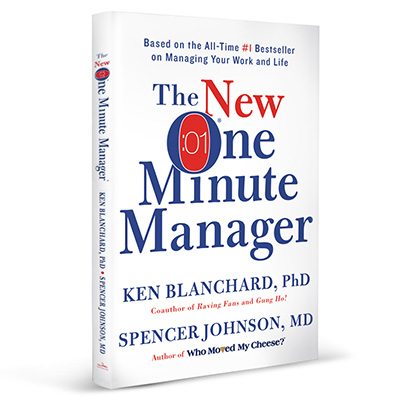
NOMM-book-featureTo learn more about The New One Minute Manager, visit the book homepage where you can download the first chapter.

A New Book for a New Generation: The New One Minute Manager®

NOMM-book-featureOn May 5, HarperCollins will release The New One Minute Manager. I’m already getting a lot of questions about how the One Minute Manager has changed since the original book was published in 1982.

The workplace has evolved dramatically over the last 30 years. In the early 1980s command and control leadership was a way of life. In those days, the One Minute Manager was the one who set goals—he decided who to praise and who to reprimand. The New One Minute Manager realizes that today the old top-down management style doesn’t work, because people want to find meaning in their work and be recognized for their contributions. Now side-by-side leadership—being a partner with your people—is much more effective.

To address these changes, my coauthor Spencer Johnson and I have updated and adapted the Three Secrets used by the New One Minute Manager—One Minute Goals, One Minute Praisings, and One Minute Re-Directs. Now the Secrets are more relevant than ever.

Readers will discover that goal setting is no longer a task managed by the leader and handed off to the employee as a list of directives. Setting One Minute Goals is now a collaborative activity that the leader and direct report work on together. The focus is on setting clear expectations and providing examples of what a good performance looks like. People are encouraged to review their goals daily so they can stay on track by focusing on their most important projects.

The Second Secret, One Minute Praisings, remains one of the most powerful tools a leader can use to encourage and motivate people. The New One Minute Manager knows the importance of catching people doing things right and praising them right away. In time, people learn to praise themselves and become self-leaders.

The Third Secret is where we’ve made the biggest change: One Minute Reprimands have been changed to One Minute Re-Directs. We did this because the pace of work is so fast today that people are in constant learning mode. Even if you’re an expert today, tomorrow your area of expertise may be outmoded. It’s not helpful to reprimand or punish a learner. Today it’s more effective to coach and support people with One Minute Re-Directs.

I’m excited about the practical tips we’ve incorporated into this book for a new generation. Now more than ever, the Three Secrets provide powerful tools to help you build relationships and achieve personal and professional goals. And the heart and soul of the new book remains the same: one minute really can make a difference. In fact, I believe the best minute of the day is the one you invest in your people.

To learn more about The New One Minute Manager and download the first chapter, visit The New One Minute Manager pre-release website.