5 Ways to Retain Top Talent

We’re fortunate at The Ken Blanchard Companies to have dozens of talented people who’ve been with us for 10, 20, 30 years and more! These long-term employees bring value to our organization in so many ways. They have developed deep, trusting relationships with our clients and associates. Because they know our business inside and out, they’re effective and efficient. They’re a wonderful resource for newer employees, who can call on them for knowledge and support.

I don’t think it’s an accident that we have so many long-timers at our company. Over the years, our leadership team has made an ongoing effort to connect with our people, listen to their feedback, and meet their needs. As a result, many of them have fallen in love with our business and stayed for the long term. We value their contributions and are honored they’re part of our team.

It’s no secret that the cost of losing good people is high. A recent study showed that replacing an employee can cost a full third of that employee’s annual salary. With an average turnover rate of 18%, those expenses can add up quickly.

If you’d like to attract employees who will stay engaged and committed to your organization, here are five suggested best practices.

1. Recognize People

According to a Pew research study, 57% of the Americans who quit their jobs in 2021 left because they felt disrespected at work. Don’t let this happen in your organization. Treat people with respect by telling them you appreciate them and why.

What if you grew up in a family that didn’t openly express appreciation for one another, and acknowledging people makes you feel uncomfortable? My advice is to “fake it till you make it” and do it anyway. Catch people doing things right and give them detailed, specific praise for their accomplishments.

While it’s important for companies to pay people well and provide benefits, don’t underestimate the power of recognizing people for their contributions. After analyzing 1.7 million employee survey responses, A Great Place to Work found that the most important driver of good work was recognition (37%), not promotions (4%) or more pay (7%).

At Blanchard, we bake recognition into our culture with our People’s Choice Awards. The awards tie into the values our company seeks to live. The Dream Team Award, the Authenticity Award, the Most Values-Led Player Award, and the Unsung Hero Award are just a few examples.

2: Partner with People

One of the most effective ways to retain your best people is to be there for them over the long term. That means regularly setting goals with them and giving them appropriate direction and support, depending on their development level on each task.

Goal setting is an ongoing process, not just something you do once a year at performance review time. Meet with each of your direct reports at least twice a month to listen to their concerns and ask how you can help them succeed in achieving their goals.

3. Keep Showing Up for People

One mistake a lot of managers make is that once a direct report becomes good at their job, the manager disappears on them. Don’t ghost your people. While it’s great to give self-reliant achievers autonomy, everybody needs acknowledgment. Keep showing people that you’re behind them by giving them clear, specific feedback on their work. And if something goes wrong, help them get back on track. Whatever you do, don’t become a seagull manager who flies in, makes a lot of noise, dumps on everyone, and flies out. That’s a management style I hoped would go out of fashion by now. Unfortunately, it’s still around.

4. Help People Grow

If a company is going to retain top talent, it must provide growth opportunities. Recently, our company offered a series of meetings to help people explore career development at Blanchard. On an individual level, help your direct reports grow by giving them a stretch project—something they haven’t done before—and let them know you’ll be there to provide direction and support if they get stuck. Not only will this empower your people, it also will benefit the organization by building skills and bench strength.

5. Let People Be Human

Organizations are made up of human beings—at least until AI and the robots take over! Human beings function best when they have a work-life balance. If you want people to stick around year after year, don’t pass judgment on them when they take time for themselves and their families. In fact, encourage them to do so.

***

Many research studies suggest that there are very real benefits to being in a successful long-term relationship: couples who stay together are healthier, wealthier, and happier. I think the same thing may be true for organizations. Start putting these five practices to work today to keep your top talent for the long term—and let me know how it goes!


3 Lessons I Learned from a Worldwide Pandemic

It’s hard to believe that it’s been three years since the COVID-19 virus upended all our lives. So much has changed since March 2020. My wife, Margie, often says, “Never let a good crisis go to waste.” Meaning that when things go wrong, she looks for the opportunity in the crisis by asking, “What’s good about this?”

For me personally, COVID drove home three important lessons.

Lesson #1: Change is inevitable—and that can be a good thing.

The pandemic fundamentally changed the way our company—and millions of other organizations—do business. Zoom came alive and permitted us all to communicate more frequently with people near and far. Our company has associates from all around the world. With Zoom, our global people can now participate in our virtual, all-company meetings on a level playing field, without feeling like outsiders.

Another upside to the pandemic was discovering that we didn’t have to travel to be productive. I’m able to give keynotes and consult with clients right from my office—either at company headquarters or at home. We can get together in person when it makes sense to do so, but we no longer have to spend so much time on the road or on airplanes.

We’ve discovered that with today’s technology, people can be just as productive—if not more so—from their home offices. Most people still go into the office at least a couple of days a week, but it’s easier on the planet and people’s stress levels to not have to commute every single day.

Lesson #2: It’s important to plan for the future.

It’s the responsibility of leaders to prepare for the future. But most people find that it’s difficult to manage day-to-day operations and plan for the future at the same time. That’s why my wife, Margie, created the Office of the Future when she was the president of our company.

The Office of the Future looked at trends five, ten, and twenty years out. Because our company had already anticipated online learning and invested in digital technologies, we weren’t caught completely flat-footed when the pandemic hit. All the energy we had put into planning for the digital future really helped us survive when classroom training was shut down by the virus.

What about your organization? What steps can you be taking now to make sure that you’ll be ready when the next disruption occurs?

Lesson #3: Keep your I-love-you’s up to date.

Sadly, the pandemic took many lives. It’s hard to find an upside to losing people you love. However, those losses drive home how important it is to communicate our love to those we hold dear. Don’t wait for the perfect moment; do it as soon as you think about that person. Remember:

Nice thoughts not communicated mean squat.

It’s just as important to express our love on a regular basis to the people we live with, so that those relationships stay healthy. If you’re not feeling loving, figure out why and deal with it. Small resentments can turn into big problems over time. When the pandemic hit, the lockdowns tested a lot of marriages—and some didn’t pass that test. Don’t let that happen to you. Catch your partner doing things right on a regular basis.

What about you? In what way is your life different now than before the pandemic? What lessons have you learned from it? Take a few minutes to stop, think, and answer these questions. As Margie would put it, don’t let the COVID-19 crisis go to waste. Reflecting on your experiences is one of the most powerful ways to learn from them.

Investing in Your People Is Never Risky

People sometimes wonder why Spencer Johnson and I titled our book The One Minute Manager. They can’t imagine how someone can manage in a minute. The reality is that many managers don’t take the time—even a minute—to follow the three secrets from the book: set goals with your people, catch them doing things right and praise their progress, and redirect them when they get off track.

I’ve often said “The best minute of the day is the one you invest in your people.” Why do I believe that? Because leaders who invest time in their people are building important, meaningful connections. Those connections create inspired people and inspired leaders who work together to achieve great results and who benefit from great relationships. It’s an investment that’s no risk, all reward!

Part of The One Minute Manager’s significance is how the book helps leaders understand that the best ways to serve your people don’t have to involve rehearsed conversations, lengthy meetings, or stressful performance reviews. Sometimes an act as simple as listening to a person’s idea, talking about their weekend, or sharing a laugh with them can be the most memorable moment of their day.

Investing in your people is about time spent focusing on them, not on yourself. Leadership is not about you; it’s about the people you are trying to influence. The more you know about each of your direct reports, the better you’ll be able to help them achieve their goals. For example, taking time to work side by side with a direct report to determine their development level on a task lets them know you are interested in meeting them where they are. And it allows you to use the right leadership style, with the right amount of direction and support, to help that person get to the next level.

Here’s another way you can spend a minimum amount of time and build a major connection: schedule one-on-one meetings with each of your people where they set the agenda. These meetings don’t use up a lot of work time—just 20 to 30 minutes every other week. There’s no better way to show someone you care about them as a person than to set aside time to chat about anything they wish. It’s a great opportunity for both of you to speak openly without interference or judgment. These short meetings lead to trusting relationships with feelings of respect, loyalty, and accountability on both sides.

Also, don’t forget to take time to celebrate people’s talents, skills, and successes. Celebrating doesn’t require a big, expensive party. It can be as simple as taking a person aside (or sending them a private chat message) to praise them for their input at a meeting. It can be as quiet as sending someone a gift card to acknowledge their going above and beyond on a project. Or it can be as grand as announcing to everyone they can stop working two hours early on a Friday afternoon. Celebration in any form lets people know they are doing things right, which builds morale and camaraderie. And it’s fun!

Making your team members feel special doesn’t need to be time consuming. Invest a few moments now and then to let people know you’re glad they’re on your team, you appreciate their contributions, and you enjoy helping them win. Take time to build those meaningful connections. It’s the best investment you’ll ever make.  

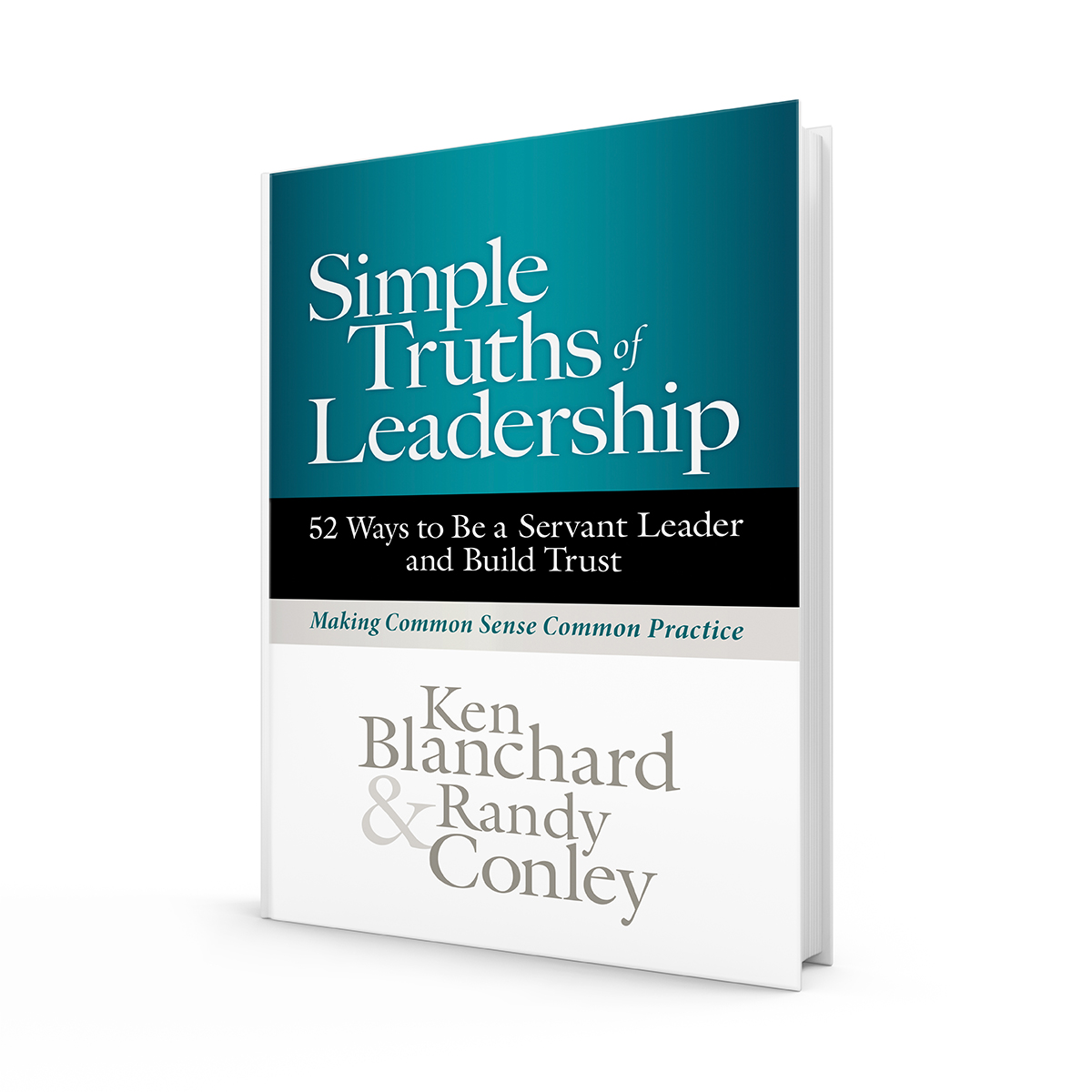
This blog was based on Simple Truth #8 in Simple Truths of Leadership: 52 Ways to Be a Servant Leader and Build Trust, available now at your favorite bookstore. To download an eBook summary of the book, please go here.

Autonomy Through Boundaries

When I talk to leaders about helping their people become autonomous, a lot of them think I mean they should give people the freedom to do anything they want. That is not the case. To inspire an empowered, autonomous workforce, leaders must create boundaries.

Boundaries have the capacity to channel energy in a specific direction. Just as the banks of a river channel the power and energy of water, so do effective boundaries channel the power and energy of people.

One of my favorite sayings is “A river without banks is a very large puddle,” taken from my book with John Carlos and Alan Randolph, Empowerment Takes More Than a Minute. Without boundaries, the work people do has no momentum and direction.

            Establishing boundaries sets people up to win. Imagine playing tennis with just a net and no markings for boundary lines. You wouldn’t know how to keep score, evaluate your performance, or improve your game.

            Here are the steps to take to create empowering boundaries:

  1. Establish clear goals, expectations, and standards of performance.

Goals ensure people know the areas in which you expect them to be autonomous and responsible. The worst thing a manager can do is to send people off on their own with no clear goals and then punish them when they don’t meet unspoken expectations. Don’t be one of those managers. Communicate in plain language what people need to accomplish.

  • Ensure people are aware of all procedures, rules, and laws.

Policies and procedures are important to guide day-to-day operations and decision making. Just be sure to review the rules periodically to make sure they are still relevant. If your people alert you to a procedure that no longer makes sense, listen to them. They’re often closer to the action than you are and better able to see when it’s time to rethink outdated procedures.

  • Confirm everyone knows your organization’s compelling vision:
    • Your purpose (what business you are in)
    • Your picture of the future (where you are going)
    • Your values (what will guide your journey)

By communicating your organization’s vision, you help people understand how their work fits into the big picture. Seeing their contribution to the mission and vision of the organization can motivate people to high performance.

            While it may sound counter-intuitive, boundaries and the fastest way to empower people to become autonomous. Clear boundaries allow people to make decisions, take initiative, act like owners, and stay on track to reach both personal and organizational goals.

This blog was based on Simple Truth #12 in Simple Truths of Leadership: 52 Ways to Be a Servant Leader and Build Trust, available now at your favorite bookstore. To download an eBook summary of the book, please go here.

An Empowered Workforce Focuses on the Greater Good

In an earlier blog post on the topic of quiet quitting, I made a case for servant leadership—leaders who serve their people by helping them realize that quiet quitting (disengagement at work) is not the answer. Servant leaders establish a safe, caring environment, let people know how valuable they are as individuals, ask them what they need, listen to their answers, and work side by side with them on a solution.

I want to go one step further today with another goal for organizations run by servant leaders: creating a culture of empowerment.

Empowerment is an organizational climate that unleashes the knowledge, experience, and motivation that reside in people. Creating a culture of empowerment doesn’t happen overnight—but leaders of the best run companies know that empowerment creates satisfied people, positive relationships, and never before seen results. People are excited about the organizational vision, motivated to serve customers at a higher level, and focused on working toward the greater good.

It’s true—empowered employees have more expected of them. But along with those high expectations comes growth, career development, the satisfaction of belonging to a self-directed team and being involved in decisions, and a sense of ownership.

In Empowerment Takes More than a Minute, the book I coauthored with John Carlos and Alan Randolph, we offer three keys leaders must use to guide the transition to a culture of empowerment.

The First Key: Share Information with Everyone

Team members who get the information they need from their leader can make good business decisions. But when leaders keep important information to themselves, people often come up with their own version of the truth—which may be worse than reality. And when people don’t have accurate information, they can’t act responsibly.

Servant leaders trust their people and realize that openly sharing information about themselves and the organization—good or bad—is the right thing to do. It builds trust between managers and their people. And when people have accurate information, they can make decisions that are in the best interests of the organization.

The Second Key: Create Autonomy through Boundaries

Counter to what some people believe, there is structure in an empowered organization. It is there to inform team members of the boundaries that exist within their autonomy. These boundaries take the form of vision statements, goals, decision-making rules, performance management partnerships, etc. Within those ranges, team members can determine what to do and how to do it. As the empowered person grows, the range of structures also grows to allow them a greater degree of control and responsibility.

The Third Key: Replace the Hierarchy with Self-Directed Individuals and Teams

Empowered, self-directed individuals and teams—highly skilled, interactive groups with strong self-managing skills—are more effective in complex situations. They don’t just recommend ideas—they make and implement decisions and are held accountable for results. Today, success depends on empowered, self-directed individuals and teams.

Empowerment means that people have the freedom to act. It also means that they are accountable for results. The journey to empowerment requires everyone to challenge their most basic assumptions about how business should operate. People at all levels of the organization must master new skills and learn to trust self-directed individuals and teams as decision-making entities. An empowered culture is not easily built—but the rewards for the organization, its leaders, and its workers are enduring and plentiful.