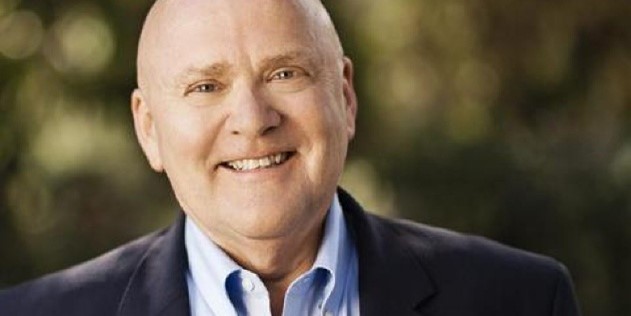
Any Dumb-Ass Can Do It: A New Book by My Friend, Garry Ridge

My good friend, Garry Ridge, has a new book out called Any Dumb-Ass Can Do It: Learning Moments from an Everyday CEO of a Multibillion-Dollar Company. I’m not surprised that it’s already a bestseller, because the book is as fun to read as it is informative. You can tell from chapters like “Even the Queen Sits Down to Pee” that Garry doesn’t take himself too seriously. Yet every chapter contains a key message about creating a safe, supportive work culture in which people can thrive. As Garry knows, when people thrive, so does the bottom line.

Don’t Mark My Paper—Help Me Get an A

I met Garry more than 20 years ago when he signed up for the Master of Science in Executive Leadership (MSEL) graduate program that my wife, Margie, and I were teaching at the University of San Diego. He had just arrived in the US from Australia to take over as president of WD-40 Company, and he thought our MSEL program would help him be a more effective leader.

A light bulb went on in Garry’s head when he heard me talk about how during my days as a college professor I used to give out the final exam at the beginning of the course and spend the semester teaching students the answers so they could get an A on the final exam.

“Why don’t we do that in business?” he asked. It made no sense to him why managers stood back and graded people instead of coaching them. So, he set up a “Don’t Mark My Paper, Help Me Get an A” performance review system at WD-40 Company that coached learners instead of punishing them. The results were spectacular; the company’s annual sales more than tripled. Garry and I wrote a book about it called Helping People Win at Work.

Investing in Leadership Development

Garry continued to implement the leadership practices Blanchard had been teaching for decades, heart-centered strategies for building trust and leading individuals and teams. By the time he retired as CEO of WD-40 Company, it was valued at more than $3 billion, with products selling in 176 countries on every continent. We were lucky to have Garry serve on the Blanchard board of directors, where we benefited from many of his powerful “learning moments”—those flashes of insight that led to better outcomes.

I’ve always said that success is about results and relationships. Garry is a living, breathing example of how a leader of a publicly traded company can succeed while caring about its people. As Garry puts it, “I love my shareholders, but I serve my people. Because if I serve my people, they will delight my customers who will in turn delight my shareholders. The vision-crushing ritual of the pressure of quarterly earnings is no measure of a company’s true, long-term success.”

Garry is no dumb-ass, of course. In fact, Inc. magazine named him as one of the world’s Top 10 Most Admired CEOs. His point is that you don’t have to have super intelligence or a fancy degree to succeed as a leader. But you must have the humility to learn, and you must genuinely care for the people in your organization. When your people thrive, they create raving fan customers who in turn support a healthy bottom line, which delights shareholders. If Garry is a dumb-ass, we need more like him in business!


Celebrating 45 Years of Leadership Development

This October Blanchard is celebrating the 45th anniversary of our creation as a company in 1979. What a privilege it has been these past four-and-a-half decades to serve so many extraordinary clients, and to empower so many people to sharpen their skills and lead with love!

Blanchard’s Beginnings

Like many of the best things in life, the origin of our company came about through serendipity. In the late 1970s I was on sabbatical from my professorship at the University of Massacusetts, working on the revised edition of Management of Orgaizational Behavior, the textbook I had written with Paul Hersey. During that time I was invited to speak about leadership at a Young Presidents Organization (YPO) event in Hawaii.

My sessions at the event were so popular that at the end of the conference, several of the YPO members came forward and asked me what I was planning to do next. I told them that I would be heading back to Amerst, Massachusetts, to teach.

“You’re crazy!” they said. “When you’re hot, you’re hot. You should start your own company.”

My wife, Margie, and several of our professor friends back at the University of Massachusetts had dreamed of taking what we were teaching and starting a business, but our talk had always been just that: a dream.

“Margie and I can’t even balance our own checkbook,” I said to the YPO members. “How are we going to start a company?”

“We’ll help you,” they said.

And that’s exactly what happened. Five of the YPO presidents became our advisory group and helped us start the company.

In the beginning Margie and I had just a half-dozen associates. During those early days, the eight of us traveled from city to city to conduct all our training face-to-face. There were no cell phones; there was no Zoom. Training occurred classroom by classroom. It required a lot of travel, but we were fueled by our enthusiasm to teach leaders to empower and motivate their people.

The Changing Landscape of Leadership Development

Today Blanchard has more than 200 employees, with offices around the world in more than 40 countries. While we still do classroom training and in-person workshops, our delivery methods now include online and virtual courses, assessments, coaching, and learning reinforcement tools.

Technology has changed the landscape of leadership development. I’m a big fan of the way it has expanded our ability to make a difference in the lives of others. Today we can provide our clients with the training that works best for them, whether it’s face-to-face peer interaction or online self-paced learning.

Back in the old days, I was traveling so often to do training that I’d fall asleep in the airport. I confess I used to nap stretched across the airport gate, to make sure I didn’t miss my flight! One of the things I appreciate most about technology is that it allows me to deliver talks around the world without having to get on an airplane. I also love being able to see the faces of our 200+ associates on Zoom during our all-employee meetings.

The methodology of leadership development has evolved, too. We have found that rather than teaching a single course, the most comprehensive way to build people’s knowledge is to provide them with learning journeys—a series of experiences and activities that develop their skills over weeks or even months. This allows people to digest the information as they practice new skills. Because they are learning over time, participants retain what they’ve learned and apply their new tools in the real world.

We’ve confirmed that what really turbocharges learning is when people go through learning journeys with their peers. Learning together, team members can solve real problems. Cohorts share a common language for tackling issues. Putting team members through a learning journey is one of the best ways to break up work silos, increase engagement, and build productive relationships.

Looking Toward the Future

I sometimes joke with audiences that the only one who really likes change is a baby with a dirty diaper. But change is a necessity, because we live in a rapidly changing world. That’s why our company has always been proactive about looking toward the future.

In the 1980s my wife, Margie—who was president of the company at that time—established Blanchard’s Office of the Future to stay on the leading edge of leadership development. Today we call it the Blanchard Innovation Lab. This is where our best minds conduct research and development to meet the evolving needs of the workforce.

Now more than ever, our planet needs great leaders. I’m excited about the potential of our industry to have a tremendous positive impact on the world. I can’t see the future, but I’m confident that Blanchard will be at the forefront of that effort as we head toward our 50th anniversary.

Explore the Versatility of SLII®

Most of you already know about SLII®, our company’s situational approach to leadership and our flagship product. Millions of managers around the world have found it to be the very best way to lead. The SLII® model shows leaders how to give their team members the right kind of leadership style for the person’s development level on each specific task or goal they do. Here’s how it works:

When working toward completing a task or achieving a goal, everyone moves along a continuum made up of four development levels. Managers use this practical framework to assess a person’s competence and commitment on a task and diagnose their development level:

  • Enthusiastic Beginner (D1): The person has low competence and high commitment. They don’t know how to do the task but are excited to get started.
  • Disillusioned Learner (D2): The person has some competence but low commitment. Still early in the learning process, they are feeling discouraged and insecure about moving forward.
  • Capable, but Cautious, Contributor (D3): The person has high competence and variable commitment. They are finally getting the hang of things but still need occasional help.
  • Self-Reliant Achiever (D4): The person has high competence and high commitment. They are at the top of their game on this task.

Next, the manager matches the person’s development level on the task with the leadership style that has the right combination of directive and supportive behaviors to help the person succeed: S1—Directing; S2—Coaching; S3—Supporting; and S4—Delegating.

If you have taken SLII® training, you may remember being asked by the facilitator to come up with a situation in your own life where you could apply the SLII® model. This is where everyone learns how many areas SLII® can be applied, not only on their job but also in their day-to-day life. It’s always fun to see participants’ faces light up when they discover how easily they can relate real-life activities to the SLII® process.

One example we’ve used for years in training sessions references a person learning how to ski.

  • Starting out, the instructor shows the person how to put on their skis and move forward. The person feels the thrill of starting down their first small hill, envisioning themselves easily mastering this fun sport. (D1)
    • After their first lesson—and several falls—they realize skiing isn’t as easy as they had thought it would be. They feel inadequate and a little foolish, and think about quitting. (D2)
    • Several more lessons go by, and the person is now having fun skiing and is practicing on more difficult runs. They know there is still much to learn but feel optimistic about their progress. (D3)
    • With time and the right amount of direction and support from their instructor along their learning journey, the person has achieved their goal of becoming a confident skier. (D4)

Now think of how the stages of the SLII® model could pertain to almost any task or goal you can think of—areas as diverse as showing someone how to play a musical instrument, bake cookies, or improve their driving skills. It could be used by anyone coaching a team sport involving people of any age, or by a friend helping another friend learn a foreign language. I’ve been told SLII® can be applied to the different stages of marriage, business partnerships, and raising children. Someone even said the basics of SLII® helped them train their dog! How’s that for versatile?

A few years ago, I wrote a book titled Fit at Last: Look and Feel Better Once and For All with my personal coach, Tim Kearin. In the book we describe how Tim used the SLII® model to help me through my fitness journey. He kept track of my development levels on goals such as nutrition and weight control, aerobic exercise, strength training, flexibility, balance, and rest and sleep, and he used all four leadership styles as needed. SLII® played a huge part in my reaching my goals.

SLII® teaches leaders how to build meaningful connections with team members. It creates engaged, high performing individuals and teams, and helps organizations excel. It can also make a difference in your home, your community, and your life. Give SLII® a try and let us know how it works for you!

An Empowered Workforce Focuses on the Greater Good

In an earlier blog post on the topic of quiet quitting, I made a case for servant leadership—leaders who serve their people by helping them realize that quiet quitting (disengagement at work) is not the answer. Servant leaders establish a safe, caring environment, let people know how valuable they are as individuals, ask them what they need, listen to their answers, and work side by side with them on a solution.

I want to go one step further today with another goal for organizations run by servant leaders: creating a culture of empowerment.

Empowerment is an organizational climate that unleashes the knowledge, experience, and motivation that reside in people. Creating a culture of empowerment doesn’t happen overnight—but leaders of the best run companies know that empowerment creates satisfied people, positive relationships, and never before seen results. People are excited about the organizational vision, motivated to serve customers at a higher level, and focused on working toward the greater good.

It’s true—empowered employees have more expected of them. But along with those high expectations comes growth, career development, the satisfaction of belonging to a self-directed team and being involved in decisions, and a sense of ownership.

In Empowerment Takes More than a Minute, the book I coauthored with John Carlos and Alan Randolph, we offer three keys leaders must use to guide the transition to a culture of empowerment.

The First Key: Share Information with Everyone

Team members who get the information they need from their leader can make good business decisions. But when leaders keep important information to themselves, people often come up with their own version of the truth—which may be worse than reality. And when people don’t have accurate information, they can’t act responsibly.

Servant leaders trust their people and realize that openly sharing information about themselves and the organization—good or bad—is the right thing to do. It builds trust between managers and their people. And when people have accurate information, they can make decisions that are in the best interests of the organization.

The Second Key: Create Autonomy through Boundaries

Counter to what some people believe, there is structure in an empowered organization. It is there to inform team members of the boundaries that exist within their autonomy. These boundaries take the form of vision statements, goals, decision-making rules, performance management partnerships, etc. Within those ranges, team members can determine what to do and how to do it. As the empowered person grows, the range of structures also grows to allow them a greater degree of control and responsibility.

The Third Key: Replace the Hierarchy with Self-Directed Individuals and Teams

Empowered, self-directed individuals and teams—highly skilled, interactive groups with strong self-managing skills—are more effective in complex situations. They don’t just recommend ideas—they make and implement decisions and are held accountable for results. Today, success depends on empowered, self-directed individuals and teams.

Empowerment means that people have the freedom to act. It also means that they are accountable for results. The journey to empowerment requires everyone to challenge their most basic assumptions about how business should operate. People at all levels of the organization must master new skills and learn to trust self-directed individuals and teams as decision-making entities. An empowered culture is not easily built—but the rewards for the organization, its leaders, and its workers are enduring and plentiful.

Playing Well with Others

Remember the days when we used to get report cards from our teachers? They gave us feedback not only about our class work but also about us as human beings. Perhaps you were one of the kids whose teacher praised you by saying that you “played well with others.” If so, good on you! Playing well with others is an essential life skill, no matter how old we get.

 Who Are Your Truth Tellers and Challengers?

It’s not always easy to work well with others, especially when the other person is very different from us. Often, the people we work with don’t share our opinions or our approach to problem solving. They might even challenge our thinking and insist on doing things their way—or at least insist that we compromise. This is a good thing! Why? Because we need truth tellers and challengers to help us grow and develop.

In her wonderful book, Team of Rivals: The Political Genius of Abraham Lincoln, Doris Kearns Goodwin shows how Lincoln became the greatest American president, in part by surrounding himself with those who had initially opposed him and who continued to challenge him throughout his presidency.

How Working with People Least Like Me Brought Out the Best in Me

Early in my career, I worked with a man who wasn’t like me in many ways. Where I was easygoing, he was a stickler. Where I saw the big picture, he was better at details. Where I had a live-and-let-live philosophy, he had a take-no-prisoners approach. A lot of people found it tough to be around this man, but he was brilliant and working with him led to a wonderful career for me.

I don’t regret a single day I spent working with this man. He got me excited about leadership and pushed me hard to be clear and theoretically sound in my work. I would not have become as good a teacher or presenter if not for him.

I also had a writing partner whose personality could be tough at times. He insisted on getting his way and didn’t always use tact when he communicated his opinions. Yet he had such a brilliant, creative mind that I knew I had to write a book with him. Despite the many confrontations we had, the book we worked on together never would have reached its full potential without him.

Working with these two men showed me how partnering with people who were different than I was could improve my skills and ignite my career.

The Benefits of Working with Others

I believe that playing well with others is my superpower. Over the past 53 years I’ve written more than 65 books, most of them with coauthors. Here are just a few of the upsides to working with others.

Learning. My mother used to ask me why I didn’t write my own books. “I already know what I know,” I would tell her. “When I write with somebody else, I learn a lot.” Writing with others increases my knowledge on multiple topics.

Skill Building. By working with coauthors, I sharpen my writing skills—vocabulary, grammar, organization, and structure. I also get to practice patience and listening skills.

Productivity. Without question, working with others increases my productivity. It is highly doubtful that I could have published more than 65 books on my own.

Networking. On my seventieth birthday, we threw a party and invited all my coauthors to attend. What a joy it was to be with all the wonderful writing partners I’d had over the years! There were around 30 of them at that time, and the number is even larger today. Developing a network of special friends is one of the greatest benefits of working with others.

Ability to Serve Others. I believe that the purpose of work is to make a positive contribution to humanity. Working with others allows me to expand my influence and make a bigger difference in people’s lives.

So, don’t go it alone! Learn to play well with others—especially those who might be different than you. Collaborating with others will bring out the best in you—and it will benefit your organization, as well.