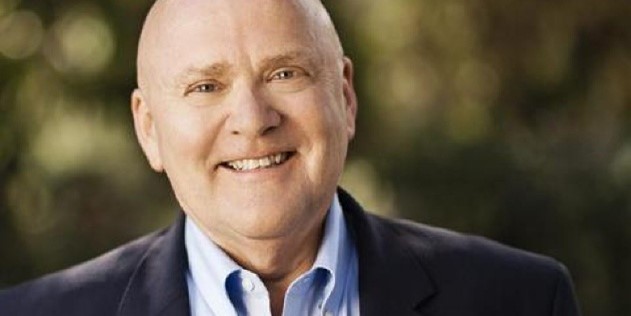
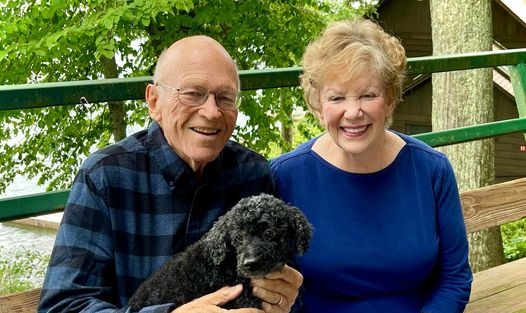
Any Dumb-Ass Can Do It: A New Book by My Friend, Garry Ridge

My good friend, Garry Ridge, has a new book out called Any Dumb-Ass Can Do It: Learning Moments from an Everyday CEO of a Multibillion-Dollar Company. I’m not surprised that it’s already a bestseller, because the book is as fun to read as it is informative. You can tell from chapters like “Even the Queen Sits Down to Pee” that Garry doesn’t take himself too seriously. Yet every chapter contains a key message about creating a safe, supportive work culture in which people can thrive. As Garry knows, when people thrive, so does the bottom line.

Don’t Mark My Paper—Help Me Get an A

I met Garry more than 20 years ago when he signed up for the Master of Science in Executive Leadership (MSEL) graduate program that my wife, Margie, and I were teaching at the University of San Diego. He had just arrived in the US from Australia to take over as president of WD-40 Company, and he thought our MSEL program would help him be a more effective leader.

A light bulb went on in Garry’s head when he heard me talk about how during my days as a college professor I used to give out the final exam at the beginning of the course and spend the semester teaching students the answers so they could get an A on the final exam.

“Why don’t we do that in business?” he asked. It made no sense to him why managers stood back and graded people instead of coaching them. So, he set up a “Don’t Mark My Paper, Help Me Get an A” performance review system at WD-40 Company that coached learners instead of punishing them. The results were spectacular; the company’s annual sales more than tripled. Garry and I wrote a book about it called Helping People Win at Work.

Investing in Leadership Development

Garry continued to implement the leadership practices Blanchard had been teaching for decades, heart-centered strategies for building trust and leading individuals and teams. By the time he retired as CEO of WD-40 Company, it was valued at more than $3 billion, with products selling in 176 countries on every continent. We were lucky to have Garry serve on the Blanchard board of directors, where we benefited from many of his powerful “learning moments”—those flashes of insight that led to better outcomes.

I’ve always said that success is about results and relationships. Garry is a living, breathing example of how a leader of a publicly traded company can succeed while caring about its people. As Garry puts it, “I love my shareholders, but I serve my people. Because if I serve my people, they will delight my customers who will in turn delight my shareholders. The vision-crushing ritual of the pressure of quarterly earnings is no measure of a company’s true, long-term success.”

Garry is no dumb-ass, of course. In fact, Inc. magazine named him as one of the world’s Top 10 Most Admired CEOs. His point is that you don’t have to have super intelligence or a fancy degree to succeed as a leader. But you must have the humility to learn, and you must genuinely care for the people in your organization. When your people thrive, they create raving fan customers who in turn support a healthy bottom line, which delights shareholders. If Garry is a dumb-ass, we need more like him in business!

Margie—The Woman Beside Me

In honor of Women’s History Month, I’ve updated this blog post I wrote two years ago about my favorite woman. She is my best friend, my true love, and my brilliant, beautiful wife of nearly 64 years—Margie Blanchard.

The old saying “Behind every successful man is a woman” isn’t true in our case. Margie was never behind me—she has always been right beside me as my partner in life. I wouldn’t be anywhere without Margie. She has been the spark for many of the great events of our lives.

The Beginning

I fell in love with Margie in the summer of 1961. I had just graduated from Cornell and was hanging around town for the summer, mainly to play golf and take a couple of courses to lighten my load for the master’s program I would be starting in the fall. A friend of mine whom we all called “Looper” had been dating Margie, but his father passed away and Looper needed to go home to run the family dairy. He asked me if I would take Margie out once in a while as a favor to him. One day my roommate asked me to have a drink with him and one of Margie’s sorority sisters who was getting married soon. My roommate was going to be best man in their wedding. I said, “Okay, I’ll invite Margie McKee to join us. She’s almost married, too.”

Margie was working that summer as a speech therapist and counselor at a camp for kids with severe speech problems. I picked her up at the camp and we drove eight miles back to town. She spent the entire ride describing her feelings about these special needs children—she was so filled with compassion. She had a real heart for those kids as well as a need to help people. I think I fell in love with Margie on that eight-mile ride. We were married the following June.

My Start as an Author

In the fall of 1966, Margie (pregnant with our daughter, Debbie), our son, Scott, and I arrived at Ohio University. I had landed a job as an assistant to Harry Evarts, dean of the school of business administration. Paul Hersey had just arrived on campus as chairman of the management department, where I began teaching a course at the request of the dean. I discovered that I loved teaching.

I heard Hersey taught a tremendous course on leadership, so in December I went to see him and said, “Paul, I understand you teach a great leadership course. Could I sit in next semester?”

Paul said I was welcome to take his course, but I would have to take it for credit.

I was stunned. I went home and told Margie about the conversation.

“Can you imagine? He won’t let me audit his course. I have a Ph.D. and he doesn’t, and he wants me to take his course for credit!”

Margie said, “That’s all fine, but is he any good?”

“He’s supposed to be fabulous.”

“Then why don’t you get your ego out of the way and take his course?”

After convincing the registrar to let me take Hersey’s undergrad course, I signed up, went to class, wrote all the papers, and found it to be a great experience.

After the course ended, Hersey took me aside and asked me to write a textbook with him, which became the first edition of Management of Organizational Behavior: Utilizing Human Resources. It is still in print, now in its tenth edition.

If it weren’t for Margie’s suggestion, Paul Hersey and I would not have coauthored that book, which popularized the Situational Leadership®* model we created together.

The Birth of The One Minute Manager

In 1980, Margie and I went to a cocktail party for San Diego authors. Also at the party was Spencer Johnson, who had coauthored a series of children’s books called Value Tales with his wife, Ann Donegan. He was in the process of coauthoring a parenting book titled The One Minute Scolding. Margie met Spencer first, hand-carried him over to me, and told us she thought we should meet.

Then Margie said something that would change all our lives: “You two need to write a children’s book for managers. They won’t read anything else.”

The following week, Spencer came to see me speak at a seminar I was giving in town. He sat in the back, laughing, apparently enjoying my presentation. At the end, he came up to me and said “The hell with parenting—let’s write The One Minute Manager®!” And we did.

To date, the book has sold more than fifteen million copies. It wouldn’t have happened without Margie.

The Ken Blanchard Companies® and Beyond

During the ten years Margie spent as president of our company, I was sometimes asked why she was president, not me. I thought it was obvious that she was the one who should be president. That held true: when Margie started her term, we were a five million dollar company. When she left that position, we were a thirty million dollar company. (Margie is the first to say that partnering with her brother, Tom McKee, who joined the company as general manager of operations, was what made the difference.) As a lifelong cheerleader, I was just happy to work beside Margie and Tom and cheer them on.

Margie has always been interested in keeping an eye on business trends. She also believes leaders should keep managing the present separate from planning the future. So when she ended her term as company president, she and Blanchard cofounder Eunice Parisi-Carew created a unique, innovative think tank they named Office of the Future (OOF). With help from Margie’s assistant, Lily Guthrie, OOF studied and reported on emerging trends in leadership, technology, and other workplace issues. OOF’s findings and reports were available to clients and other organizations to assist with planning for the future, and to the media for use in advising the public of trends in the workplace. Margie saw their work and research as both a challenge to Blanchard’s status quo and a stimulus for change that would ensure our company’s continued vitality and success.

Today, Margie is as active and interesting as ever. Because Margie is a lifelong teacher, she has a special place in her heart for Blanchard Institute, our 501(c)(3) nonprofit organization that offers free Student Self Leadership training programs for students 14 to 18, with several scholarships available each year for higher education. She also loves to teach courses on career planning to young people in our company. And because Margie is a lifelong learner, when the pandemic began she took up a new hobby of watercolor painting. She’s really good!

Thank you, Margie, for being a wonderful woman and the best partner a man could ever hope to have.

*Situational Leadership® is a registered trademark of Leadership Studies, Inc., dba The Center for Leadership Studies.  

Better Together: The Importance of Friends and Family

In June’s blog I talked about the joys and rewards of connecting with people in your industry at business conferences like ATD. Today I want to focus on the priceless rewards of connecting with friends and family.

In this day and age, when so much of our connecting happens over Zoom and other digital platforms, it’s especially important to get together in the real world on a regular basis. That’s because seeing people in person creates genuine human connections that that you simply can’t have online.

It is a tradition in our family to spend time together during the summer in Skaneateles, New York. We are fortunate that my in-laws, the McKees, bought some property on Skaneateles Lake back in 1947. For more than 75 years, our friends and family members have gathered here to celebrate birthdays, prepare meals, take boat rides, and simply enjoy the slower pace of rural upstate New York.

The Benefits of Togetherness

 There’s a deeper purpose to our time in Skaneateles than just having a fun vacation. Summer in Skaneateles is a decades-old tradition that we have passed down to our children and grandchildren. It’s like a glue that binds the different generations of our family, strengthening our relationships with each other.

The time-honored ritual of coming to Skaneateles also provides structure to our lives. My wife, Margie—an accomplished photographer—takes pictures and creates a book for each summer. Looking through those books, we can appreciate the passage of time and the family rituals that bring meaning to our lives. When our kids and grandkids look at the books, they not only have fun memories, but they also understand their roots and feel a sense of belonging and continuity.

The Importance of Human Connection

I’m an uber-extravert, so being with others is essential to my mental and spiritual well-being. But even the most intraverted person needs to feel a sense of belonging. That’s because human beings are inherently social creatures. Our need to connect with each other is programmed in our DNA. Gathering with friends and family provides an environment where everyone—no matter what their personality type—can feel seen, heard, and valued.

When we spend time together—taking walks, sharing meals, playing sports, or celebrating milestones—we are making memories that anchor us in a sense of belonging and meaning. When life feels tough, we can tap into the reservoir of positive emotions created by good times we have shared with loved ones.

 The Healing Power of Togetherness

In times of crisis or sorrow, the support of friends and family becomes a lifeline. For example, I’ll never forget the outpouring of love Margie and I received after our house burned down in the California wildfires of 2007. We were in Florida at the time of the fire. When we returned to San Diego, people had gathered at the Blanchard headquarters to support us. Just seeing their faces provided tremendous comfort and resassured us that everything was going to be okay. People’s kind words and warm hugs during that difficult time alleviated our despair and made a big difference in our ability to cope.

Make Memories with Your Loved Ones

Finding meaning and purpose through work is important, but nothing compares to the joy and meaning you get from being together with friends and family. Our primary purpose on this earth is to love, which is why it’s so important to cherish and nurture our relationships. In the end, it is our connections with others that make life truly meaningful—so schedule time to make great memories with your friends and loved ones today!

Leaders Must Extend Trust First

Trust is essential for any healthy relationship. Warren Buffet once likened trust to the air we breathe. “When it is present,” he said, “nobody really notices. But when it’s absent, everybody notices.”

In a working relationship, it’s up to you as a leader to make the first move to extend trust. This often comes as a surprise to many leaders, who assume they are automatically trusted by others because of their position or title. In fact, the opposite may be true. Because you have more position power, people may be wary of you. That’s why it’s so important that leaders extend trust first.

What It Looks Like to Extend Trust to Your People

One of my favorite stories about extending trust to your people comes from Horst Schultze, one of the founders of the Ritz-Carlton Hotels. After extensive training, Horst’s employees were given a $2,000 discretionary fund that they could use to solve a problem without checking with anyone. Now that’s extending trust!

One day, a businessman who was staying at one of the Ritz-Carlton properties in Atlanta had to fly to Hawaii, because the next day at 1:00 p.m. he was making a major speech to his international company. He was a little disorganized as he was leaving. On his way to the airport, he discovered that he’d left behind his laptop computer, which contained all the PowerPoints he needed for his presentation. He tried to change his flights, but he couldn’t. So he called the Ritz-Carlton and said, “This is the room  I  was  in,  and  this  is  where  my  computer  was.  Have Housekeeping get it and overnight it to me. They have to guarantee delivery by ten tomorrow morning, because I need it for my one o’clock speech.”

The next day Horst was wandering around the hotel, as he often did. When he got to Housekeeping he said, “Where’s Mary?” Her coworkers said, “She’s in Hawaii.” He said, “Hawaii? What’s she doing there?”

He was told, “A guest left his computer in his room that he needed for a speech today at one o’clock—and Mary doesn’t trust overnight carrier services.” Now you might think that Mary went for a vacation, but she came back on the next plane. And what do you think was waiting for her? A letter of commendation from Horst and high fives around the hotel.

Use Discretion, Then Take a Risk

I don’t mean to suggest that leaders should blindly trust everyone. That would be foolish. Leaders need to assess an individual’s trustworthiness before they extend trust. For example, Mary, the Ritz-Carlton employee, was trustworthy because she had completed her training and orientation and was known to be reliable.

Think of a risky situation you are facing where you may be hesitant to trust someone.

  • What about the person or situation gives you confidence to extend trust?
  • What gives you cause for concern?
  • How you can extend trust while also addressing your areas of concern?

The next step is to take the risk to extend trust. You don’t need trust if there’s nothing at risk. That’s called certainty, a sure thing, a guarantee. But if there is risk—if there is a chance you might get burned extending your faith in someone else—that’s when you need to extend trust.

Trust doesn’t happen by accident. For trust to develop in a relationship, one party has to make the decision to extend trust in the hope it will be reciprocated. Ernest Hemingway summed this up simply yet eloquently when he said, “The way to make people trustworthy is to trust them.” In other words, while you can use discretion, you won’t really know whether you can trust someone until you make the first move.

At some point you, as a leader, must take a risk by extending trust and turning over responsibility to your followers. First, be certain they are clear on the goal. Make sure they have the right resources, skills, and training to do a good job—and then let them do it.

By extending trust first, you demonstrate respect and create goodwill. Soon your people will begin emulating your behavior by extending trust and respect to others. In a workplace where trust is the norm, people collaborate more, produce better results, and have more fun.

To learn more about building trust and other powerful leadership practices, pick up a copy of my new book with trust expert Randy Conley, The Simple Truths of Leadership Playbook. And please join us for a free webinar, Simple Truths of Leadership: From Intention to Action on Wednesday, February 21, 7:00 AM PST. Register now at https://event.on24.com/wcc/r/4444232/962C05294BC6C39A0C1D43B595A0D7AB.

Let’s Catch People Doing Something Right in 2024

Catching people doing things right and praising them is a timeless principle I learned and began practicing and teaching years ago. It is a powerful tool for bringing out the best in others. So instead of making a personal New Year’s resolution this year, I want to make one to share with leaders everywhere: Make 2024 “The Year of Catching People Doing Something Right.”

I don’t want this resolution to pertain solely to our direct reports, though. Let’s also catch our peers doing something right. Let’s catch our bosses doing something right. Let’s catch our partners, kids, relatives, and friends doing something right. And let’s catch ourselves doing something right!

As an example of how to praise someone for doing things right, here are the basics of the One Minute Praising from my bestselling book with Spencer Johnson, The One Minute Manager.

  1. Praise someone as soon as possible after you see praiseworthy behavior.
  2. In very specific terms, tell the person what they did right.
  3. Relate their good behavior to the broader picture by telling them how it made you feel.
  4. Now pause briefly to give the person a chance to feel good about what they did.
  5. Encourage the person to keep up the positive behavior.

This is a concept that still holds true—in fact, it’s woven into all of our company’s training programs and most of my 70 published books. When you catch somebody doing something right—or approximately right—praise them.

Catch your people

To great leaders, acknowledging people’s efforts and encouraging their progress is common sense. These leader behaviors set up a positive cycle: Their praise helps people feel good about themselves, people who feel good about themselves produce good results, and people who produce good results feel good about themselves.

Think about a time when you were proud of something you did, but nobody seemed to notice. How did it make you feel? Now think about a time when you did something well and were praised or otherwise recognized for it. How did you feel then? What was the difference between the two?

Note: a One Minute Praising is not the same as flattery. It’s a statement that builds trust and improves communication because it’s based on facts and data. The phrase “nice job” isn’t specific enough to build rapport. But if a leader says, “William, I appreciate your sending me your weekly report on time. It provided accurate information and allowed me to meet my deadlines. Keep up the great work,” it clearly states the leader’s appreciation, which will boost William’s morale and help him realize he is an important member of the team. Catching people doing things right provides satisfaction and motivates good performance.

Catch your coworkers

Encourage your teammates to catch each other doing things right and praise each other’s progress. This kind of camaraderie can go a long way toward building trust among peers, which helps everyone feel good about their job. People never tire of sincere praise. It’s good for motivation, morale, and momentum.

Catch your boss

When was the last time you praised your boss? Even if you are good at praising direct reports and coworkers, you may have to think long and hard to remember the last time you recognized the efforts of your manager.

It’s easy for people to picture their leader getting positive feedback from their own bosses. But think about how meaningful it would be for your manager to hear you say, “By the way, thanks for letting our team know about the exciting new client we just landed. It felt great to get this news directly from you rather than reading it in an all-company email.” Depending on your relationship, it could also be appropriate to give your boss a compliment on a blog post they wrote or on their caring leadership style.

Catch your family

This principle can also help relationships flourish at home. It’s important to express positive feelings we have about our family members and friends, so that those relationships stay healthy. Catch your partner, your kids, or your parents, siblings, or friends doing things right on a regular basis. Don’t wait for the perfect moment—do it as soon as you see or hear about something good that they have said or done, or even when you have a positive thought about that person.

For example, if your school-aged child makes his bed or does his homework without being asked, let him know right away that you notice and appreciate his efforts. Call and congratulate your nephew on his new job. Or send a card to thank a friend for helping you through a tough time.

Catch Yourself

Did you make a New Year’s resolution this year? If not, you have company. A new YouGov poll shows only 34% of adults in the US made a resolution for 2024. Why? Because people believe New Year’s resolutions fail more than they succeed. They grade themselves on a pass/fail basis—there’s no in-between.

But many people who think that a previous year’s resolution failed may, in fact, have made great progress in that area of their life during the year even if they didn’t technically achieve the original goal they had set.

Remember, in The One Minute Manager, Spencer Johnson and I state that a praising can be given not only when you catch someone (including yourself) doing something right, but alsowhen you catch someone doing something approximately right. So if you stick to your resolution well enough to make key improvements in that space, that’s praiseworthy in my book! Now put your right hand on your left shoulder and your left hand on your right shoulder and give yourself a hug.

Well done! Bring on the new year!

Catch everyone!

Good feelings generated from catching people doing things right can be habit-forming. Don’t be surprised if you find yourself passing along praise to your next-door neighbor, your yoga teacher, your postal carrier, or the cashier or bagger at the grocery store.

Good thoughts not communicated are meaningless. But positive praise creates a significant energy boost in both the giver and the receiver. So let’s all catch people doing something right in 2024!