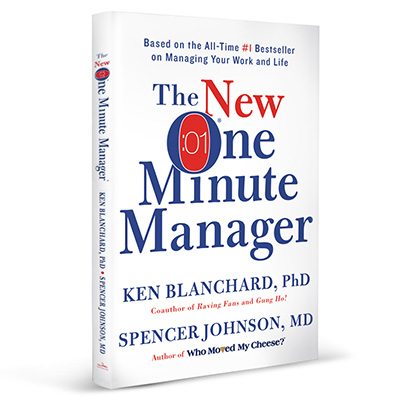
 On May 5, HarperCollins will release The New One Minute Manager. I’m already getting a lot of questions about how the One Minute Manager has changed since the original book was published in 1982.
The workplace has evolved dramatically over the last 30 years. In the early 1980s command and control leadership was a way of life. In those days, the One Minute Manager was the one who set goals—he decided who to praise and who to reprimand. The New One Minute Manager realizes that today the old top-down management style doesn’t work, because people want to find meaning in their work and be recognized for their contributions. Now side-by-side leadership—being a partner with your people—is much more effective.
To address these changes, my coauthor Spencer Johnson and I have updated and adapted the Three Secrets used by the New One Minute Manager—One Minute Goals, One Minute Praisings, and One Minute Re-Directs. Now the Secrets are more relevant than ever.
Readers will discover that goal setting is no longer a task managed by the leader and handed off to the employee as a list of directives. Setting One Minute Goals is now a collaborative activity that the leader and direct report work on together. The focus is on setting clear expectations and providing examples of what a good performance looks like. People are encouraged to review their goals daily so they can stay on track by focusing on their most important projects.
The Second Secret, One Minute Praisings, remains one of the most powerful tools a leader can use to encourage and motivate people. The New One Minute Manager knows the importance of catching people doing things right and praising them right away. In time, people learn to praise themselves and become self-leaders.
The Third Secret is where we’ve made the biggest change: One Minute Reprimands have been changed to One Minute Re-Directs. We did this because the pace of work is so fast today that people are in constant learning mode. Even if you’re an expert today, tomorrow your area of expertise may be outmoded. It’s not helpful to reprimand or punish a learner. Today it’s more effective to coach and support people with One Minute Re-Directs.
I’m excited about the practical tips we’ve incorporated into this book for a new generation. Now more than ever, the Three Secrets provide powerful tools to help you build relationships and achieve personal and professional goals. And the heart and soul of the new book remains the same: one minute really can make a difference. In fact, I believe the best minute of the day is the one you invest in your people.
To learn more about The New One Minute Manager and download the first chapter, visit The New One Minute Manager pre-release website.

 How We Lead