You Get from People What You Expect

When people don’t understand what their leaders expect from them, they feel lost. They have no compass and no agreed-upon standards of conduct to follow. They’re not sure how to please their boss, how to behave around their teammates, or what a good job looks like. All they can do is wait for someone to tell them what to do and how to do it.

As a servant leader who works side by side with your team members, you must let your people know exactly what you expect from them. This gives them a mental picture of how to be successful under your leadership.

But expectations aren’t just about words—they are also about you modeling the behaviors you expect. You must walk your talk, or your words are meaningless. Communicating your expectations gives your people confidence and clarity about what a good job looks like.

Making Common Sense Common Practice

For example, suppose you tell your people that your expectations of them are similar to the Golden Rule: Do unto others as you would have them do unto you. Describe to them in clear terms what that would look like:

  • Act ethically in everything you do.
  • Treat your customers the way you would want to be treated.
  • Care for your teammates and cheer each other on.

Bravo! You’ve just painted a picture your people can see, feel, and apply to their daily work. These clear expectations, communicated directly to your team members, establish the standard for how you want them to consistently behave. Serve your people and help them accomplish their goals by setting the bar high and modeling the behavior you wish to see.

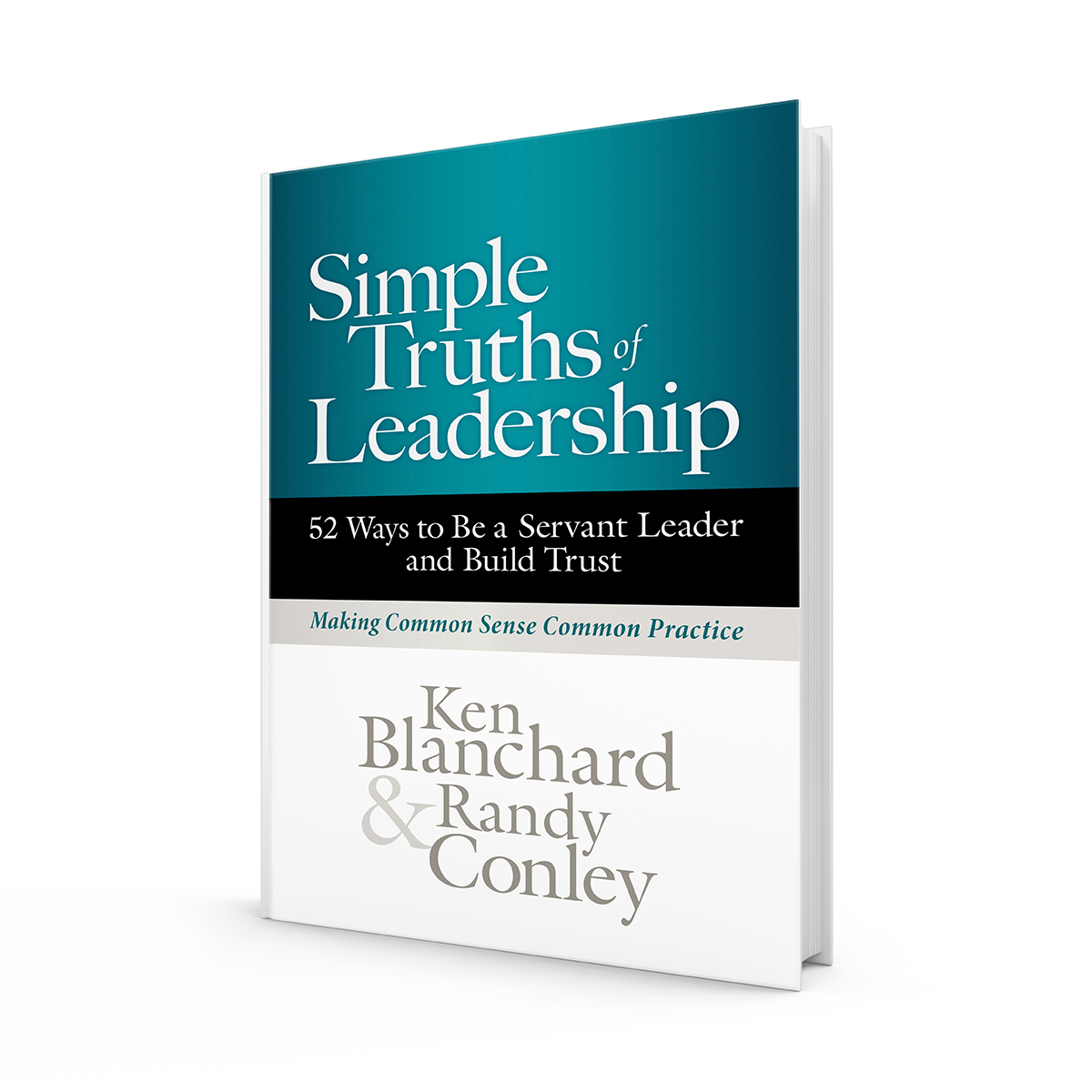
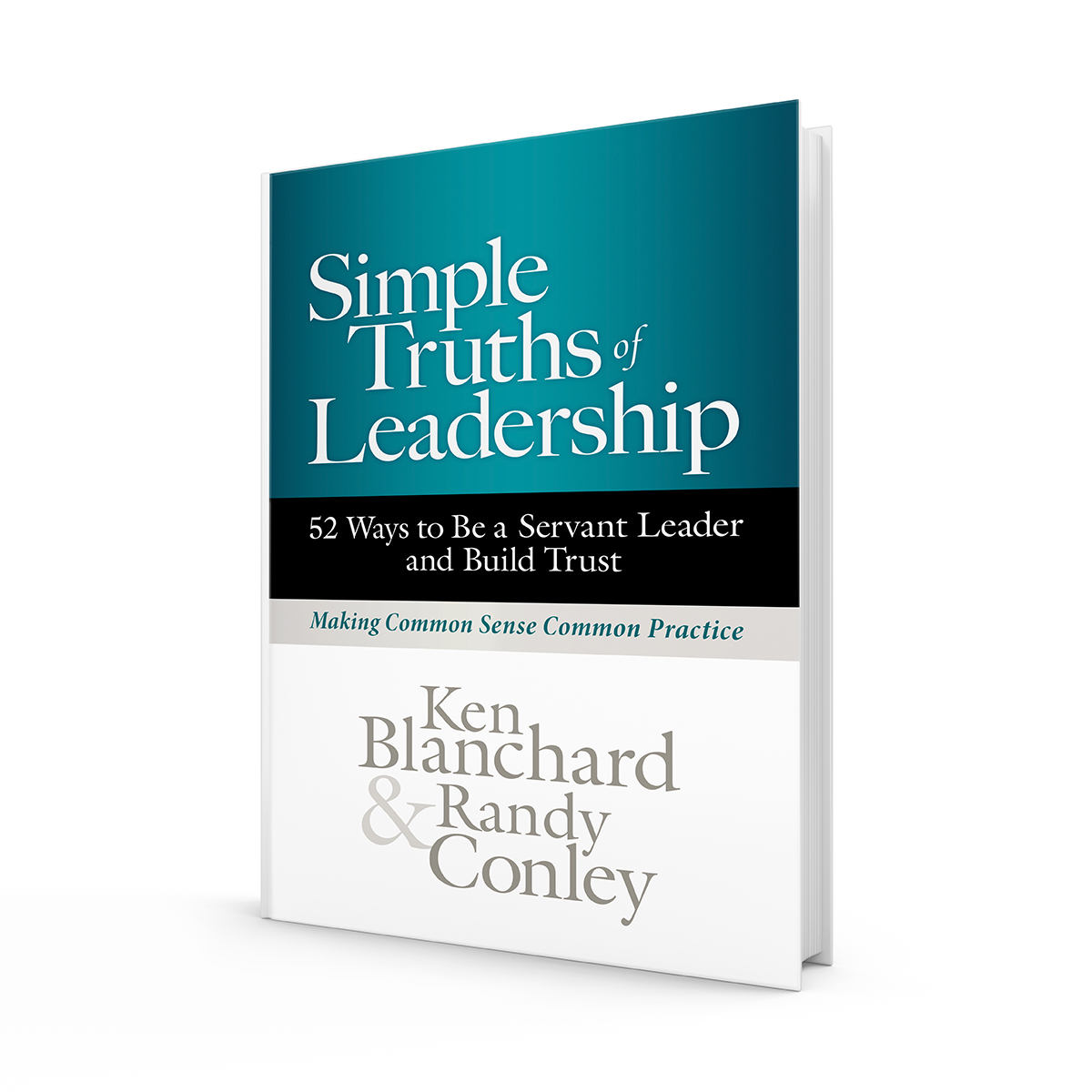
“You Get from People What You Expect” is Simple Truth #13 in the new book I’ve coauthored with Randy Conley, Simple Truths of Leadership: 52 Ways to Be a Servant Leader and Build Trust. It’s on sale now at your favorite bookstore or online retailer. Go here to download an eBook summary for a sneak preview!

Make it Easy for People to Give You Feedback

Giving and receiving feedback can be a helpful, productive part of a business relationship. But for many people it can conjure up negative feelings of being criticized, second-guessed, or reprimanded. And as hard as it is for a manager to give feedback to a direct report, it’s even more challenging for the direct report to give feedback to their manager—even when they know know it would be helpful for the manager to hear what they have to say.

Have you ever known someone who gave feedback to their boss, who then “killed the messenger”? Maybe it was an honest comment like, “Boss, I think our Thursday afternoon meetings are a waste of time”—and the boss shouted, “What do you mean, ‘a waste of time’? Are you kidding? Those meetings are important!”

It’s clear this self-serving leader didn’t want to hear the truth. Self-serving leaders believe they are too high and mighty to listen to feedback from a subordinate (sub-ordinary) employee.

Servant Leaders Love Getting Feedback

On the other hand, servant leaders love feedback. In fact, they look at it as a gift. As a servant leader, the only reason you are leading is to serve your people—and if someone has suggestions on how you can serve better, you want to hear them.

Giving feedback to the boss doesn’t come naturally to most people—so make yourself approachable and easy to connect with. Assure your people you won’t get defensive and you really want to hear what they have to say.

When receiving feedback, remember that the person is giving you a gift. Make sure the first thing you say is “Thank you.” Then follow up with “This is so helpful.” And then, “Is there anything else you think I should know?” I’ve found that once leaders open the door for feedback from people, they can learn many valuable nuggets of truth they can use to improve their leadership style.

Giving and receiving feedback without judgment is a best practice for any leader who strives to achieve both great relationships and great results. My colleague Rick Tate said it best: “Feedback is the breakfast of champions!”

“Servant Leaders Love Feedback”is Simple Truth #23 in the new book I’ve coauthored with Randy Conley, Simple Truths of Leadership: 52 Ways to Be a Servant Leader and Build Trust. It’s on sale now at your favorite bookstore or online retailer. Go here to download an eBook summary for a sneak preview!

Four Steps to High Performance Teams

Most people use the term “team” loosely in business settings. Yet because so much work today is accomplished by teams, it’s important to clearly define what a team is and examine what makes a team most effective. These characteristics apply whether the team is working virtually or in a physical setting.

We define a team as two or more persons who come together for a common purpose and who are mutually accountable for results. This is the difference between a team and a group. Often, work groups are called teams without developing a common purpose and shared accountability. This can lead to disappointing results and a belief that teams do not work well.

A collection of individuals working on the same task are not necessarily a team. They have the potential to become a high-performance team but first, they need to clarify their purpose, strategies, and accountabilities.

The Characteristics That Make a High-Performance Team

Some teams achieve outstanding results, no matter how difficult the objective. They are at the top of their class. What makes these teams different? What sets them apart and makes them capable of outperforming their peers? Below are the characteristics and best practices that are shared by outstanding teams.

Align for Results. High performance teams begin by aligning for results. They work together to clarify the team’s purpose, so that everyone knows what they’re aiming for. Next, the team members define their goals, outline their respective roles, and agree on behavioral norms.

Perform Under Pressure. Another characteristic of a high-performance team is its ability to perform under pressure. When conflicts arise, issues are embraced and discussed. Team members encourage each other to express their views with candor. Because the goal is to achieve the team’s purpose—rather than to protect individual egos—team members listen with curiosity and openness rather than defensiveness.

Develop Team Cohesion. Anyone who’s watched a championship team perform can observe that the team’s members work in harmony, collaborating with one another and doing whatever is necessary for the good of the whole. No matter what a team member’s role, their contributions are respected and appreciated. Team members trust one another and hold each other accountable, which further develops team cohesion.

Sustain High Performance. The final characteristic of a high-performance team is its ability to sustain its impressive results. The team members continue to demonstrate unity by sharing leadership. A high-performance team will adapt to change and accept even greater challenges.

As you read through the characteristics of high-performance teams, it’s probably no surprise that teams like these are effective. I’ll never forget the time I was invited to a Boston Celtics practice during the heyday of Larry Bird, Robert Parish, and Kevin McHale. Standing on the sidelines with Coach KC Jones, I asked, “How do you lead a group of superstars like this?”

KC smiled and said, “I throw the ball out and every once in a while, shout, ‘Shoot!’”

In observing Jones as a leader, I noticed he didn’t follow any of the stereotypes of a strong leader. During time-outs, the players talked more than KC did. He didn’t run up and down the sidelines yelling things at the players during the game; most of the coaching was done by the team members. They encouraged, supported, and directed each other.

The Celtics of that era exhibited the characteristics of a high-performance team. They were aligned for results, knew how to perform under pressure, had built team cohesion, and had reached a level of sustained high performance that did not rely on the coach for direction to get the job done.

When this low-key leader, KC Jones, retired, all the players essentially said he was the best coach they’d ever had. Why? Because he permitted everyone to lead, and that’s what a team is all about.

Building a highly effective team, like building a great organization, begins with a picture of what you are aiming for—a target.  Let these characteristics be your target. By benchmarking your team in each of these areas, you can identify where you need to improve to become a championship team.

Monitoring and Tracking Performance

One of the most important aspects of being an SLII® leader is communicating clearly with people regarding their performance. After you’ve made performance standards clear so that each person knows what a good job looks like, you must closely monitor individual performance and provide frequent feedback. Monitoring and tracking performance is a key directive leadership behavior of an SLII® leader.

When you lead people who are working on a task or goal but not yet fully competent, you are there to help them in their development. You not only observe their progress and provide direction, you also listen to their concerns and answer their questions. They need praising when you catch them doing things right and redirecting when you see them beginning to go off track. They also need regular performance check-in meetings with you.

It’s important to schedule these check-in meetings in a frequency based on the individual’s development level on their current task or goal. When a task is brand new to a person, you need to meet often to give specific direction for the first few weeks. After they have a bit of experience behind them, the meetings can be twice a week or so to focus on the goal. As they become more confident and competent, once a week is probably enough and can involve mainly listening on your part. After the person is on top of the task, regular meetings may not even be necessary unless they choose to request your help.

An SLII® leader who works this closely with their team members may find it unnecessary to conduct a yearly performance review with each person. Why? Because performance review should be an ongoing process that happens during open, honest discussions leaders have with their people throughout the year. When check-in meetings are scheduled according to development level, open and honest discussions about performance take place on an ongoing basis, creating mutual understanding and agreement. If these meetings are effective, the year-end performance review would simply be a review of what has already been discussed. There would be no surprises.

The concept of development level-based meetings leads into one of the most important—and mutually fulfilling—parts of SLII® leadership: one-on-one meetings. The purpose of one-on-ones is for managers and direct reports to get to know each other as human beings. These regularly scheduled meetings between manager and individual performer are meant to continue year after year, indefinitely.

At least once every two weeks, managers hold a 15- to 30-minute meeting with each of their people. The manager is responsible for scheduling the meeting but the individual contributor sets the agenda. This is a time for people to talk to their managers about anything on their hearts and minds—it’s their meeting. In the old days, most businesspeople had a traditional military attitude of “Don’t get close to your direct reports. You can’t make hard decisions if you have an emotional attachment to your people.” Yet rival organizations will come after your best people—so knowing them and caring for them, beyond being an enjoyable part of your job as an SLII® leader, is a competitive edge. Too often, talented people report that their executive recruiter knows and cares more about their hopes and dreams than their manager does. Don’t let this be said about you. One-on-one meetings create job satisfaction and genuine, even lifelong, relationships.

There you have it! If you have been a faithful follower of my blog posts, you now know the fourteen all-important SLII® micro skills—seven directive and seven supportive leadership behaviors. These actions not only shape and control what, how, and when things are done, they also develop mutual trust and respect between SLII® leaders and their team members. If you’ve missed a few, please feel free to go back and read my previous posts at any time. And watch this space for many more leadership topics to come!

A Fresh Look at SMART Goals

If you are familiar with SLII®, our company’s leadership model for powering inspiring leaders, you know that effective SLII® leaders are highly skilled in the two primary areas of leadership behavior: Directive and Supportive.

We define Directive leadership behaviors as “actions that shape and control what, how, and when things are done” and Supportive leadership behaviors as “actions that develop mutual trust and respect, resulting in increased motivation and confidence.”

In my last blog post, I wrote about Listening, a Supportive behavior. This time I’ll be refreshing your outlook on Setting SMART Goals, a Directive behavior.

What is a SMART Goal?

The concept of SMART goals has been around for decades. Different people and organizations may have slightly different ways of explaining the letters in the SMART acronym. Our twist on this familiar concept is the order in which you should write the goals, which is: S, then T, then R, A, and M. I’ll explain as we continue.

S is for Specific. A goal should state exactly what you want to accomplish and when you want to accomplish it.

T is for Trackable and Timebound. Performance standards, including a timeline, must be in place to enable frequent tracking of each goal. Are you making observable progress toward goal achievement? What will a good job look like?

So first, you decide exactly what you want to achieve—S—and then determine how you are going to track or measure progress toward goal accomplishment—T.

Once the S and T are in place, use the other three SMART criteria—the R, A, and M—to check if the goal is truly SMART.

Relevant. Is this goal important? Will it make a difference in your life, your job, or your organization?

Attainable. A goal has to be reasonable. It’s great to stretch yourself, but don’t make a goal so difficult that it’s unattainable or you will lose commitment.

Motivating. For you to do your best work, a goal needs to tap into either what you enjoy doing or what you know you will enjoy doing in the future.

Example #1: A Personal Goal

The first example is from the book Fit at Last: Look and Feel Better Once and for All, which I wrote with Tim Kearin, my good friend and personal trainer. Although my initial goal wasn’t exactly SMART, it was specific: I envisioned going to my 50th class reunion at Cornell and hearing my classmates say, “You’re looking good!” My less critical goals were to be able to do the limbo and to learn how to tap dance. (Again, maybe not so SMART.)

Fortunately, Tim helped me write the following goal. It’s rather long but it is SMART and, I’ll admit, a big improvement over the goals I had written.

SMART Goal: In one year, through an effective eating plan and exercise program with guidance, support, and progress tracking from Tim Kearin, I will weigh less than 200 pounds. I will gain 1 inch in height through posture-specific exercises, reduce my neck circumference and chest circumference by 1 inch, reduce my waist measurement by 5 inches and my hip measurement by 4 inches—and get rid of my “fat pants”.

This goal is Specific (we knew what we wanted to happen and by when); Trackable/Timebound (I knew Tim would keep great records and set a reasonable deadline for completion); Relevant (health is more important than almost anything else in life); Attainable (I knew I needed help and Tim was the perfect trainer for me, and our numbers were realistic); and Motivating (I looked forward to feeling better, looking better, living longer, and having healthy numbers for future doctor visits).

Example #2 – Career-Related Goal

The second example is taken from a recent Indeed.com article and involves a person with their eye on a promotion.

SMART Goal: I will earn a promotion to senior customer service representative by completing the required training modules in three months and applying for the role at the end of next quarter.

This goal is Specific (the person knows exactly what they want and when); Trackable/ Timebound (completing training in three months and applying for job the following quarter); Relevant (important to rise to a new level and make a difference in income and stature); Attainable (training first will provide skills to qualify them for the promotion); and Motivating (exciting career move, new challenge, higher pay).

Example #3: An Organizational Goal

The third example of an effective SMART goal is taken from FitSmallBusiness.com regarding employee training.

SMART Goal: Confirm that 90% of team members have completed new inventory management software training by the end of third quarter.

This goal is Specific (the company knows exactly what they need and when they want it); Trackable/Timebound (90 people will need to complete training, deadline set for end of third quarter); Relevant (important for entire team to merge together to new platform, which is more efficient than current platform); Attainable (majority of people have completed training, which is web-based and easily accessible); and Motivating (eager for better overall productivity, motivated to get the rest of the team trained).

Remember—all good performance starts with clear goals. If you don’t know what you want to accomplish, there is very little chance you will get there. So whether it’s for your personal life, your work life, or your organization, make every goal a SMART goal. It’s the best way to ensure success!