Remembering Drea Zigarmi

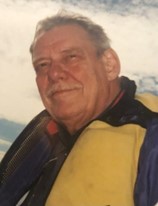
This month we lost a treasured founding associate and beloved friend, Drea Zigarmi. Coming just six months after the passing of founding associate Don Carew, it’s a tough loss, indeed. Not only was Drea talented and brilliant; he was also an extraordinary human being.

I met Drea when I was a professor at the University of Massachusetts Amherst in the early 1970s. At that time Drea was working on his PhD in administration and organizational behavior. We became fast friends, and he was soon part of the coterie that included Blanchard’s other founding associates: Pat Kuiper (soon to become Pat Zigarmi), Don Carew, Eunice Parisi-Carew, Fred Finch, and Laurie Hawkins.

Drea and Pat joined our young company in 1981, moving to California with no assurance of a permanent job or income. Drea brought his talent for research and analysis to the company’s key programs and tools: SLII®, DISC, the LBAII, the Employee Work Passion instrument, and many others. Another of Drea’s significant contributions was the work he did with CEO, Scott Blanchard, on the Leadership-Profit Chain.

Drea’s work was a key factor in Blanchard’s success. He kept us grounded in the research that underscored the validity of our offerings.

Drea brought tremendous value to our organization in so many other ways as well. A natural teacher and guide, he helped scores of people with their research, dissertations, and publishing. For decades, he was a popular Blanchard consultant and trainer. Participants loved the depth and creativity of his teaching about leadership, values, organizational change, and research. For example, he enlivened the teaching of SLII® by showcasing the dialogue in the film Twelve O’Clock High, much to the delight of his audiences.

With more peer-reviewed publications than most senior university professors, Drea was an accomplished writer. He was the coauthor of several books, including Leadership and the One Minute Manager, The Leader Within, Leading at a Higher Level, Achieve Leadership Genius, and The Team Leader’s Idea-a-Day Guide.

Drea was a deeply contemplative person. You could get a sense of this when you heard him play classical guitar. At parties you could often find him in a quiet spot engaged in earnest conversation. I will miss our periodic one-on-one walks together and his delightfully corny jokes.

Many in our field and company owe a debt of gratitude for Drea’s wisdom, guidance, and encouragement. His brilliance lives on in our intellectual property, and his loving spirit will live in our hearts forever.

Remembering Don Carew

On January 28, 2025, I lost one of my dearest friends and colleagues, Don Carew. Not only was Don one of the original founding associates of our company, but he was also a very special human being. More than anyone I have ever met, Don Carew embodied kindness.

I first met Don at the University of Ohio in 1966, where he was teaching courses in human relations, and I was teaching business leadership. Don introduced himself to me on the sidewalk in front of the student union building, and we became instant friends. I loved Don’s gentle spirit and welcoming personality. We also shared a passion for making a positive difference in people’s lives through leadership. It wasn’t long before Don and his first wife, Jody, became an integral part of my wife Margie’s and my social circle.

Don had profound empathy for others and was a passionate supporter of civil rights and social justice. Back in 1963, he took a group of his students to the March on Washington, D.C., where they heard Dr. Martin Luther King, Jr. deliver his historic “I Have a Dream” speech.

It was Don who urged Margie and me to join him at the University of Massachusetts Amherst in 1970, where he had relocated and become an enormously popular professor. During the years we taught together at UMass, Don and I forged a deep friendship. We led weekend classes together. Don would share his expertise in working with teams and groups, while I would focus on a situational approach to leadership. Eventually we began consulting with external groups.

Margie and I left Amherst and relocated to San Diego in 1976 for a one-year sabbatical that turned into a permanent move. But I continued to teach weekend courses with Don several times a year at the University of Massachusetts.

After Margie and I launched our company in 1979, Don joined us as an associate. He had the intellect to work effectively with the C suite as well as the empathy and respect to connect with frontline workers as they transformed their cultures. I had a wonderful time collaborating with Don and Eunice Parisi-Carew on our bestselling book, The One Minute Manager Builds High Performing Teams. Don’s and Eunice’s expertise in teams and group development was a key factor in our decision to change the original Hersey-Blanchard model and develop SLII®.

I will miss Don’s warm voice and loving presence. His spirit of integrity and inclusiveness lives on in our culture at Blanchard and for that, I am grateful.

Margie—The Woman Beside Me

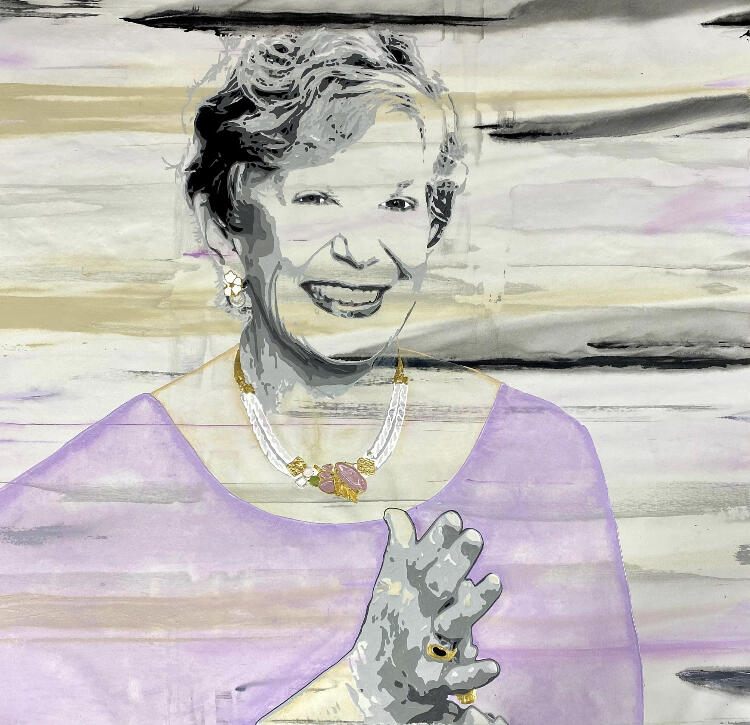
In honor of Women’s History Month, I’m going to write about Margie—my brilliant, beautiful wife of nearly 62 years.

The old saying “Behind every successful man is a woman” is untrue in our case. Margie was never behind me—she has always been right beside me as my partner in life. I wouldn’t be anywhere without Margie. She is the love of my life, my teammate, and my best friend. And she has been the spark for many of the great events of our lives.

The Beginning

I fell in love with Margie in the summer of 1961. I had just graduated from Cornell and was hanging around town for the summer. A friend of mine who we called “Looper” had been dating her, but his father had died and Looper needed to go home to run the family dairy. He asked me if I would take Margie out for a drink once in a while as a favor to him. One day my roommate asked me if I wanted to have a drink with him and one of Margie’s sorority sisters who was getting married soon. My roommate was going to be best man in their wedding. I said, “Okay, I’ll invite Margie McKee to join us. She’s almost married, too.”

Margie was working as a speech therapist and counselor at a camp for kids with severe speech problems. I picked her up at the camp and we drove eight miles back to town. I remember asking, “Why would you want to spend the summer with all of those special needs kids?” She spent the rest of the ride describing her feelings about the children—she was so filled with compassion. She had a real heart for those kids as well as a need to help people. I think I fell in love with Margie on that eight-mile ride.

The Genesis of SLII®

In the fall of 1966, Margie (pregnant with Debbie), Scott, and I arrived at Ohio University. I had landed a job as an assistant to Harry Evarts, dean of the School of Business Administration. Paul Hersey had just arrived on campus as the chairman of the management department, where I began teaching a course at the request of the dean. I found that I loved teaching.

I heard Hersey taught a tremendous course on leadership, so in December I came to see him and said, “Paul, I understand you teach a great leadership course. Could I sit in next semester?”

“Nobody audits my course,” said Hersey. “If you want to take it for credit, you’re welcome.” And he walked away.

I was stunned. I went home and told Margie about the conversation.

“Can you imagine? He won’t let me audit his course. I have a Ph.D. and he doesn’t, and he wants me to take his course for credit?”

Margie said, “That’s all well and good, but is he any good?”

“He’s supposed to be fabulous.”

“Then why don’t you get your ego out of the way and take his course?”

I had to convince the registrar to let me take Hersey’s undergrad course because I already had a Ph.D. So I took the course, wrote all the papers, and found it to be a great experience.

After the course ended, Hersey took me aside and asked me to write a textbook with him, which would become Management of Organizational Behavior: Utilizing Human Resources. It is still in print, now in its 10th edition.

If it weren’t for Margie’s suggestion, Paul Hersey and I would not have coauthored that book, which popularized the Situational Leadership®* model we created together. Its concepts were later revised by Margie, me, and the other Founding Associates of our company to become SLII®, our flagship product.  

The Birth of The One Minute Manager

In 1980, Margie and I went to a cocktail party for San Diego authors. Also at the party was Spencer Johnson, who had coauthored a series of children’s books called Value Tales with his wife, Ann Donegan. He was in the process of coauthoring a book titled The One Minute Scolding. Margie hand-carried Spencer over to me and told us she thought we should meet.

Then Margie said something that would change all of our lives: “You two need to write a children’s book for managers. They won’t read anything else.”

The following week, Spencer came to see me speak at a seminar I was giving in town. He sat in the back, laughing, apparently enjoying my presentation. At the end, he came to me and said, “The hell with parenting—let’s write The One Minute Manager®!” And we did.

To date, the book has sold more than fifteen million copies. It wouldn’t have happened without Margie.

The Ken Blanchard Companies® and Beyond

During the ten years Margie spent as president of our company, I was sometimes asked why she was president, not me. I thought it was obvious that she was the one who should be president. That held true: when Margie started her term, we were a five million dollar company. When she left that position, we were a thirty million dollar company. (Margie is the first to say that partnering with her brother, Tom McKee, who joined the company as general manager of operations, was what made the difference.) I was happy to work beside Margie and Tom and cheer them on because I’ve always been a cheerleader!

Margie was always interested in keeping an eye on business trends. She also believed leaders should keep managing the present separate from planning the future. So when she ended her term as company president, she and Blanchard cofounder Eunice Parisi-Carew created a unique, innovative think tank they named Office of the Future (OOF). With help from Margie’s assistant, Lily Guthrie, OOF studied and reported on emerging trends in leadership, technology, and other workplace issues. Margie saw their work and research as both a challenge to Blanchard’s status quo and a stimulus for change that would ensure our company’s continued vitality and success. OOF’s findings and reports were available to clients and other organizations to assist with planning for the future, and to the media for use in advising the public of trends in the workplace.

Today, Margie is as active and interesting as ever. Because she is a lifelong teacher, she now teaches courses on career planning to young people in our company. And because she is a lifelong learner, when the pandemic began she took up a new hobby of watercolor painting. She’s really good!

Thanks, Margie, for being such a great partner. You’re the best!

*Situational Leadership® is a registered trademark of Leadership Studies, Inc., dba The Center for Leadership Studies.  

Learn What Makes People Tick

I’m excited to announce that this month our company launched Essential Motivators™, a powerful new learning journey. What makes this offering so special is that it reinforces something I’ve been teaching for decades: Different Strokes for Different Folks! In other words, leadership shouldn’t be a one-size-fits-all proposition. The way you communicate and work with others needs to be tailored to where they are, not where you are.

Back in the 1960s there was a debate about which leadership style was best: autocratic or democratic? It was widely assumed that one of these was the best for managing people. My friend and colleague, Paul Hersey, and I questioned that assumption. Our response was to develop a situational approach to leadership, which The Ken Blanchard Companies later developed into SLII®. What is the best leadership style? The one that matches the developmental needs of the person with whom you’re working.

A Powerful Tool for Working Together

Just as people have different levels of development, they also have different personality types. You may have taken a DiSC assessment or a Myers-Briggs Type Indicator test to get a better sense of your personality. What’s great about the Essential Motivators™ framework is that the four types are user-friendly and easy to apply in moments of need. By becoming aware of your own and others’ unique personality patterns, you can be far more effective at work and at home. Here are the Essential Motivators™ four basic personality patterns:

FIRE. People of the Fire pattern tend to be improvisers. They focus on the present; they are tactical and seek results. 

EARTH. People of the Earth pattern tend to be stabilizers. To plan for the future, they focus on the past; they are logistical and seek to establish and maintain structure.

AIR. People of the Air pattern tend to be theorists. They seek strategic solutions for complex problems. They want to understand how the world and things in it work.

WATER. People of the Water pattern tend to be catalysts. They look to the future and seek authentic connections to make the world a better place.

All four of these elements are required to create a healthy, balanced organization. When Margie and I started our company, we soon realized that we were both Water people. People like us have a psychological core need for a sense of purpose. We value ethics and empathic relationships. Our talents are diplomacy and advocacy—we like to inspire and praise people.

Those are all great Water characteristics, but they’re not necessarily the kinds of talents and skills that can build a successful business. In fact, when we started the company, we couldn’t even balance our own checkbook! For that, we needed people with the Earth personality pattern. Earth people are dependable and have a core need for responsibility. They value security and stability and have a talent for logistics and creating standards. The Earth people we hired early on were able to manage our finances and office administration, allowing us to focus on our strengths of inspiring and motivating others.

Our company never would have grown without the contributions of our talented Air people! These associates have a core psychological need for knowledge and competence. They value logic and expertise and are great at exploring ideas and designing programs. Anyone who’s taken one of our trainings has the contributions of our Air people to thank.

Finally, had it not been for the initiative of our Fire people, The Ken Blanchard Companies would have gone out of business several times. These are the people who need to act and make an impact. They are great at improvising in a crisis and being tactical, coming up with plans of action to achieve goals. My son, Scott, has a Fire personality pattern, which is evident by the way he has led our company as president.

So, what’s your personality type? Knowing your personality pattern is like discovering your superpower. You understand yourself at a deeper level. When you know the personality patterns of others, you begin to celebrate people for who they are. By knowing what makes others tick, it’s more fun to work together, and the work goes a whole lot better and faster.

Just as leaders need to adapt their leadership style to the development level of the person they’re leading, we all need to adapt our interactions to the different personality types of the people we work with. If you want to learn more about the Essential Motivators™ learning journey, listen to Chad Gordon’s interview with expert Linda Berens on our LeaderChat podcast.

How Coaching Has Helped Me—And How It Can Help You

I’ve talked a lot about how leaders can help people succeed through day-to-day coaching. In fact, our company recently offered a webinar called The Manager Who Can Coach: Bringing Coaching Skills into Your Organization, which you can view here.  

For my blog today, I wanted to share how coaching has helped me to be successful in various aspects of my life—and how it can help you. While some of these people didn’t have the formal title of “coach,” they had experience in the areas where I needed help.

A coach can give you what you can’t give yourself and provide the direction and support you need to succeed.

As a youth I had a great example of what coaching could do for me with my basketball coach, Paul Ryan. Paul coached me to focus on my strengths—in my case, my big hands and outside jump shot. While I wasn’t much of a runner, people nicknamed me “Hot Hands” because I was an excellent shooter.

A coach can help you set the goals that matter to you and keep you accountable as you move toward them.

Later in life, my affinity for food combined with my busy career made it difficult for me to keep my weight under control. When I finally decided to get serious about getting into shape, Tim Kearin, my coauthor on Fit at Last, became my primary fitness coach. We used SLII® to figure out the kind of leadership style I needed to get healthy. I now know that I need ongoing coaching and support to keep me accountable with my diet and exercise, so I work with a fitness coach on a regular basis. This is how I “keep my commitment to my commitment.”

A coach can improve your skills and deepen your knowledge.

I was never a great student. My first intellectual coach was my brilliant sister, Sandy, who taught me good study habits. In college I found coaches who guided my academic career. During graduate school at Colgate University, Warren Ramshaw coached me to find a major that really captured my interest. Later, Don McCarty helped me get accepted into the doctoral program at Cornell and coached me as I pursued my PhD.

As a writer, I also consider the dozens of coauthors I’ve had over the years to be my intellectual coaches. Every one of them exposed me to new learning and helped me drill down into subjects that interested me.

A coach can clarify next steps, ask smart questions, and keep you moving forward toward your goals.

In the late 1970s a group of presidents who were members of the Young Presidents Organization (YPO) encouraged my wife Margie and me to start our own company. We were flattered by their high opinion of us, but in those days we couldn’t even balance our own checkbook! Fortunately, five of those presidents became our business coaches and helped us get our company going.

Twenty-five years ago, we began using professional advisors for our family business. We wanted to make sure the business didn’t mess up our family—and vice versa! An advisor meets with us once a quarter, giving us invaluable coaching.

A coach can help you gain self-knowledge and improve your relationships.

One of my weaknesses is that I’m a pleaser and tend to say “yes” too often. That’s why it’s important for me to work with a coach to look at what I’m doing and help me set priorities that align with my purpose.

My wife Margie and I are always looking for ways to improve our relationship and how we communicate with each other, so we’ve worked with several relationship coaches over the years. The key to a good marriage is being open to learning.

When we met Norman Vincent Peale and his wife, Ruth, in the 1980s, we learned how important it is to be a team when you’re married. We observed that they each had their strength areas and didn’t try to tell the other one what to do. Every morning Norman and Ruth would take a two-mile walk together, holding hands, but they wouldn’t talk. They called it their “alone time together.” When it came to the teamwork of marriage, Norman and Ruth were great coaches for us.

A coach can give you perspective and someone to confide in.

After seeing how badly my old church treated a pastor who protested the Vietnam War back in the 1960s, I turned my back on my spiritual side. Fortunately for me, I found a great spiritual coach in Norman Vincent Peale when we got together to write The Power of Ethical Management. Norman gave me a broader perspective and helped me get back onto my spiritual path. Since then, I’ve had several great spiritual coaches, including Bob Buford, coauthor of Half-Time and founder of The Leadership Network, Phil Hodges, my long-time friend and coauthor, and Bill Hybels, former senior pastor of Willow Creek Community Church.

Take Advantage of Coaching

If you’re avoiding doing something just because you’ve never done it before, a coach can help you with that.

If you’re stuck in any area of your life, a coach can help you identify what’s stopping you and find ways around your roadblocks.

Take a look at your life. Where are you now—and where do you want to be? Where do you need more direction and support? Be honest with yourself about the areas where you’re not able to succeed on your own, and find a coach to help you with them.

To get the most out of a coaching relationship, you’ll need to be honest with your coach about what’s happening and where you need help. You’ll also need more than one session. Coaching is most effective when you meet regularly over an agreed-upon period of time.

My final advice is to let go of your pride and stop struggling on your own. Go get yourself a coach!