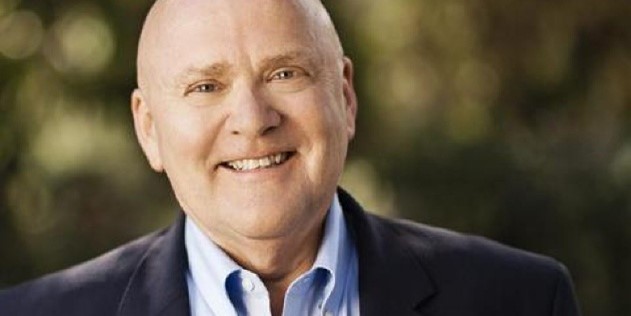
Any Dumb-Ass Can Do It: A New Book by My Friend, Garry Ridge

My good friend, Garry Ridge, has a new book out called Any Dumb-Ass Can Do It: Learning Moments from an Everyday CEO of a Multibillion-Dollar Company. I’m not surprised that it’s already a bestseller, because the book is as fun to read as it is informative. You can tell from chapters like “Even the Queen Sits Down to Pee” that Garry doesn’t take himself too seriously. Yet every chapter contains a key message about creating a safe, supportive work culture in which people can thrive. As Garry knows, when people thrive, so does the bottom line.

Don’t Mark My Paper—Help Me Get an A

I met Garry more than 20 years ago when he signed up for the Master of Science in Executive Leadership (MSEL) graduate program that my wife, Margie, and I were teaching at the University of San Diego. He had just arrived in the US from Australia to take over as president of WD-40 Company, and he thought our MSEL program would help him be a more effective leader.

A light bulb went on in Garry’s head when he heard me talk about how during my days as a college professor I used to give out the final exam at the beginning of the course and spend the semester teaching students the answers so they could get an A on the final exam.

“Why don’t we do that in business?” he asked. It made no sense to him why managers stood back and graded people instead of coaching them. So, he set up a “Don’t Mark My Paper, Help Me Get an A” performance review system at WD-40 Company that coached learners instead of punishing them. The results were spectacular; the company’s annual sales more than tripled. Garry and I wrote a book about it called Helping People Win at Work.

Investing in Leadership Development

Garry continued to implement the leadership practices Blanchard had been teaching for decades, heart-centered strategies for building trust and leading individuals and teams. By the time he retired as CEO of WD-40 Company, it was valued at more than $3 billion, with products selling in 176 countries on every continent. We were lucky to have Garry serve on the Blanchard board of directors, where we benefited from many of his powerful “learning moments”—those flashes of insight that led to better outcomes.

I’ve always said that success is about results and relationships. Garry is a living, breathing example of how a leader of a publicly traded company can succeed while caring about its people. As Garry puts it, “I love my shareholders, but I serve my people. Because if I serve my people, they will delight my customers who will in turn delight my shareholders. The vision-crushing ritual of the pressure of quarterly earnings is no measure of a company’s true, long-term success.”

Garry is no dumb-ass, of course. In fact, Inc. magazine named him as one of the world’s Top 10 Most Admired CEOs. His point is that you don’t have to have super intelligence or a fancy degree to succeed as a leader. But you must have the humility to learn, and you must genuinely care for the people in your organization. When your people thrive, they create raving fan customers who in turn support a healthy bottom line, which delights shareholders. If Garry is a dumb-ass, we need more like him in business!

Unforgettable Herb Kelleher

Last Thursday, we lost probably the finest corporate leader I have known in my leadership development career: Herb Kelleher, cofounder and longtime CEO and president of Southwest Airlines. Not only was Herb the visionary who created the model for a low-fare, customer-first airline, he believed every executive is only as good as his or her people. And he walked his talk. More than anybody I’ve ever worked with, Herb Kelleher lived and breathed the philosophy that the number one customer of any organization is its people.

I first met Herb through Southwest’s president emeritus, Colleen Barrett. When Colleen ordered 30,000 copies of the book I coauthored with Barbara Glanz called The Simple Truths of Service: Inspired by Johnny the Bagger, I was so blown away by the size of the order that I flew to Dallas to meet her. Because Colleen and Herb had worked together since 1967 nurturing and grooming Southwest Airlines into one of the most admired companies in the world, meeting Colleen’s mentor and teammate was a foregone conclusion. From the moment I met him, I loved Herb’s big smile, tremendous sense of humor, and ability to bring insight and laughter to any situation.

I could tell many tales about my fun times with Herb, but my favorite story happened just after he had recorded his foreword for the audio version of Colleen’s and my coauthored book Lead with LUV: A Different Way to Create Real Success.

“Let’s go get a drink!” said Herb. He was always ready to do that. We went back to my hotel where my wife, Margie, would be meeting me later so we could go to dinner with the board of directors for Halftime, a faith-based ministry founded by the late Bob Buford. (Margie still serves on the Halftime board.)

At the hotel bar, Herb and I started drinking sidecars, one of his favorite drinks, made up of three ingredients: Cognac, orange liqueur, and lemon juice. By the time Margie arrived, let’s just say Herb and I were feeling no pain. Margie could easily tell I was not in any shape to go to dinner with a bunch of faith-based folks. When she began to give Herb a One Minute Reprimand, he held up his hands in surrender, saying, “Margie, this was all Ken’s idea! I’m usually a teetotaler!” We all had a good laugh about that.

Margie said, “Okay, Ken, you can come to dinner—just don’t say anything.”

Herb, now getting into the absurdity of the situation, said, “That would be something to see!”

So I went to the dinner. The seating was organized in a circle. When the waiter came around to take our appetizer order, I whispered, “I notice you have chocolate cake à la mode. Bring me that for my appetizer.” When the waiter put the cake in front of me, all conversation around the table stopped and all attention was focused on me and my appetizer/dessert. The cat was out of the bag—I was plastered.

When I called Herb the next day and told him what had happened, he roared. Suffice to say it cost me a lot of backrubs over the next few weeks to get Margie’s full forgiveness. After that incident, every time Margie and I saw Herb, the first thing out of his mouth was “Margie, that was not my fault!” and then we’d all laugh.

I’ll miss Herb—and not just because of the fun, fabulous human being he was. Herb taught me a lot about what it takes to be a pioneer, a maverick, an innovator, and a fabulous motivator of people. To Herb, the “business of business” was people.

A lot of folks are going to miss you, Herb, including the many thousands of employees of Southwest Airlines. You were the best in the business. Rest in peace and God bless.

The Unselfishness of Love in Action

Time for Part 4 of my “Elements of Love” series based on Henry Drummond’s nine elements of love from his book The Greatest Thing in the World.

Drummond’s sixth element is Unselfishness. Here’s what he writes about it:

“Love as unselfishness never seeks its own to the harm or disadvantage of others, or with the neglect of others. It often neglects its own for the sake of others; it prefers their welfare, satisfaction, and advantage to its own; and it ever prefers good of the community to its private advantage. It would not advance, aggrandize, enrich, or gratify itself at the cost and damage of the public.”

I interpret Drummond’s definition of unselfishness in many ways as being related to humility. It’s all about moving from a focus on yourself to concern about helping others. This is really a journey in life. How many of you have ever known a baby who came home from the hospital asking “How can I help around the house?” No, they’re screaming for what they want! Humans are naturally selfish beings. Being unselfish is a learned behavior.

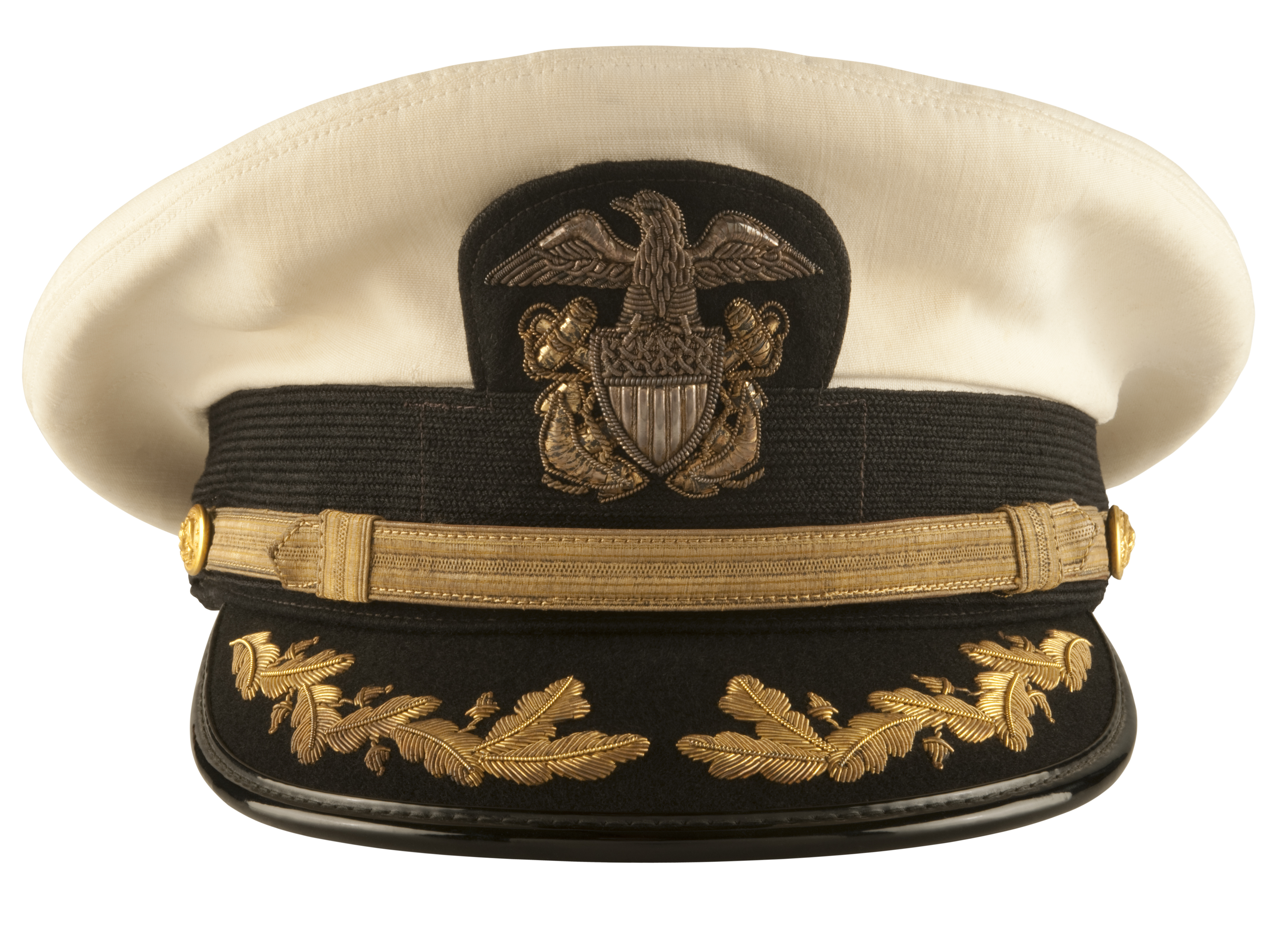
My father modeled unselfishness for me when I was very young. He graduated from the United States Naval Academy in 1924. Since World War I had ended and people thought that was the war to end all wars, the Navy didn’t think they needed as many officers at that time. As a result, my father was released after his senior cruise. In January 1925 he entered Harvard Business School with a major in finance and then headed to Wall Street to begin his career.

In 1940, when I was one year old, he was about to be made a vice president of National City Bank. Instead, he came home and said to my mother, “I quit my job today.”

My mother said, “To do what?”

“I rejoined the Navy.”

“You’ve got to be kidding me!”

My father responded, “Remember when we got married, I said that if the country ever got in trouble, I owed it something. Hitler is crazy and pretty soon the Japanese will be in this war.”

So my father went from being a potential bank vice president to a second lieutenant at the Brooklyn Navy Yard. When Pearl Harbor happened in December 1941, it looked like he was going to stay there because he was 40 years old with no naval experience. But that wasn’t my father’s style—so he called one of his classmates from the Academy who was a top person at the Bureau of Naval Personnel in Washington and said, “What do you have for an old fart with no experience? I’ve got to get in the action.”

His buddy said, “Let me see what I can find and I’ll get back to you.” A few days later he called my dad and said, “All I have for a guy with your experience is heading up a suicide group going into the Marshall Islands.”

My dad immediately said “You’ve got your man!” Of course, he didn’t tell my mother what his friend had said. He was given the command of twelve LCI (Landing Craft, Infantry) leading the first wave into the Marshall Islands. Well over half of his men were killed or wounded. I have a picture of me at five years old in a sailor suit saluting him as he got off the train, returning home after being away for more than two years.

All this to say my dad was the most unselfish person I have ever met. How about you? Who models or has modeled unselfishness for you in your life? Remember—just because we were all born selfish doesn’t mean we can’t master unselfish behavior as adults!

The Humility and Courtesy of Love

If you’ve been reading my blogs, you’ll know this is Part 3 of my series about the nine elements of love as written by Henry Drummond in his book The Greatest Thing in the World.

We are on the fourth element, which is Humility. Drummond wrote:

“Love as humility does not promote or call attention to itself, is not puffed up, is not bloated with self-conceit, and does not dwell upon its accomplishments. When you exhibit true love, you will find things to praise in others and will esteem others as you esteem yourself.”

When some people hear the word humility, they think of it as a weakness. Even Jim Collins, the author of From Good to Great, told his researchers to recheck the data when humility came up as the second trait of great leaders. He couldn’t believe that humility could be one of the top two traits! But I’ve always thought of humility as a strength. In fact, one of my favorite sayings was coined by Rick Warren, pastor of Saddleback Church in Orange County, California:

“People with humility don’t think less of themselves, they just think about themselves less.”

If this statement applies to you, there is a good chance that you have what it takes to be an effective servant leader. Rather than spending your days doing things that benefit yourself, your loving spirit wants to serve others.

I learned this lesson early in life from my father, who retired as a rear admiral in the U.S. Navy. When I won the presidency of the seventh grade in junior high school, I came home all proud and told my dad that I had won. He said “Congratulations Ken—but now that you are president, don’t ever use your position. Great leaders are great not because they have power, but because people respect and trust them. Leadership is not about you, it’s about the people you’re serving.” Quite a lesson for 13-year-old kid!

Here’s what Drummond had to say about the fifth element of love, Courtesy:

“Love as courtesy is said to be love in little things. It behaves toward all people with goodwill. It seeks to promote the happiness of all.”

It’s all about being polite—holding a door for someone, saying thanks when someone does something nice for you, and the like.

In the Disney parks, their first value is safety, followed by courtesy—the friendly, helpful service you get from each cast member every time you visit one of their parks or hotels. It can be as simple as a smiling face or a “My pleasure”—whatever brings happiness to their guests.

So this week, remember to reach out in love with a humble heart and be a courteous and considerate person in all your interactions with people. You’ll be surprised how good it feels when you make somebody else feel good!

Vulnerability in Leadership: a Good Thing or a Bad Thing?

Every day, one of my friends sends me a quote from a little book called Live and Learn and Pass It On, edited by H. Jackson Brown. Here is one I particularly enjoy:

“I’ve learned that everything I truly value has been gained by vulnerability on my part. It is the secret to life.”  (Anonymous, age 21)

The reason I love this quote is because it reminds me of the work of Brené Brown, who describes herself as a researcher and storyteller. Brené spoke at our client conference last fall and was one of the first people to study and write about the power of vulnerability.

As a leader, you might think that if you admit to your people you don’t know how to solve every problem, they will see you as weak. Quite the contrary. When you show your vulnerabilities, rather than thinking less of you, people will think more of you. Why? Because they already know you don’t know everything!

Colleen Barrett, president emeritus of Southwest Airlines and my coauthor on the book Lead with LUV*, has been known to say, “People admire your skills, but they love your vulnerability.” When you are willing to acknowledge that you don’t have it all together, your people—including customers and family members—know they might have a chance to play a part and make a contribution.

Brené Brown says being vulnerable requires courage as well as humility. Most people who aren’t willing to show their vulnerability don’t want to admit they are scared little kids inside. Being humble is not the same as lacking confidence. I have always said “People with humility don’t think less of themselves; they just think about themselves less.”

So, have a vulnerable, courageous, and humble day. Isn’t it great to know you don’t need to have all the answers to be admired by others?


*LUV is the stock symbol for Southwest Airlines.