Another Skaneateles Summer

My wife, Margie, and I are once again in our favorite place for the summer: our cottage in the beautiful town of Skaneateles in upstate New York. We arrived a few days ago and are still unpacking and doing all kinds of things to get this place going.

Going to our cottage in Skaneateles isn’t something we just decided to start doing when we noticed ourselves getting older. Our extended family has had the great privilege of spending July and August here for more than 75 years! Surrounded by a deep green forest and overlooking the pristine water of Skaneateles Lake, our cottage is the perfect place to recharge and reflect, share memories, and make new ones. It’s also where I’ve often found inspiration for many of the books I’ve written.

In case you haven’t heard me speak or write about this before, let me fill you in. In 1946, Margie’s mother and father bought 300 feet of lake frontage for $300. So Margie has been coming here every year since she was six years old, and I’ve been coming with her since we got married in the summer of 1962. When we started our company in 1979, we said to the few folks who worked with us at the time, “By the way, we won’t be around in July or August—you’ll have to operate without us.” And that’s been our practice every year. Of course we both keep in touch with our leadership team, but we focus on rest and relaxation.

Skaneateles Lake is one of the Finger Lakes, located near Syracuse and not far from Cornell, Margie’s and my alma mater. The lake is 17 miles long and 315 feet deep. It is one of the cleanest lakes in the United States—so clean that the city of Syracuse takes its water straight out of it! And it’s so cold, even in the summer, that when you jump in it takes your breath away. But we always jump in.

You can see now that traveling to Skaneateles is much more than a fun vacation—it’s a decades-old tradition. Margie’s parents’ cottage was the first home built on the property. More and more building and expanding by family members has happened through the years, to the point where now when we host a big reunion weekend, everyone has a comfortable place to sleep. We have all worked together to build a family legacy for past, present, and future generations.

Every summer at the lake is a little different, which is why one of Margie’s favorite projects is going through hundreds of pictures and making a photo album so we have a record of everything that happened each year. By taking on this annual labor of love, Margie has ensured that the memories captured through the years will be with the family forever—all of the kids, grandkids, and now great-grandkids growing up; family members, friends, and colleagues who visited at various times; and every special event including birthdays, side trips to nearby towns, dinners out, boating, swimming, etc. Even sitting on the dock and talking about the weather is a special event in Skaneateles!

One of our special events is an annual celebration of life we call “Breakfast with the Ancestors.” On a designated morning, several of us get into our little pontoon boat with baskets of egg casseroles, pastries, fruit, and juice. We slowly motor down to the picturesque little cemetery at the end of the lake where Margie’s mom and dad and my sister, Sandy, are buried. Two tombstones are also in place for Margie and me showing our names and the years we were born followed by a dash. (We like to say we are enjoying “living our dash.”) We all sit down for a nice picnic breakfast and talk about memories we have of Margie’s mom and dad, Sandy, and other relatives who have passed away. It’s all about celebrating the lives of people we love who aren’t with us anymore—and sometimes even beloved pets we have lost. A few folks might think Margie and I take things a little too far when we lie down on top of our future graves to pose for photos—but it’s all in good fun, and another family tradition we have grown to love.

And what about the weather? Well, long ago we decided that when the weather is less than perfect, it really doesn’t matter because we are at our favorite place. One year it rained almost the entire summer. Every day I thought Noah was going to show up. Even so, we ended up with treasured memories of sitting on our porch with our visitors, drinking lemonade and watching the rain fall in the lake. And when our granddaughter, Hannah, and her wife, Beth, planned for an outdoor Skaneateles wedding in the summer of 2021, no one realized their big day would be preceded by two weeks of nonstop rain. Needless to say, the site of the wedding—which normally is a huge, beautiful green lawn—had become a mass of muddy grass. But when the sun came out from behind the clouds at the reception, the organizers opened the flaps of the big tent. Then the band started playing and a number of wedding guests took off their shoes, walked out into the sunshine, and danced on the muddy grass! Everyone had fun—and needless to say, it was an unforgettable day of love and mud.

Margery Allen, who was my assistant for many years and is a wonderful writer, composed these lovely thoughts for us. I read this piece every year because I think it perfectly describes our feelings about this magical place:

“Breathe deeply as you cross the threshold and take in the sights, sounds, and smells of the cottage and the lake. Feel that sense of relaxation deep in your bones as you view what has brought you solace for so many summers. Remember the memories created in anticipation of what is yet to unfold during the next few weeks. Enjoy the solitude and gift of time that refreshes you. Look forward to family and friends joining you once again at this favorite place. Rest, relax, and think positive thoughts. Visualize and heal from within.”

No matter where you live, it’s important to find a place where you can recharge and reflect. Everyone deserves the quiet joy of being in nature and spending time with people you love. Does your family have a special place where you go every so often, just to relax and have fun together? Do you remember such a place from when you were a kid? I hope so. It wouldn’t have to be a cottage on a lake; it could be the big park on the edge of town, a favorite campground or beach, or a road trip to a much-loved relative’s house. For us, it’s always been summer in Skaneateles, New York—a treasured time and place for us to come together for relaxation, fun, and contemplation with family and friends.


Table Talk, Anyone?

Early in our marriage, Margie and I realized how enjoyable it was to have people come to our home for dinner. Sometimes we would invite just a few close friends we hadn’t seen for a while; sometimes we would host family members from out of town; and other times it was great fun introducing neighbors who had never met each other and watching them become friends. As our organization grew, we became great friends with dozens of our colleagues and the dinner parties became almost legendary.

The fare at these get-togethers—everything from sandwiches to backyard barbecues to holiday feasts—was never the important part. It was the camaraderie—the joy of seeing old friends and making new ones.

Margie and I noticed something interesting early on. When everyone was seated at a big table, several small conversations would be going on at the same time. People would talk to the person on their left and the person on their right and that was about it. There’s nothing wrong with that, but we really wanted people to leave the party knowing more about each other than they did before they arrived. We figured out the best way to bring everyone together. It was simple.

At one point during the meal, Margie would give the person seated next to her a jar that contained several small slips of paper. Each person was asked to reach in the jar, take a slip of paper (no peeking), and pass the jar to the next person. When everyone had a paper, they discovered a question they would read aloud and then answer. There was no pressure—people could answer their question in whatever order came up. Some would need time to think about their answer and some just needed a few folks to go ahead of them (or maybe a little wine) to build their confidence. 

Every so often we would change the rules and give everyone the same question to answer. Each of these occasions was a memorable time. The questions and answers were more than conversation starters—they were glimpses of people’s thoughts, feelings, and memories that we may have never heard otherwise. The stories told led to other stories, comments, jokes, food for thought, and always laughter. 

Here’s a few examples of the questions we had for our dinner guests:

  • What’s your best birthday memory?
  • What have you learned this year?
  • What has brought you joy this year?
  • What are you looking forward to?
  • What is something you know to be true?
  • If you could have dinner with anyone, living or dead, who would it be?
  • What do you want to do in the future that you haven’t done yet?

But wait—this isn’t just for adult dinner parties. Anyone with school-aged children at home will find that letting the kids pick questions from a jar on family dinner nights is far more interesting, informative, and fun than making them answer the same “How was school?” questions every day. They might even want to make up their own questions and do this activity with their friends.

It’s easy to find websites with lists of questions for just this purpose. We’ve done some of the work for you by providing these links:

Having a jar of table topics on hand is never a bad idea. It’s a great way for everyone at any table to get to know one another a bit better. You just never know what you will learn!

Do This 4-Part Self-Assessment to Refire in 2021

Most people I know are not only relieved about 2020 being over, they’re also looking forward to 2021 with optimism that things will get better. Here’s a way for you to take stock of how you’re doing personally so that you are ready to refire—and step into the New Year with new, achievable goals.

(Note: Even though these concepts are from Refire! Don’t Retire, a book I wrote with my friend Mort Shaevitz, this exercise will work for you no matter what age you are!)

When you consider refiring, think in terms of four basic areas of your life: Emotional, Intellectual, Physical, and Spiritual. As you read, think about whether you would rate yourself high or low, right now, in these four areas.

  • EMOTIONAL is about being playful, friendly, joyful, loving, spontaneous, and enthusiastic. It involves reaching out to others. Our research shows that people who are emotionally close with family, friends, and work colleagues are happier, more loyal, and more productive.
  • INTELLECTUAL is what you are doing to keep your mind active and still learning. Read books, take classes, stretch your mind. Be open to learning every minute of every day! Remember, when you stop learning, you might as well lie down and let them throw the dirt over you!
  • PHYSICAL is about healthy living and includes such things as exercising, eating right, and getting plenty of sleep. It’s been easy to let some of these things lapse during quarantine, especially if you are among the millions of folks who suddenly found themselves working from home. But it’s more important now than ever before to practice self-care by making choices for yourself that will keep you in good physical condition.
  • SPIRITUAL isn’t necessarily about religion. It can also be about getting in touch with something important outside of yourself—looking outward rather than inward. It’s the opposite of material things. It’s about counting your blessings, realizing you’re not the center of the universe, working toward a higher purpose, and focusing on the greater good.

As I’m writing this, I’d rate myself high in the Emotional area—I have lots of people around me that I can reach out to and love. I’m also doing well in the Spiritual area—I am in close contact with my Higher Power (for me, it’s God), and I enter my days slowly with prayer, gratitude, and a positive outlook.

I’m more of a work in progress in the Intellectual and Physical realms, so I’m going to look at improving in those two areas in 2021.

Intellectually, I’m excited about finishing writing a book with my colleague Randy Conley, tentatively titled DUH! Why Isn’t Common Sense Common Practice? I’m also looking forward to working on a book with my son, Scott. Writing really gets my mind going!

Physically, I need to get on my recumbent bike for at least 30 minutes a day and take my dog, Joy, for walks 3 or 4 times a week. In addition, I need to get back to doing my stretching and weight exercises daily. To make these activities happen, as my colleague Art Turock has said for years, I need to ask myself, “Am I just interested in these things, or am I committed?” When you’re merely interested, you sometimes put things off until tomorrow. But when you’re committed, you do what you say you are going to do, no matter what!

So how did you do? If you gave yourself a not-great rating in any of these areas, don’t sweat it! We all had a rough 2020. Just set one reasonable goal at a time—a goal you know you can commit to, and achieve, in 2021. When you accomplish that goal, set another attainable goal in a different area. Before you know it, you will be refiring on all cylinders!

So Happy New Year to you and yours. Refire to make 2021 a great year!

Your Personal Picture of the Future

There are three parts to a compelling personal vision: your life purpose, your picture of the future, and your values. In my last blog post, I detailed a four-step process to help you write your personal life purpose statement.

The second part of creating a compelling personal vision is to come up with your personal picture of the future. It’s never too early to start thinking about how you want to spend the rest of your life and how you might want to be remembered. My wife, Margie, and I each have a favorite activity to help people achieve this goal.

Fantasy Friday

One of Margie’s favorite phrases is “A goal is a dream with a deadline.” Back when she was working on her PhD in communication, she taught an extended learning course where she came up with this writing exercise to help people turn their dreams for the future into goals. She calls the exercise “My Fantasy Friday.” Here’s how it works:

Imagine it’s a Friday ten years in the future. It’s a work day but also the beginning of the weekend. Write a paragraph that answers the following questions:

  • Where are you living, and with whom?
  • What are you doing throughout the day, hour by hour? (The more details, the better.)
  • How are you feeling—intellectually, emotionally, physically, and spiritually?

That’s it! After you’re finished and you read what you’ve written, it may surprise you.

When Margie first came up with this activity, she suggested that we write our Fantasy Friday paragraphs separately and then share them with each other. When we compared our paragraphs, we were amazed to learn we had both been dreaming of not only living near the water but also starting our own business. We had never shared either of those ideas before. Keep in mind this was before we decided to move to San Diego and start our own company!

Write Your Own Obituary

At the risk of sounding morbid, I believe it can be helpful to think of your own obituary as your picture of the future.

I first got this idea when I read about Alfred Nobel, the inventor of dynamite. As the story goes, when Albert’s brother Ludvig died in France, the French newspaper mistakenly printed an obituary for Alfred instead of Ludvig. As a result, Alfred had the unusual experience of reading his own obituary. To his dismay, the focal point of the piece was the destruction brought about through his invention. Alfred was devastated to think that was how he would be remembered. It’s believed this incident caused Alfred to set aside the bulk of his estate to establish the Nobel Prize so that he would be remembered for peace, not for destruction.

To determine your picture of the future, I’d like to challenge you to write your own obituary. Since this is not something you can put together as quickly as you did the draft of your life purpose (see my last blog post), I suggest you spend some time on it and then share it with loved ones—not to scare them, but to get their feedback. Ask them “Is this the way you would like to remember me?”

To give you an example, the following is an obituary I wrote about myself. When I first shared it with Margie, she thought I was getting a little dark. But then she got into it and helped me write it.

“Ken Blanchard was a loving teacher and example of simple truths whose books and speeches on leadership, management, and life helped motivate himself and others to awaken to the presence of God in our lives and to realize we are here to serve, not to be served. He continually inspired, challenged, and equipped people to live, love, and lead like Jesus. He was a loving child of God, son, brother, spouse, father, grandfather, uncle, cousin, friend, and colleague who strove to find a balance between success, significance, and surrender. He had a spiritual peace about him that permitted him to say “no” in a loving manner to people and projects that got him off purpose. He knew full well that B.U.S.Y. stood for Being Under Satan’s Yoke. He was a person of high energy who was able to see the positive in any event. No matter what happened, he could find a learning or message in it. Ken Blanchard was someone who trusted God’s unconditional love and believed he was the Beloved. He valued integrity, walked his talk, and was a mean and lean 185-pound golfing machine. He will be missed because wherever he went, he made the world a better place.”

Okay, I’ll admit that some of the things in my obituary are goals or hoped-for outcomes, such as being able to say “no” in a loving manner to people and projects that got me off purpose. (I still have never heard a bad idea!) As for being a 185-pound mean and lean golfing machine, that is also an ongoing aspiration. Ha!

I hope you have fun writing your obituary and also writing about your Fantasy Friday. I think you’ll find both processes interesting and perhaps even learn some truths about yourself as you ponder your goals for your future.

Next time I’ll cover the final step of creating a compelling personal vision—determining your personal values. Hope you’ll join me again!

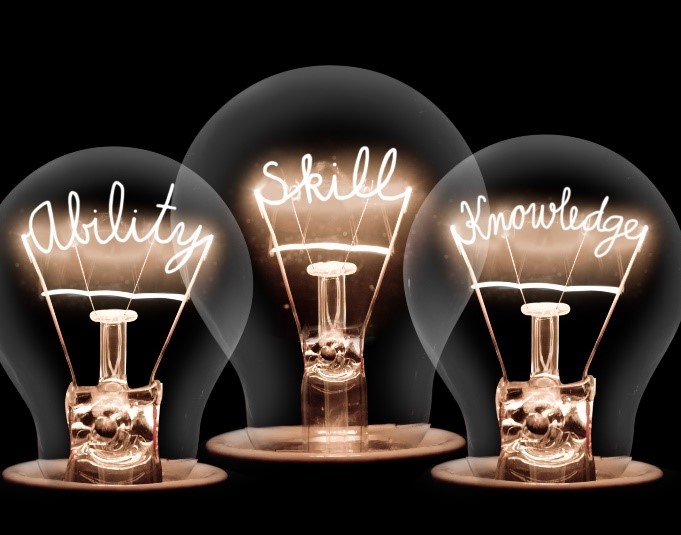
3 Simple Ways to Master Learning and Make Things Happen

Years ago, a dear friend of mine asked me what my biggest disappointment was with my career. That thoughtful question motivated some real self-reflection. I realized that what bothered me most was that my work was not having lasting impact. While my books were widely read, many people were not following through on the concepts and using them consistently in their day-to-day work. Most managers seemed content to merely talk about leadership practices, rather than to actually implement them.

My friend said, “You’re trying to change people’s behavior only from the outside. Lasting change starts on the inside and moves out.”

I knew immediately he was right, because all I had been focusing on were leadership methods and behavior. I hadn’t focused much on what was inside people’s heads or hearts.

Armed with this new insight, I teamed up with Paul J. Meyer and Dick Ruhe to write Know Can Do, a book about how to close the learning-doing gap. Together we developed three simple ways to help people make the leap from knowing to doing.

#1 – Learn Less More (and Not More Less)

While it’s fine to spend energy learning new skills and knowledge, you also need strategies to retain and apply all the helpful information you take in. For example, perhaps you love reading books and attending seminars. There’s nothing wrong with that—unless you do those things so often that you don’t pause to integrate your new know-how and put it into action.

The fact is, we retain only a small fraction of what we read and hear only once. Instead of gobbling up new information, focus on a few key concepts and study them deeply. Then repeat what you’ve learned over time, which is called spaced repetition. This way, the new knowledge becomes firmly fixed in your mind and you become a master in those areas.

#2 – Listen with a Positive Mindset

There’s nothing wrong with thinking critically; in fact, it’s essential for survival. However, many if not most of us did not receive unconditional love and support when we were young. This gives us a tendency to doubt ourselves and others. Self-doubt causes us to filter all information—whether in book, audio, video, seminar, or conversation format—through our indecisive, closed-minded, judgmental, fear-ridden mindset, which leads to negative thinking.

Negative thinking causes us to learn and use only a fraction of what we see and hear. As a result, we achieve only a small percentage of what we could achieve. We accept too little too soon.

A positive, open mind ignites creativity, ingenuity, and resourcefulness. Instead of trying to find what’s wrong with new information, be a green light thinker who actively seeks out what’s right. Practice saying to yourself, “I know there is something of value in what I’m reading or hearing; what is it?”

#3 – Use a Follow-Up Plan

Doing what you’ve learned cannot be left to chance. To keep and apply the knowledge you’ve gained, you need a follow-up plan that provides structure, support, and accountability.

For example, suppose you’ve been out of shape most of your life, but thanks to your newfound positive thinking, you just finished a session with a personal trainer at the gym. You’re feeling proud of yourself—but you don’t have a follow-up plan. What do you think is going to happen in the coming weeks and months? Chances are good to great that you’ll revert to your old ways.

Follow-up plans can take many forms, but the best ones include someone who can tell you, show you, observe you, and praise your progress or redirect you as you practice the new skill. Don’t let your teacher skip the praise part of that sequence, because accentuating the positive motivates learners. Soon you’ll be able to praise and redirect yourself. Over time, you’ll become a master in that skill.

And what’s the best way to maintain that mastery? By teaching what you’ve learned.

So, put the knowledge you’ve just gained into action by reviewing this blog with a positive mindset, practicing these steps, and sharing them with others!