5 Ways to Retain Top Talent

We’re fortunate at The Ken Blanchard Companies to have dozens of talented people who’ve been with us for 10, 20, 30 years and more! These long-term employees bring value to our organization in so many ways. They have developed deep, trusting relationships with our clients and associates. Because they know our business inside and out, they’re effective and efficient. They’re a wonderful resource for newer employees, who can call on them for knowledge and support.

I don’t think it’s an accident that we have so many long-timers at our company. Over the years, our leadership team has made an ongoing effort to connect with our people, listen to their feedback, and meet their needs. As a result, many of them have fallen in love with our business and stayed for the long term. We value their contributions and are honored they’re part of our team.

It’s no secret that the cost of losing good people is high. A recent study showed that replacing an employee can cost a full third of that employee’s annual salary. With an average turnover rate of 18%, those expenses can add up quickly.

If you’d like to attract employees who will stay engaged and committed to your organization, here are five suggested best practices.

1. Recognize People

According to a Pew research study, 57% of the Americans who quit their jobs in 2021 left because they felt disrespected at work. Don’t let this happen in your organization. Treat people with respect by telling them you appreciate them and why.

What if you grew up in a family that didn’t openly express appreciation for one another, and acknowledging people makes you feel uncomfortable? My advice is to “fake it till you make it” and do it anyway. Catch people doing things right and give them detailed, specific praise for their accomplishments.

While it’s important for companies to pay people well and provide benefits, don’t underestimate the power of recognizing people for their contributions. After analyzing 1.7 million employee survey responses, A Great Place to Work found that the most important driver of good work was recognition (37%), not promotions (4%) or more pay (7%).

At Blanchard, we bake recognition into our culture with our People’s Choice Awards. The awards tie into the values our company seeks to live. The Dream Team Award, the Authenticity Award, the Most Values-Led Player Award, and the Unsung Hero Award are just a few examples.

2: Partner with People

One of the most effective ways to retain your best people is to be there for them over the long term. That means regularly setting goals with them and giving them appropriate direction and support, depending on their development level on each task.

Goal setting is an ongoing process, not just something you do once a year at performance review time. Meet with each of your direct reports at least twice a month to listen to their concerns and ask how you can help them succeed in achieving their goals.

3. Keep Showing Up for People

One mistake a lot of managers make is that once a direct report becomes good at their job, the manager disappears on them. Don’t ghost your people. While it’s great to give self-reliant achievers autonomy, everybody needs acknowledgment. Keep showing people that you’re behind them by giving them clear, specific feedback on their work. And if something goes wrong, help them get back on track. Whatever you do, don’t become a seagull manager who flies in, makes a lot of noise, dumps on everyone, and flies out. That’s a management style I hoped would go out of fashion by now. Unfortunately, it’s still around.

4. Help People Grow

If a company is going to retain top talent, it must provide growth opportunities. Recently, our company offered a series of meetings to help people explore career development at Blanchard. On an individual level, help your direct reports grow by giving them a stretch project—something they haven’t done before—and let them know you’ll be there to provide direction and support if they get stuck. Not only will this empower your people, it also will benefit the organization by building skills and bench strength.

5. Let People Be Human

Organizations are made up of human beings—at least until AI and the robots take over! Human beings function best when they have a work-life balance. If you want people to stick around year after year, don’t pass judgment on them when they take time for themselves and their families. In fact, encourage them to do so.

***

Many research studies suggest that there are very real benefits to being in a successful long-term relationship: couples who stay together are healthier, wealthier, and happier. I think the same thing may be true for organizations. Start putting these five practices to work today to keep your top talent for the long term—and let me know how it goes!
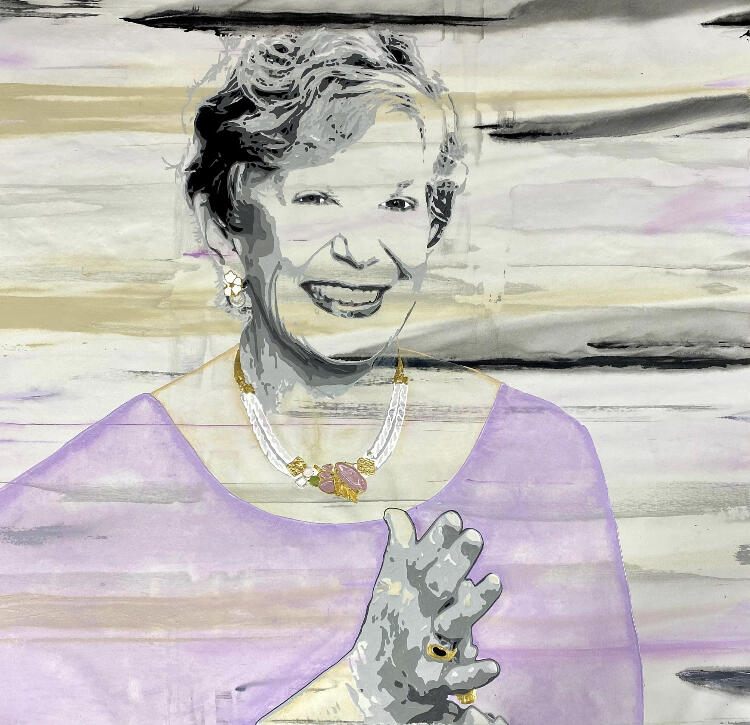
Margie—The Woman Beside Me

In honor of Women’s History Month, I’m going to write about Margie—my brilliant, beautiful wife of nearly 62 years.

The old saying “Behind every successful man is a woman” is untrue in our case. Margie was never behind me—she has always been right beside me as my partner in life. I wouldn’t be anywhere without Margie. She is the love of my life, my teammate, and my best friend. And she has been the spark for many of the great events of our lives.

The Beginning

I fell in love with Margie in the summer of 1961. I had just graduated from Cornell and was hanging around town for the summer. A friend of mine who we called “Looper” had been dating her, but his father had died and Looper needed to go home to run the family dairy. He asked me if I would take Margie out for a drink once in a while as a favor to him. One day my roommate asked me if I wanted to have a drink with him and one of Margie’s sorority sisters who was getting married soon. My roommate was going to be best man in their wedding. I said, “Okay, I’ll invite Margie McKee to join us. She’s almost married, too.”

Margie was working as a speech therapist and counselor at a camp for kids with severe speech problems. I picked her up at the camp and we drove eight miles back to town. I remember asking, “Why would you want to spend the summer with all of those special needs kids?” She spent the rest of the ride describing her feelings about the children—she was so filled with compassion. She had a real heart for those kids as well as a need to help people. I think I fell in love with Margie on that eight-mile ride.

The Genesis of SLII®

In the fall of 1966, Margie (pregnant with Debbie), Scott, and I arrived at Ohio University. I had landed a job as an assistant to Harry Evarts, dean of the School of Business Administration. Paul Hersey had just arrived on campus as the chairman of the management department, where I began teaching a course at the request of the dean. I found that I loved teaching.

I heard Hersey taught a tremendous course on leadership, so in December I came to see him and said, “Paul, I understand you teach a great leadership course. Could I sit in next semester?”

“Nobody audits my course,” said Hersey. “If you want to take it for credit, you’re welcome.” And he walked away.

I was stunned. I went home and told Margie about the conversation.

“Can you imagine? He won’t let me audit his course. I have a Ph.D. and he doesn’t, and he wants me to take his course for credit?”

Margie said, “That’s all well and good, but is he any good?”

“He’s supposed to be fabulous.”

“Then why don’t you get your ego out of the way and take his course?”

I had to convince the registrar to let me take Hersey’s undergrad course because I already had a Ph.D. So I took the course, wrote all the papers, and found it to be a great experience.

After the course ended, Hersey took me aside and asked me to write a textbook with him, which would become Management of Organizational Behavior: Utilizing Human Resources. It is still in print, now in its 10th edition.

If it weren’t for Margie’s suggestion, Paul Hersey and I would not have coauthored that book, which popularized the Situational Leadership®* model we created together. Its concepts were later revised by Margie, me, and the other Founding Associates of our company to become SLII®, our flagship product.  

The Birth of The One Minute Manager

In 1980, Margie and I went to a cocktail party for San Diego authors. Also at the party was Spencer Johnson, who had coauthored a series of children’s books called Value Tales with his wife, Ann Donegan. He was in the process of coauthoring a book titled The One Minute Scolding. Margie hand-carried Spencer over to me and told us she thought we should meet.

Then Margie said something that would change all of our lives: “You two need to write a children’s book for managers. They won’t read anything else.”

The following week, Spencer came to see me speak at a seminar I was giving in town. He sat in the back, laughing, apparently enjoying my presentation. At the end, he came to me and said, “The hell with parenting—let’s write The One Minute Manager®!” And we did.

To date, the book has sold more than fifteen million copies. It wouldn’t have happened without Margie.

The Ken Blanchard Companies® and Beyond

During the ten years Margie spent as president of our company, I was sometimes asked why she was president, not me. I thought it was obvious that she was the one who should be president. That held true: when Margie started her term, we were a five million dollar company. When she left that position, we were a thirty million dollar company. (Margie is the first to say that partnering with her brother, Tom McKee, who joined the company as general manager of operations, was what made the difference.) I was happy to work beside Margie and Tom and cheer them on because I’ve always been a cheerleader!

Margie was always interested in keeping an eye on business trends. She also believed leaders should keep managing the present separate from planning the future. So when she ended her term as company president, she and Blanchard cofounder Eunice Parisi-Carew created a unique, innovative think tank they named Office of the Future (OOF). With help from Margie’s assistant, Lily Guthrie, OOF studied and reported on emerging trends in leadership, technology, and other workplace issues. Margie saw their work and research as both a challenge to Blanchard’s status quo and a stimulus for change that would ensure our company’s continued vitality and success. OOF’s findings and reports were available to clients and other organizations to assist with planning for the future, and to the media for use in advising the public of trends in the workplace.

Today, Margie is as active and interesting as ever. Because she is a lifelong teacher, she now teaches courses on career planning to young people in our company. And because she is a lifelong learner, when the pandemic began she took up a new hobby of watercolor painting. She’s really good!

Thanks, Margie, for being such a great partner. You’re the best!

*Situational Leadership® is a registered trademark of Leadership Studies, Inc., dba The Center for Leadership Studies.  

3 Lessons I Learned from a Worldwide Pandemic

It’s hard to believe that it’s been three years since the COVID-19 virus upended all our lives. So much has changed since March 2020. My wife, Margie, often says, “Never let a good crisis go to waste.” Meaning that when things go wrong, she looks for the opportunity in the crisis by asking, “What’s good about this?”

For me personally, COVID drove home three important lessons.

Lesson #1: Change is inevitable—and that can be a good thing.

The pandemic fundamentally changed the way our company—and millions of other organizations—do business. Zoom came alive and permitted us all to communicate more frequently with people near and far. Our company has associates from all around the world. With Zoom, our global people can now participate in our virtual, all-company meetings on a level playing field, without feeling like outsiders.

Another upside to the pandemic was discovering that we didn’t have to travel to be productive. I’m able to give keynotes and consult with clients right from my office—either at company headquarters or at home. We can get together in person when it makes sense to do so, but we no longer have to spend so much time on the road or on airplanes.

We’ve discovered that with today’s technology, people can be just as productive—if not more so—from their home offices. Most people still go into the office at least a couple of days a week, but it’s easier on the planet and people’s stress levels to not have to commute every single day.

Lesson #2: It’s important to plan for the future.

It’s the responsibility of leaders to prepare for the future. But most people find that it’s difficult to manage day-to-day operations and plan for the future at the same time. That’s why my wife, Margie, created the Office of the Future when she was the president of our company.

The Office of the Future looked at trends five, ten, and twenty years out. Because our company had already anticipated online learning and invested in digital technologies, we weren’t caught completely flat-footed when the pandemic hit. All the energy we had put into planning for the digital future really helped us survive when classroom training was shut down by the virus.

What about your organization? What steps can you be taking now to make sure that you’ll be ready when the next disruption occurs?

Lesson #3: Keep your I-love-you’s up to date.

Sadly, the pandemic took many lives. It’s hard to find an upside to losing people you love. However, those losses drive home how important it is to communicate our love to those we hold dear. Don’t wait for the perfect moment; do it as soon as you think about that person. Remember:

Nice thoughts not communicated mean squat.

It’s just as important to express our love on a regular basis to the people we live with, so that those relationships stay healthy. If you’re not feeling loving, figure out why and deal with it. Small resentments can turn into big problems over time. When the pandemic hit, the lockdowns tested a lot of marriages—and some didn’t pass that test. Don’t let that happen to you. Catch your partner doing things right on a regular basis.

What about you? In what way is your life different now than before the pandemic? What lessons have you learned from it? Take a few minutes to stop, think, and answer these questions. As Margie would put it, don’t let the COVID-19 crisis go to waste. Reflecting on your experiences is one of the most powerful ways to learn from them.

In 2023, Friendships are More Important than Ever

Happy New Year! I hope you had a wonderful New Year’s weekend. Margie and I sure did. We spent New Year’s Eve with three of our favorite couples, enjoying a fun evening with lively conversation. We watched the New Year’s celebration from Times Square in New York City live on TV at 9 PM and then, after hugs and well wishes, everyone headed home. We were happy to be able to bring in the new year with good friends.

On Sunday, our pastor spoke on the topic of friendship. He emphasized that besides our family there is nothing more important than good friends, particularly friends who are there for you in good times as well as bad times. To underscore this point, he talked about the classical film It’s a Wonderful Life starring Jimmy Stewart. He plays a character named George Bailey who continually gives up his own plans for the needs of his community of friends. 

So what did Margie and I do Sunday night? We watched It’s a Wonderful Life. What a terrific old black-and-white film, made in 1946. If you haven’t seen it, watch it! Love and friendship are the main themes. George Bailey is always there for others, just like our friends are there for us.

Good friends make tough times bearable and good times better. Life is more meaningful because of the people we share it with, day in and day out. In fact, friendships are known to have a positive impact on our general health and wellbeing.

This got me thinking about how much the pandemic has interfered with travel, togetherness, and personal connection over the past three years. I’m sure many friendships have faded into the background during this stressful time. So let’s start the new year on a great note. Make a list of what you want to accomplish by the end of 2023 and include a commitment to getting back in touch with some of your old friends. I encourage you to celebrate these important relationships in whatever way works for you.

When I think of friendships, I think about my college days at Cornell. We have a group of couples—there are 12 or 14 of us—that we have kept in contact with since we first met in college. That’s more than six decades! We have a wonderful time staying in touch. We’ve been Zooming together since Covid started. I met one of the guys, Bob Lurcott, in fifth grade and he was best man at our wedding in 1962!

Here’s another way we connect with friends. When Margie and I get ready to send out Christmas cards each December, she creates a letter that summarizes the highs and lows of our year. We send our Christmas card and letter to over 300 family members and friends, and I write a personal note on each letter to let people know I’m thinking about them. As I’m working my way through our cards, I often run across names of friends I haven’t been in contact with for a while and I give them a call right then and there. It’s always fun to surprise them and catch up.

You say reaching out to people doesn’t come naturally to you? I say jump out of your comfort zone and call that friend you are thinking about. I do this a lot—and most of the time, people seem happy to hear from me. I’ll bet your old friends will be happy to hear from you, too.

Of course our families are precious. But the icing on the cake of life is friendships—old and new. Our friends make us who we are. Don’t forget to stay in touch with them. Continue to reach out and invite your friends to be part of your life in 2023. You’ll never regret it!

The Power of Gratitude

This week the United States will be celebrating Thanksgiving Day, a holiday that’s set aside to count our blessings. There’s usually a big meal, visits from family, and special shows on television. But with COVID still floating around, inflation, financial stress, and political discord, it might be hard for some people to feel grateful this year.

I encourage you to feel grateful anyway. Why? Because oddly enough, the less grateful we feel, the more we’ll benefit from practicing gratitude.

A study conducted by the University of Southern California found a connection between gratitude and areas of the brain associated with stress reduction. Other studies have found a direct link between the practice of gratitude and increased optimism and better mental health.

If you’re new to practicing gratitude, start by giving thanks for the things you’ve been taking for granted, like air to breathe and clean water to drink.

Next, take a moment to express gratitude for the strengths you’ve been given.

Finally, think about the people who make a difference in your life. Express your gratitude for them—maybe even by picking up the phone and giving them a call.

My old friend, Zig Ziglar, used to say that “Gratitude is the healthiest of all human emotions. The more you express gratitude for what you have, the more likely you will have even more to express gratitude for!”

I’d like to take this opportunity to say thank you to all my readers for your interest in my work. I’m grateful for you! I wish every one of you a wonderful Thanksgiving. No matter how you decide to spend the holiday this year, remember to take a few moments to practice gratitude. You’ll be grateful you did!