Breaking Down Silos for a Stronger Organization

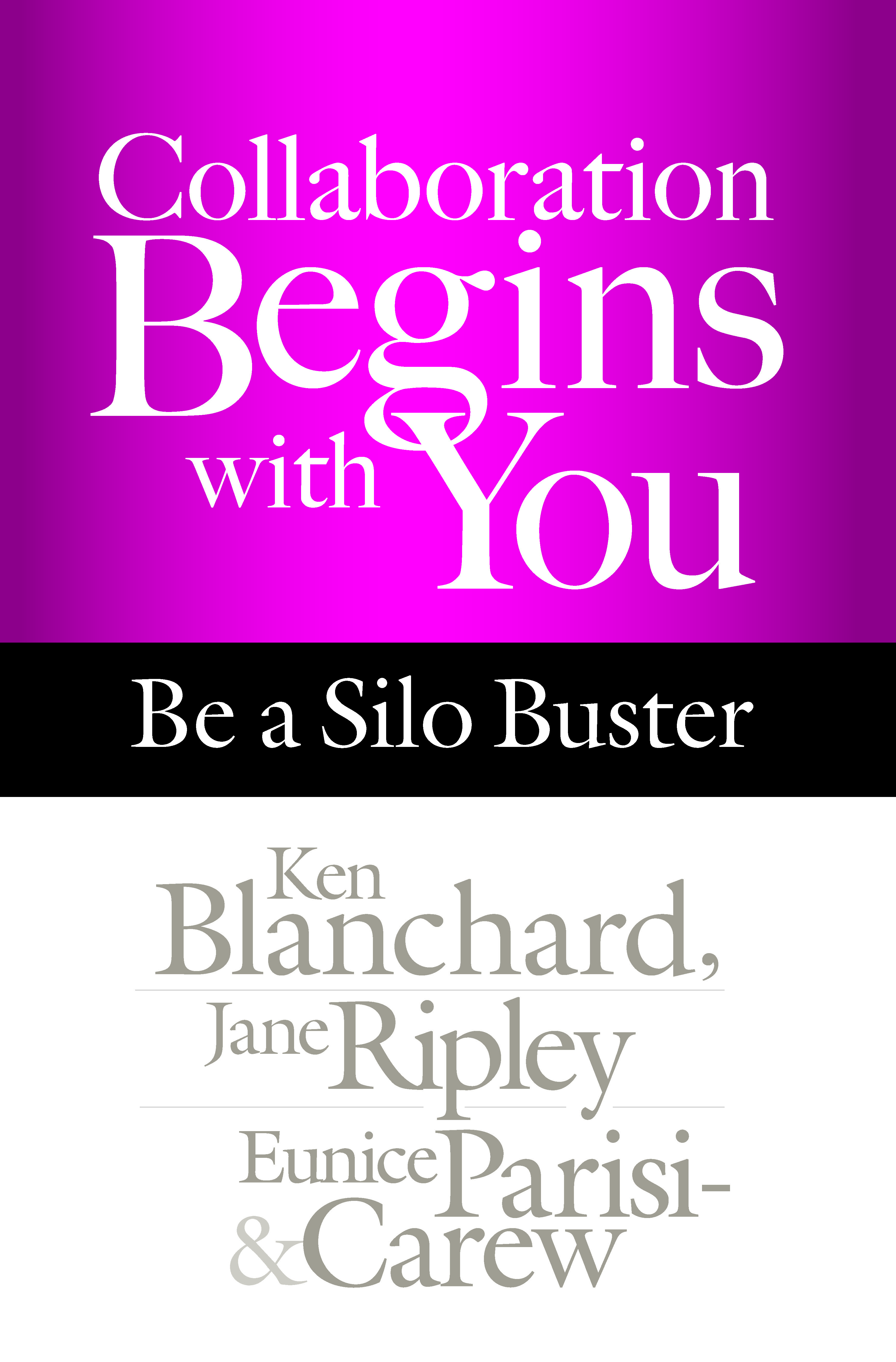
It’s no secret that collaboration creates high performing teams and organizations, yet leaders in some companies still struggle to get people to work together instead of protecting their silos. In our new book Collaboration Begins with You: Be a Silo Buster, my coauthors Jane Ripley, Eunice Parisi-Carew, and I describe how you can break down silos and bring people together to achieve fabulous results at every level in your organization.

As the title suggests, we believe that collaboration is the responsibility of every single person. Although it’s up to the leader to declare and introduce a culture of collaboration, it is up to each individual to promote and preserve it.

Silos exist when people who are more interested in organizational hierarchy want to protect resources and information as sources of power. But in today’s diverse, global environment, collaboration is the key to communication, innovation, and success. We must all be silo busters.

Establishing a culture of collaboration isn’t an overnight fix—it requires a completely new mindset. We call it the inside-out mindset of Heart, Head, and Hands. The Heart aspect refers to who you really are as a collaborator—your intentions and character. The Head aspect is about your beliefs and attitudes about collaboration. The Hands aspect relates to what you do—your actions and behaviors. People with this mindset understand and live by the statement None of us is as smart as all of us.

From this inside-out mindset, five factors are generated that help build a strong culture of collaboration. We created the UNITE acronym to make these factors easier to remember. Everyone must be vigilant about Utilizing differences; Nurturing safety and trust; Involving others in crafting a clear purpose, values, and goals; Talking openly; and Empowering themselves and others.

I’ll explain these concepts in detail in future posts. In the meantime, remember that collaboration begins with you—and it can begin today!

Editor’s Note: Collaboration Begins with You: Be a Silo Buster will be released October 12. Place your pre-order at www.Amazon.com.

 

A Positive Approach to Re-Direction

\One of the things people seem to be most interested in about The New One Minute Manager® is the modern version of the Third Secret: One Minute Re-Directs. Spencer Johnson and I realized that One Minute Reprimands worked years ago when you needed to change behavior in a command-and-control management environment, but today working side by side with people gets better results. When everyone is constantly learning and re-learning new skills The One Minute Re-Direct is more gentle and caring than a reprimand, and that’s what makes it so powerful.

My friend Erwin McManus has a wonderful saying: “Don’t let the truth run faster than love.” This applies so well when re-directing behavior. When someone makes a mistake you need to tell the truth so you can change the behavior—but make sure you do it in a caring way. Also assume the best intentions. The best way to do this is to talk to your direct report about what you observed to make sure their goals were clear to them at the time. If you both determine that the goals were clear, next check out the facts leading up to the re-direction to make sure you both agree on what happened. Discuss the impact of the behavior, and then reaffirm the person in a way that is meaningful. Let the person know they are better than their mistake and you have confidence and trust in them.

Garry Ridge, CEO of WD-40 Company, states it this way: “It’s important to maintain the balance between being tenderhearted and task oriented.” As a leader you must be able to re-direct behavior to keep people on the right track while also respecting their dignity. Remember—when you share feedback it is never about you or the other person; it is about the behavior. A leader’s job is to constantly help people be the best they can be.

I hope you find this information helpful the next time you need to re-direct someone’s behavior. You’ll encourage them to improve performance while letting them know how much you support their success.

NOMM-book-featureTo learn more about The New One Minute Manager, visit the book homepage where you can download the first chapter.

Praising Performance to Build Confidence, Productivity, and Morale

Business People Talking On Business MeetingI ask people all the time, “How many of you are sick and tired of all the praisings you get at work?” I always get the same response—laughter. It’s sad how many managers spend their time pointing out things that are wrong with performance instead of catching people doing things right. That’s why Spencer Johnson and I encourage you to focus on the Second Secret of The New One Minute Manager®, One Minute Praisings.

After you have set clear goals with someone, it’s important to spend a good amount of time with that person to make sure they are set up for success. In fact, let people know you’re going to give them lots of feedback on their performance because you believe in their talent and you want them to be high performers. If they aren’t used to receiving much feedback it might seem confusing, but soon they’ll realize what a valuable tool it can be.

When you praise performance, remember to do it promptly and be specific about the behavior. Let the person know how you feel about their achievement and encourage them to keep up the good work. This is especially true when someone is working on a new skill or task, because praising will help build confidence. As people become more proficient, they will actually learn to praise themselves for a job well done.

Something to keep in mind: a One Minute Praising is not the same as flattery. It’s a statement that builds trust and improves communication because it’s based on facts and data. Saying “nice job” isn’t specific enough to build rapport. But if you say, “Sally, thank you for getting your monthly report to me on time. It provided accurate information and allowed me to meet my deadlines. Keep up the great work,” it clearly states your appreciation and will boost Sally’s morale. It will also help her realize she is an important member of the team and improve her productivity overall.

So spend a few minutes every day catching your people doing something right. It doesn’t take much time. Remember: the best minute of the day is the one you invest in your people.

NOMM-book-featureTo learn more about The New One Minute Manager, visit the book homepage where you can download the first chapter.

A New Book for a New Generation: The New One Minute Manager®

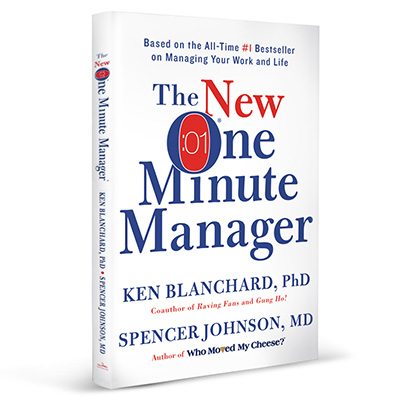
NOMM-book-featureOn May 5, HarperCollins will release The New One Minute Manager. I’m already getting a lot of questions about how the One Minute Manager has changed since the original book was published in 1982.

The workplace has evolved dramatically over the last 30 years. In the early 1980s command and control leadership was a way of life. In those days, the One Minute Manager was the one who set goals—he decided who to praise and who to reprimand. The New One Minute Manager realizes that today the old top-down management style doesn’t work, because people want to find meaning in their work and be recognized for their contributions. Now side-by-side leadership—being a partner with your people—is much more effective.

To address these changes, my coauthor Spencer Johnson and I have updated and adapted the Three Secrets used by the New One Minute Manager—One Minute Goals, One Minute Praisings, and One Minute Re-Directs. Now the Secrets are more relevant than ever.

Readers will discover that goal setting is no longer a task managed by the leader and handed off to the employee as a list of directives. Setting One Minute Goals is now a collaborative activity that the leader and direct report work on together. The focus is on setting clear expectations and providing examples of what a good performance looks like. People are encouraged to review their goals daily so they can stay on track by focusing on their most important projects.

The Second Secret, One Minute Praisings, remains one of the most powerful tools a leader can use to encourage and motivate people. The New One Minute Manager knows the importance of catching people doing things right and praising them right away. In time, people learn to praise themselves and become self-leaders.

The Third Secret is where we’ve made the biggest change: One Minute Reprimands have been changed to One Minute Re-Directs. We did this because the pace of work is so fast today that people are in constant learning mode. Even if you’re an expert today, tomorrow your area of expertise may be outmoded. It’s not helpful to reprimand or punish a learner. Today it’s more effective to coach and support people with One Minute Re-Directs.

I’m excited about the practical tips we’ve incorporated into this book for a new generation. Now more than ever, the Three Secrets provide powerful tools to help you build relationships and achieve personal and professional goals. And the heart and soul of the new book remains the same: one minute really can make a difference. In fact, I believe the best minute of the day is the one you invest in your people.

To learn more about The New One Minute Manager and download the first chapter, visit The New One Minute Manager pre-release website.

Leaders: Are You as Good a Listener as You Think You Are?

girl holds the hand of a child listening to ear on gray backWhen I ask people to talk about the best boss they ever had, they always mention one quality—listening. The best leaders are good listeners. Our research shows that listening is a critical skill for developing people, building trust, and creating a meaningful connection. But be careful—we’ve also found that it’s common for direct reports to score their managers lower in listening skills than the managers score themselves. I’ve said many times that God gave us two ears and one mouth because he wanted us to listen more than we talk. Let me explain some of the fundamentals of effective listening in case you may want to sharpen your skills.

Pay Attention to Nonverbal Behaviors. Listen with your eyes as well as your ears—watch a person’s facial, eye, and body movements in addition to the tone of their voice. Be aware of clues that their silent behaviors provide while at the same time being sensitive to your own nonverbal signals. For example: are you encouraging someone to continue with a conversation, or silently telling them to stop?

Ask Questions. This is not about interrogation or control. Use well thought out questions to seek information, opinions, or ideas that will help you understand the person while helping them feel heard. The best leaders ask open-ended questions to encourage communication, clarifying questions to check for understanding, and prompting questions to encourage deeper thinking.

Reflect Feelings. Acknowledge any emotions being expressed by the person and share your understanding by restating the person’s feelings back to them in a nonjudgmental way. This will help demonstrate that you not only understand their message but also empathize with their feelings.

Paraphrase. Restate in your own words what was said to demonstrate that you heard what the speaker was saying. Paraphrasing is useful to confirm that you understand what your team member was saying.

Summarize. State in a nutshell what was said over the entire conversation. The exact words are not as important as clearly capturing the main points and sequence of what was said. This is where you want to reflect the speaker’s conclusion back to them to indicate that you understand.

As you can see, effective listening is about focusing on what the other person is saying and then demonstrating that you understand and value their thoughts. Developing listening skills takes an investment of time but is the best way to build trusting relationships with the people you lead. Using these skills should get you off to a good start.