Improve Collaboration with a Safe and Trusting Culture

As a leader, do you create a safe and trusting environment where your people can express concerns and share information freely? That might be a difficult question for some of you to answer. In our new book, Collaboration Begins With You: Be a Silo Buster, my coauthors Jane Ripley and Eunice Parisi-Carew and I describe how to build trust and take responsibility for creating a culture of collaboration.

In the previous post I introduced the UNITE acronym to describe the five elements that every person must adopt to make collaboration a part of the corporate culture. We encourage everyone to Utilize differences; Nurture safety and trust; Involve others in crafting a clear purpose, values, and goals; Talk openly; and Empower themselves and others. I wrote about Utilizing differences in the last post and this time I want to share more about how to Nurture safety and trust.

The best way to start is by being a role model for the behavior you want to see in others. Share your own knowledge openly and encourage others to speak freely without fear of judgment. Welcome people’s ideas and truly give them consideration before making a decision. Give and receive feedback without judgment and be accessible, authentic, and dependable.

To build trust with your team, view mistakes and failures as learning opportunities and discuss them openly. If you punish people for making mistakes, they will learn quickly to cover them up and you’ll miss important opportunities to avoid future mishaps. I’ve found that some of the greatest learning moments happen when mistakes are shared and discussed. Encouraging these kinds of discussions will lead to smoother processes, improved communication, and innovative thinking.

To help people feel safe in their working environment, be transparent when making decisions. Make sure people know their role and what a good job looks like, and give them freedom to experiment. If people know what is expected of them and the boundaries they can operate in, they will flourish.

Rate yourself as a leader who Nurtures safety and trust by asking yourself these questions.

  1. Do I encourage people to speak their mind?
  2. Do I consider all ideas before decisions are made?
  3. Do I share knowledge freely?
  4. Do I view mistakes as learning opportunities?
  5. Am I clear with others about what I expect?

If you answered yes to most of the questions, you probably have created a safe and trusting environment for your people. But pay attention to where you answered no so that you can continue to build a strong culture of collaboration, because as the book title says—collaboration begins with you.
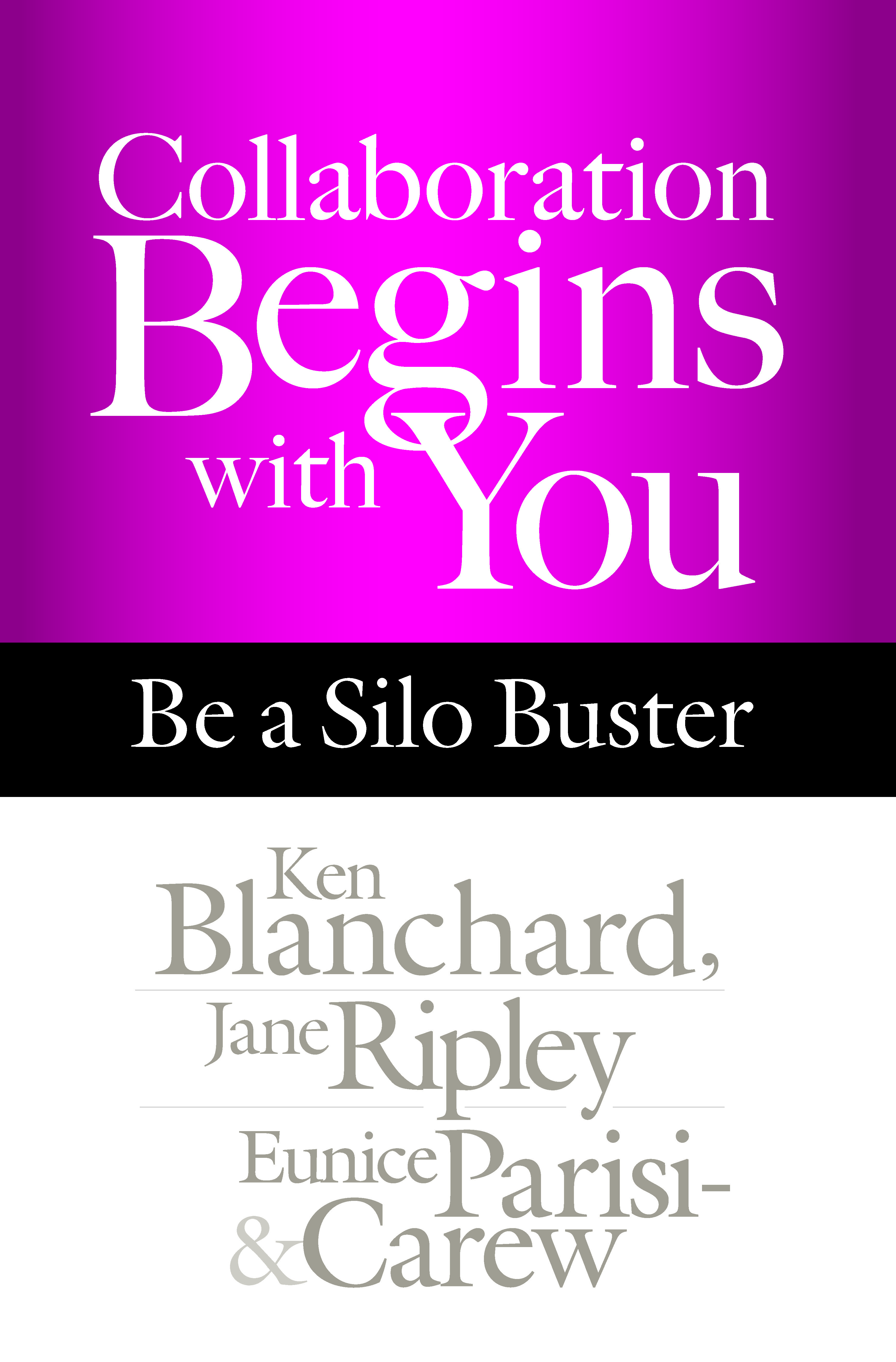
Collaboration Begins with You Book coverTo learn more about Collaboration Begins With You: Be a Silo Buster, visit the book homepage where you can download the first chapter.

Utilizing Differences to Build Collaboration

In our new book, Collaboration Begins with You: Be a Silo Buster, my coauthors Jane Ripley, Eunice Parisi-Carew, and I explain the importance of building a culture of collaboration in your organization. Believing true collaboration is the responsibility of every individual, we define five elements each person must consider when accepting their specific role in helping to create that culture.

The UNITE acronym makes these elements easy to remember. Every collaborative leader must be able to Utilize differences; Nurture safety and trust; Involve others in crafting a clear purpose, values, and goals; Talk openly; and Empower themselves and others. Let’s take a closer look at the importance of utilizing differences.

Many people think if a group working together allows differing viewpoints it might create disagreement, which would be a bad thing. However, we believe conflict in collaborative groups is good—as long as discussions stay focused on the issues and disagreements don’t get personal. In fact, conflict can be the basis for breakthrough thinking that leads to revolutionary ideas.

Ask yourself these questions to see if you are a collaborator who makes the most of people’s differences:

  1. Do you believe everyone has something to contribute?
  2. Do you ensure everyone in your group is heard?
  3. Do you actively seek different points of view?
  4. Do you encourage debate about ideas?
  5. Do you feel comfortable facilitating conflict?

If you answered yes to most of these questions, congratulations! You are well on your way to being a first-class collaborator who embraces diverse points of view within your work group. If you answered no to any of them, you know where to begin your journey to effective collaboration.

Organizations operating in today’s global economy have workforces comprising multiple generations with diverse backgrounds, perspectives, and temperaments. This guarantees significant disparity among people in almost every work group. The ability to utilize these differences for the greater good will determine the success or failure of your project—and possibly your company. Remember—collaboration begins with you!

Editor’s Note: Collaboration Begins with You: Be a Silo Buster will be released October 12. Place your pre-order at www.Amazon.com.

Breaking Down Silos for a Stronger Organization

It’s no secret that collaboration creates high performing teams and organizations, yet leaders in some companies still struggle to get people to work together instead of protecting their silos. In our new book Collaboration Begins with You: Be a Silo Buster, my coauthors Jane Ripley, Eunice Parisi-Carew, and I describe how you can break down silos and bring people together to achieve fabulous results at every level in your organization.

As the title suggests, we believe that collaboration is the responsibility of every single person. Although it’s up to the leader to declare and introduce a culture of collaboration, it is up to each individual to promote and preserve it.

Silos exist when people who are more interested in organizational hierarchy want to protect resources and information as sources of power. But in today’s diverse, global environment, collaboration is the key to communication, innovation, and success. We must all be silo busters.

Establishing a culture of collaboration isn’t an overnight fix—it requires a completely new mindset. We call it the inside-out mindset of Heart, Head, and Hands. The Heart aspect refers to who you really are as a collaborator—your intentions and character. The Head aspect is about your beliefs and attitudes about collaboration. The Hands aspect relates to what you do—your actions and behaviors. People with this mindset understand and live by the statement None of us is as smart as all of us.

From this inside-out mindset, five factors are generated that help build a strong culture of collaboration. We created the UNITE acronym to make these factors easier to remember. Everyone must be vigilant about Utilizing differences; Nurturing safety and trust; Involving others in crafting a clear purpose, values, and goals; Talking openly; and Empowering themselves and others.

I’ll explain these concepts in detail in future posts. In the meantime, remember that collaboration begins with you—and it can begin today!

Editor’s Note: Collaboration Begins with You: Be a Silo Buster will be released October 12. Place your pre-order at www.Amazon.com.


Set Boundaries for an Empowered Workforce

Setting boundaries to help empower people might sound like a contradiction. When managed correctly, though, well placed boundaries can ensure a strong culture of empowerment for your entire company.

I’ve often said that a river without banks is a large puddle. If you empower people by setting them loose without any direction, they can lose momentum and focus—or, even worse, they can make costly mistakes or put a project at risk. Like the banks of a river, properly set boundaries will channel energy in the right direction so that people can take on more responsibility as they grow and develop.

The key to setting boundaries is to ensure people know the areas where they can be autonomous and responsible rather than focusing on things they are not permitted to do. Boundaries are based on each person’s skill level and are meant to help the person understand how their goals align with the overall vision and goals of the organization. Helping people see how their work fits into the big picture allows them to become peak performers.

It is also important for managers to explain the decision making process in an empowered culture. Some people think being empowered means they get to make all the decisions. They could be disappointed when the manager continues to make strategic decisions and leaves only some operational decisions to them. And they might hesitate to make decisions at all when they realize they will be held accountable for the results—both good and bad.

Yes, empowerment means people have the freedom to act, but it also means they are accountable for results. The right balance is to have managers continue making strategic decisions and get team members involved in making more operational decisions as they become more comfortable with assuming the potential risks involved. As people gradually accept more responsibility for decisions and consequences, managers can pull back on their involvement.

It takes a little time in the beginning for managers to establish boundaries for team members, but this investment has a huge payoff. The worst thing a manager can do is to send people off on their own with no clear direction and then punish them when they make mistakes. Don’t fall into that trap. Establish clear boundaries that will empower people to make decisions, take initiative, act like owners, and stay on track to reach both personal and organizational goals.

Taking the Time to Find Your Calling: Two Ways to Get Started

I’ve been reading an interesting book by Richard J. Leider and David A. Shapiro called Whistle While You Work: Heeding Your Life’s Calling. The authors explain that in many instances our calling comes to us when we are removed from everyday routine—that’s when we are able to listen to what authentically moves us from the inside.

Each summer, my wife, Margie, and I spend time at our lake home in upstate New York, where we are removed from our everyday routine and obligations in San Diego. This change of scenery allows me to do just what the authors of the book describe: I get time to think about where I want to make a difference in the world. In fact, I do most of my writing at the lake. I have time to think about the issues leaders are facing around the world and spend time researching and writing articles and books that offer solutions to those challenges.

So what’s your calling—and how do you discover it? In addition to taking the time to quiet yourself by removing yourself from routine, I also think it is important to identify the activities that cause you to lose track of time—that’s a hallmark of a calling versus something you are driven to accomplish. For me, writing at the lake certainly ticks that box. How about you? Think about using vacation time to quiet yourself. Pay attention to what you learn. This concept goes beyond what you do to make a living—think about what you want to do in your community or with your family that will support your values and purpose.

It’s never too late to make changes in your life by taking advantage of your most precious commodity—time. Life is a very special occasion, so celebrate it by finding and honoring your authentic self!