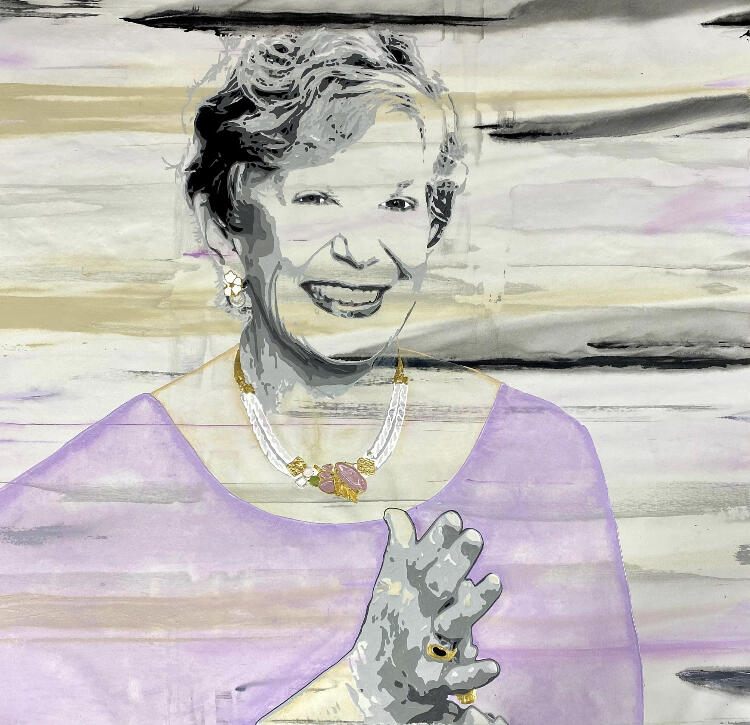
Remembering Don Carew

On January 28, 2025, I lost one of my dearest friends and colleagues, Don Carew. Not only was Don one of the original founding associates of our company, but he was also a very special human being. More than anyone I have ever met, Don Carew embodied kindness.

I first met Don at the University of Ohio in 1966, where he was teaching courses in human relations, and I was teaching business leadership. Don introduced himself to me on the sidewalk in front of the student union building, and we became instant friends. I loved Don’s gentle spirit and welcoming personality. We also shared a passion for making a positive difference in people’s lives through leadership. It wasn’t long before Don and his first wife, Jody, became an integral part of my wife Margie’s and my social circle.

Don had profound empathy for others and was a passionate supporter of civil rights and social justice. Back in 1963, he took a group of his students to the March on Washington, D.C., where they heard Dr. Martin Luther King, Jr. deliver his historic “I Have a Dream” speech.

It was Don who urged Margie and me to join him at the University of Massachusetts Amherst in 1970, where he had relocated and become an enormously popular professor. During the years we taught together at UMass, Don and I forged a deep friendship. We led weekend classes together. Don would share his expertise in working with teams and groups, while I would focus on a situational approach to leadership. Eventually we began consulting with external groups.

Margie and I left Amherst and relocated to San Diego in 1976 for a one-year sabbatical that turned into a permanent move. But I continued to teach weekend courses with Don several times a year at the University of Massachusetts.

After Margie and I launched our company in 1979, Don joined us as an associate. He had the intellect to work effectively with the C suite as well as the empathy and respect to connect with frontline workers as they transformed their cultures. I had a wonderful time collaborating with Don and Eunice Parisi-Carew on our bestselling book, The One Minute Manager Builds High Performing Teams. Don’s and Eunice’s expertise in teams and group development was a key factor in our decision to change the original Hersey-Blanchard model and develop SLII®.

I will miss Don’s warm voice and loving presence. His spirit of integrity and inclusiveness lives on in our culture at Blanchard and for that, I am grateful.

Table Talk, Anyone?

Early in our marriage, Margie and I realized how enjoyable it was to have people come to our home for dinner. Sometimes we would invite just a few close friends we hadn’t seen for a while; sometimes we would host family members from out of town; and other times it was great fun introducing neighbors who had never met each other and watching them become friends. As our organization grew, we became great friends with dozens of our colleagues and the dinner parties became almost legendary.

The fare at these get-togethers—everything from sandwiches to backyard barbecues to holiday feasts—was never the important part. It was the camaraderie—the joy of seeing old friends and making new ones.

Margie and I noticed something interesting early on. When everyone was seated at a big table, several small conversations would be going on at the same time. People would talk to the person on their left and the person on their right and that was about it. There’s nothing wrong with that, but we really wanted people to leave the party knowing more about each other than they did before they arrived. We figured out the best way to bring everyone together. It was simple.

At one point during the meal, Margie would give the person seated next to her a jar that contained several small slips of paper. Each person was asked to reach in the jar, take a slip of paper (no peeking), and pass the jar to the next person. When everyone had a paper, they discovered a question they would read aloud and then answer. There was no pressure—people could answer their question in whatever order came up. Some would need time to think about their answer and some just needed a few folks to go ahead of them (or maybe a little wine) to build their confidence. 

Every so often we would change the rules and give everyone the same question to answer. Each of these occasions was a memorable time. The questions and answers were more than conversation starters—they were glimpses of people’s thoughts, feelings, and memories that we may have never heard otherwise. The stories told led to other stories, comments, jokes, food for thought, and always laughter. 

Here’s a few examples of the questions we had for our dinner guests:

  • What’s your best birthday memory?
  • What have you learned this year?
  • What has brought you joy this year?
  • What are you looking forward to?
  • What is something you know to be true?
  • If you could have dinner with anyone, living or dead, who would it be?
  • What do you want to do in the future that you haven’t done yet?

But wait—this isn’t just for adult dinner parties. Anyone with school-aged children at home will find that letting the kids pick questions from a jar on family dinner nights is far more interesting, informative, and fun than making them answer the same “How was school?” questions every day. They might even want to make up their own questions and do this activity with their friends.

It’s easy to find websites with lists of questions for just this purpose. We’ve done some of the work for you by providing these links:

Having a jar of table topics on hand is never a bad idea. It’s a great way for everyone at any table to get to know one another a bit better. You just never know what you will learn!

Margie—The Woman Beside Me

In honor of Women’s History Month, I’m going to write about Margie—my brilliant, beautiful wife of nearly 62 years.

The old saying “Behind every successful man is a woman” is untrue in our case. Margie was never behind me—she has always been right beside me as my partner in life. I wouldn’t be anywhere without Margie. She is the love of my life, my teammate, and my best friend. And she has been the spark for many of the great events of our lives.

The Beginning

I fell in love with Margie in the summer of 1961. I had just graduated from Cornell and was hanging around town for the summer. A friend of mine who we called “Looper” had been dating her, but his father had died and Looper needed to go home to run the family dairy. He asked me if I would take Margie out for a drink once in a while as a favor to him. One day my roommate asked me if I wanted to have a drink with him and one of Margie’s sorority sisters who was getting married soon. My roommate was going to be best man in their wedding. I said, “Okay, I’ll invite Margie McKee to join us. She’s almost married, too.”

Margie was working as a speech therapist and counselor at a camp for kids with severe speech problems. I picked her up at the camp and we drove eight miles back to town. I remember asking, “Why would you want to spend the summer with all of those special needs kids?” She spent the rest of the ride describing her feelings about the children—she was so filled with compassion. She had a real heart for those kids as well as a need to help people. I think I fell in love with Margie on that eight-mile ride.

The Genesis of SLII®

In the fall of 1966, Margie (pregnant with Debbie), Scott, and I arrived at Ohio University. I had landed a job as an assistant to Harry Evarts, dean of the School of Business Administration. Paul Hersey had just arrived on campus as the chairman of the management department, where I began teaching a course at the request of the dean. I found that I loved teaching.

I heard Hersey taught a tremendous course on leadership, so in December I came to see him and said, “Paul, I understand you teach a great leadership course. Could I sit in next semester?”

“Nobody audits my course,” said Hersey. “If you want to take it for credit, you’re welcome.” And he walked away.

I was stunned. I went home and told Margie about the conversation.

“Can you imagine? He won’t let me audit his course. I have a Ph.D. and he doesn’t, and he wants me to take his course for credit?”

Margie said, “That’s all well and good, but is he any good?”

“He’s supposed to be fabulous.”

“Then why don’t you get your ego out of the way and take his course?”

I had to convince the registrar to let me take Hersey’s undergrad course because I already had a Ph.D. So I took the course, wrote all the papers, and found it to be a great experience.

After the course ended, Hersey took me aside and asked me to write a textbook with him, which would become Management of Organizational Behavior: Utilizing Human Resources. It is still in print, now in its 10th edition.

If it weren’t for Margie’s suggestion, Paul Hersey and I would not have coauthored that book, which popularized the Situational Leadership®* model we created together. Its concepts were later revised by Margie, me, and the other Founding Associates of our company to become SLII®, our flagship product.  

The Birth of The One Minute Manager

In 1980, Margie and I went to a cocktail party for San Diego authors. Also at the party was Spencer Johnson, who had coauthored a series of children’s books called Value Tales with his wife, Ann Donegan. He was in the process of coauthoring a book titled The One Minute Scolding. Margie hand-carried Spencer over to me and told us she thought we should meet.

Then Margie said something that would change all of our lives: “You two need to write a children’s book for managers. They won’t read anything else.”

The following week, Spencer came to see me speak at a seminar I was giving in town. He sat in the back, laughing, apparently enjoying my presentation. At the end, he came to me and said, “The hell with parenting—let’s write The One Minute Manager®!” And we did.

To date, the book has sold more than fifteen million copies. It wouldn’t have happened without Margie.

The Ken Blanchard Companies® and Beyond

During the ten years Margie spent as president of our company, I was sometimes asked why she was president, not me. I thought it was obvious that she was the one who should be president. That held true: when Margie started her term, we were a five million dollar company. When she left that position, we were a thirty million dollar company. (Margie is the first to say that partnering with her brother, Tom McKee, who joined the company as general manager of operations, was what made the difference.) I was happy to work beside Margie and Tom and cheer them on because I’ve always been a cheerleader!

Margie was always interested in keeping an eye on business trends. She also believed leaders should keep managing the present separate from planning the future. So when she ended her term as company president, she and Blanchard cofounder Eunice Parisi-Carew created a unique, innovative think tank they named Office of the Future (OOF). With help from Margie’s assistant, Lily Guthrie, OOF studied and reported on emerging trends in leadership, technology, and other workplace issues. Margie saw their work and research as both a challenge to Blanchard’s status quo and a stimulus for change that would ensure our company’s continued vitality and success. OOF’s findings and reports were available to clients and other organizations to assist with planning for the future, and to the media for use in advising the public of trends in the workplace.

Today, Margie is as active and interesting as ever. Because she is a lifelong teacher, she now teaches courses on career planning to young people in our company. And because she is a lifelong learner, when the pandemic began she took up a new hobby of watercolor painting. She’s really good!

Thanks, Margie, for being such a great partner. You’re the best!

*Situational Leadership® is a registered trademark of Leadership Studies, Inc., dba The Center for Leadership Studies.  

In 2023, Friendships are More Important than Ever

Happy New Year! I hope you had a wonderful New Year’s weekend. Margie and I sure did. We spent New Year’s Eve with three of our favorite couples, enjoying a fun evening with lively conversation. We watched the New Year’s celebration from Times Square in New York City live on TV at 9 PM and then, after hugs and well wishes, everyone headed home. We were happy to be able to bring in the new year with good friends.

On Sunday, our pastor spoke on the topic of friendship. He emphasized that besides our family there is nothing more important than good friends, particularly friends who are there for you in good times as well as bad times. To underscore this point, he talked about the classical film It’s a Wonderful Life starring Jimmy Stewart. He plays a character named George Bailey who continually gives up his own plans for the needs of his community of friends. 

So what did Margie and I do Sunday night? We watched It’s a Wonderful Life. What a terrific old black-and-white film, made in 1946. If you haven’t seen it, watch it! Love and friendship are the main themes. George Bailey is always there for others, just like our friends are there for us.

Good friends make tough times bearable and good times better. Life is more meaningful because of the people we share it with, day in and day out. In fact, friendships are known to have a positive impact on our general health and wellbeing.

This got me thinking about how much the pandemic has interfered with travel, togetherness, and personal connection over the past three years. I’m sure many friendships have faded into the background during this stressful time. So let’s start the new year on a great note. Make a list of what you want to accomplish by the end of 2023 and include a commitment to getting back in touch with some of your old friends. I encourage you to celebrate these important relationships in whatever way works for you.

When I think of friendships, I think about my college days at Cornell. We have a group of couples—there are 12 or 14 of us—that we have kept in contact with since we first met in college. That’s more than six decades! We have a wonderful time staying in touch. We’ve been Zooming together since Covid started. I met one of the guys, Bob Lurcott, in fifth grade and he was best man at our wedding in 1962!

Here’s another way we connect with friends. When Margie and I get ready to send out Christmas cards each December, she creates a letter that summarizes the highs and lows of our year. We send our Christmas card and letter to over 300 family members and friends, and I write a personal note on each letter to let people know I’m thinking about them. As I’m working my way through our cards, I often run across names of friends I haven’t been in contact with for a while and I give them a call right then and there. It’s always fun to surprise them and catch up.

You say reaching out to people doesn’t come naturally to you? I say jump out of your comfort zone and call that friend you are thinking about. I do this a lot—and most of the time, people seem happy to hear from me. I’ll bet your old friends will be happy to hear from you, too.

Of course our families are precious. But the icing on the cake of life is friendships—old and new. Our friends make us who we are. Don’t forget to stay in touch with them. Continue to reach out and invite your friends to be part of your life in 2023. You’ll never regret it!

Relationships Need All the HELP They Can Get

It’s summer—the peak season for weddings, so I hear! I’ve had the honor and privilege of officiating several weddings over the past ten or twelve years, and every couple I’ve married has been excited and hopeful about their future. Realistically, though, we all know there is real work involved on both sides if two people are committed to making a marriage—or any loving relationship—succeed.

Of course, Margie and I aren’t marriage counselors, but I think because we’ve been happily married more than 57 years now, people occasionally ask us to address the topic. As a result, we’ve developed an acronym called HELP—Humor, Ego (getting rid of it), Listening, and Praising—a framework that spouses and other romantic partners can use to examine their relationship and keep it moving in a positive direction.

Humor. If there is anything that every relationship needs, it’s laughter. I’ve heard it said that a four-year-old child laughs between 200 and 300 times a day, while most adults laugh only 10 to 15 times a day. The older we get, the more serious we seem to get about life. So try taking your relationship seriously but yourself lightly. When I say something that gets a good laugh out of Margie, that makes my day. Start off every day with cheerful good humor.

Ego. Let me explain what I mean by ego—I’m not talking about self-esteem. We all need to feel good about who we are. Strong self-esteem is necessary to handle the bumps and bruises of everyday life. The ego problems I’m talking about are false pride and self-doubt. People with false pride put themselves in the center of their world and think more of themselves than they should. They think they can solve every problem alone. People with self-doubt are hard on themselves and think less of themselves than they should. They are consumed with their own shortcomings. When either kind of ego problem gets in the way of a marriage, it Edges Good Out. Don’t let that happen! Always keep your ego in check.

Listening. No matter how long you have been with your partner, it is never a bad idea to practice listening. Margie and I sometimes facilitate at marriage retreats where we put couples through a powerful listening exercise called Heart to Heart. Couples begin by sitting in chairs, facing each other, with their knees touching.

There are three rounds to this activity. During the first round, one partner shares by finishing this sentence: “Something I want you to know about me is…” The partner listening must verbally respond in one of three ways: “I understand,” “Thank you,” or “Tell me more.” Each partner takes turns sharing, with the other partner responding.

The second round is similar, but each partner shares: “A concern I have…” Once again, their mate responds in one of the three ways to each concern that is shared, and they take turns.

The final round is where each partner shares: “Something I admire about you is…” Again, their partner responds with either “I understand”, “thank you” or “tell me more” to each statement.

This exercise has been a big hit in our sessions. The couples find this to be a valuable method of communicating thoughts in an honest, nonthreatening way. Give it a try.

Praising. The concept of praise is so key in marriage relationships—particularly in keeping them strong and healthy over the years. We all know when you first fall in love, you start off catching each other doing things right. Over time, though, things tend to shift and you may find yourselves catching each other doing things wrong and accentuating the negative. Don’t forget that you need to stay positive and continue to praise each other’s progress—it’s a moving target!

Whether you’re newlyweds, a long-married couple, or in any other kind of loving relationship, it’s important to keep things moving in a positive direction. Remember our HELP tips: keep your sense of Humor, get your Ego out of the way, always Listen to each other, and don’t forget the power of Praising. Who knows? Maybe you’ll be like us and make it past the 57-year mark—and we’re still going strong!