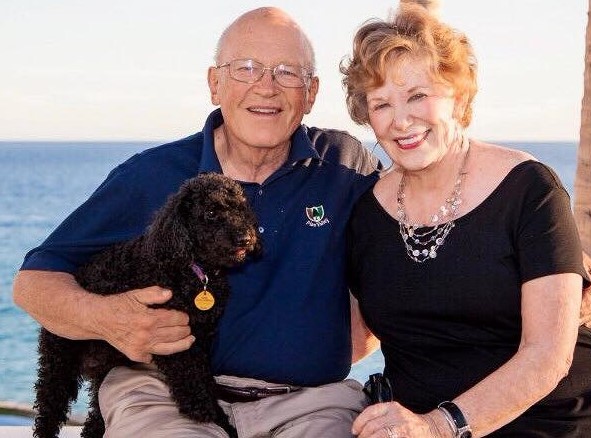
Why Catching People Doing Things Right Is the Best Way to Lead

Catch People Doing Things Right, Martha Lawrence’s new biography about my life, is coming out on October 21. That might seem like an odd title for a biography, but I can see why Martha chose it.

I’ve often said that if I could hold on to only one of the leadership lessons I’ve taught over the years, it would be to catch people doing things right. Why? Because a person who works hard needs positive feedback for their efforts. Praise is inherently motivating and only takes a moment—yet it can make all the difference in how the worker feels about their day, their job, their leader, and their organization.

I once asked a young woman if she liked her boss. She said, “She’s okay. She seems to think I’m doing a good job.”

“How can you tell?” I asked.

“Well, she hasn’t yelled at me lately,” she said. Sadly, I wasn’t surprised to hear her response.

Poor Leaders Catch People Doing Things Wrong

In the past I’ve said to groups of people, “How many of you are sick and tired of all the praisings you get at work?” I would always get the same response—laughter. It’s sad how much time managers spend pointing out what’s wrong with people’s performance instead of catching them doing things right.

When I began studying leadership in the 1960s, very few people saw their manager as a friend or colleague. Bosses were widely regarded as people whose job it was to catch their workers doing things wrong. A leader would evaluate someone’s performance, reprimand them, demand they improve, and disappear until it happened again. When people heard the boss had a meeting scheduled, they knew they must be getting in trouble because that’s the only time the boss would ever show up.

To me, this sounded like the opposite of a motivational environment. I couldn’t help but think: What if things were reversed? What if the boss noticed people doing things right, praised their progress, and cheered them on?

Great Leaders Catch People Doing Things Right

Great leaders who want to encourage and motivate their people set up a positive cycle:

  1. A great leader catches someone doing something right and praises them.
  2. The leader’s praise helps the person feel good about themselves.
  3. People who feel good about themselves produce good results.
  4. A great leader notices when people produce good results.   
  5. See #1.

Think about a time when you were proud of something you did but nobody seemed to notice. How did you feel? Now think about a time when you did something well and were praised or otherwise recognized for it. How did you feel then? What was the difference between the two?

People never tire of being told they’re doing good work. It’s good for morale and engagement, and it leads to confident, empowered employees.

How to Give a One Minute Praising

One Minute Praisings—the Second Secret of The One Minute Manager—are a key component of catching people doing things right. An effective One Minute Praising reinforces the behaviors that move people closer to their goals. And it only takes one minute, if you follow these six steps:

  1. Praise someone as soon as you see or hear about praiseworthy behavior or work. Don’t store up compliments for later; unspoken praise is meaningless.
  2. In very clear terms, tell the person what they did right and be specific.
  3. Say how good you feel about what they did and how it helps others and/or the organization. Relate their good behavior to the broader picture.
  4. Once you’ve given the praising, pause to let the message sink in and to give the person a chance to feel good about what they did.
  5. Let the person know you would like to see more of the same behavior.
  6. Make it clear you have confidence in them and you support their success.

As an example, an effective manager could say, “George, I appreciate your sending me your weekly report on time. It provided accurate information and allowed me to meet my deadlines. Keep up the great work!” This praising clearly states the manager’s appreciation, which boosts George’s morale and helps him realize he is an important member of the team.

Extra Hints to Remember

The concept of catching people doing things right can work in many scenarios.

  • When was the last time you caught your boss doing something right? Just because someone is at a higher level doesn’t mean they can’t use some encouragement.
  • Express your appreciation to family and friends often. Acknowledging how much you care helps keep these important relationships close, healthy, and moving in a positive direction.
  • Want a self-esteem boost? Reflect on your own achievements and celebrate your wins! It will motivate you to set new goals for yourself.

Also, don’t wait until someone does something exactly right to praise them. Remember that exactly right behavior is made up of a series of approximately right behaviors. Praising someone’s progress encourages them and lets them know they’re going in the right direction. People shouldn’t have to be perfect to earn a little praise.

I believe most leaders genuinely want to manage people well, but many fall short of this goal. Leaders who catch people doing things right create a work environment where people are engaged and committed to doing a good job. Don’t forget that it only takes a minute to praise someone for a job well done. It could be the most important minute of their day—and yours.

Thoughts About My Biography

When Martha Lawrence, my in-house executive editor and good friend for more than twenty years, told me a few years ago that she was working on my biography, I wasn’t sure what to think. I knew Martha was a fabulous editor as well as an accomplished author, but a biography? Me? I had never even considered that possibility. After all, it’s pretty unusual to have a biography written about you when you’re still alive! But Martha and my wife, Margie, soon convinced me that not only might this book be something interesting for people to read, but I might be able to put in my two cents’ worth here and there. With Martha at the helm, I could tell this would be a fun project!

The biography, titled Catch People Doing Things Right, is full of tales I’ve told (and many I haven’t), with Martha skillfully filling in the details: good friends, good times, and life lessons at Cornell; random events that brought Margie into my world; amazing coincidences that changed the course of my academic and business career (including Spencer Johnson and me finding each other and creating The One Minute Manager); and lots more. To pull together the story of my life, Martha dug into my old journals, letters, and papers. She also interviewed a great many friends, relatives, and colleagues of mine, who were more than happy to share their memories.

Here is an excerpt from the book that’s an excellent example of Martha’s way with words:

On a hot, dry Sunday in October 2007, strong Santa Ana winds blew down a power line in the backcountry east of San Diego. Sparks went flying, carried by gusts of up to a hundred miles per hour. The sparks ignited a fire that expanded rapidly westward, heading directly toward Ken and Margie’s home in Rancho Bernardo.

The Blanchards weren’t home that week. Margie was attending a conference in Orlando, Florida, and Ken was down in Naples, Florida, playing golf with his buddies from Cornell.

On Monday morning, October 22, Ken got up and checked his cell phone messages. He had a voicemail from his son, Scott.

“Mom and Dad, Mad and I just had to evacuate our house because of the fire. We’re down on Pomerado Road looking up. There are flames coming out from our house—and I think yours is gone, too.”

I’ll never forget hearing that message from Scott. Thankfully, all of our family members and pets evacuated and were safe. We did lose our house—but our prayers were answered when we learned that Scott and Mad’s house was spared with only minimal damage.

As I look back on my life, I feel tremendously blessed. I had a happy childhood with parents and a sister who really loved me. I’ve had dozens of great friends over the years, from elementary school to today, that I still keep in touch with. Margie and I have had a wonderful marriage—63 years and counting—and two healthy, terrific kids who now help run our company. Sure, like anyone else, there have been a few bumps in the road here and there, but I don’t have anything to hide or to be embarrassed about. Margie says I live my life “out loud.” So if my life story can be a positive motivator for others, good on it!

You’ll have to forgive me now—but because this is Martha’s book, not mine, and I think she did a fabulous job on it, I need to do a bit of marketing:

Catch People Doing Things Right: How Ken Blanchard Changed the Way the World Leads is available for pre-order now at the link above, with a release date of October 21, 2025.

Remembering Drea Zigarmi

This month we lost a treasured founding associate and beloved friend, Drea Zigarmi. Coming just six months after the passing of founding associate Don Carew, it’s a tough loss, indeed. Not only was Drea talented and brilliant; he was also an extraordinary human being.

I met Drea when I was a professor at the University of Massachusetts Amherst in the early 1970s. At that time Drea was working on his PhD in administration and organizational behavior. We became fast friends, and he was soon part of the coterie that included Blanchard’s other founding associates: Pat Kuiper (soon to become Pat Zigarmi), Don Carew, Eunice Parisi-Carew, Fred Finch, and Laurie Hawkins.

Drea and Pat joined our young company in 1981, moving to California with no assurance of a permanent job or income. Drea brought his talent for research and analysis to the company’s key programs and tools: SLII®, DISC, the LBAII, the Employee Work Passion instrument, and many others. Another of Drea’s significant contributions was the work he did with CEO, Scott Blanchard, on the Leadership-Profit Chain.

Drea’s work was a key factor in Blanchard’s success. He kept us grounded in the research that underscored the validity of our offerings.

Drea brought tremendous value to our organization in so many other ways as well. A natural teacher and guide, he helped scores of people with their research, dissertations, and publishing. For decades, he was a popular Blanchard consultant and trainer. Participants loved the depth and creativity of his teaching about leadership, values, organizational change, and research. For example, he enlivened the teaching of SLII® by showcasing the dialogue in the film Twelve O’Clock High, much to the delight of his audiences.

With more peer-reviewed publications than most senior university professors, Drea was an accomplished writer. He was the coauthor of several books, including Leadership and the One Minute Manager, The Leader Within, Leading at a Higher Level, Achieve Leadership Genius, and The Team Leader’s Idea-a-Day Guide.

Drea was a deeply contemplative person. You could get a sense of this when you heard him play classical guitar. At parties you could often find him in a quiet spot engaged in earnest conversation. I will miss our periodic one-on-one walks together and his delightfully corny jokes.

Many in our field and company owe a debt of gratitude for Drea’s wisdom, guidance, and encouragement. His brilliance lives on in our intellectual property, and his loving spirit will live in our hearts forever.

Another Skaneateles Summer

My wife, Margie, and I are once again in our favorite place for the summer: our cottage in the beautiful town of Skaneateles in upstate New York. We arrived a few days ago and are still unpacking and doing all kinds of things to get this place going.

Going to our cottage in Skaneateles isn’t something we just decided to start doing when we noticed ourselves getting older. Our extended family has had the great privilege of spending July and August here for more than 75 years! Surrounded by a deep green forest and overlooking the pristine water of Skaneateles Lake, our cottage is the perfect place to recharge and reflect, share memories, and make new ones. It’s also where I’ve often found inspiration for many of the books I’ve written.

In case you haven’t heard me speak or write about this before, let me fill you in. In 1946, Margie’s mother and father bought 300 feet of lake frontage for $300. So Margie has been coming here every year since she was six years old, and I’ve been coming with her since we got married in the summer of 1962. When we started our company in 1979, we said to the few folks who worked with us at the time, “By the way, we won’t be around in July or August—you’ll have to operate without us.” And that’s been our practice every year. Of course we both keep in touch with our leadership team, but we focus on rest and relaxation.

Skaneateles Lake is one of the Finger Lakes, located near Syracuse and not far from Cornell, Margie’s and my alma mater. The lake is 17 miles long and 315 feet deep. It is one of the cleanest lakes in the United States—so clean that the city of Syracuse takes its water straight out of it! And it’s so cold, even in the summer, that when you jump in it takes your breath away. But we always jump in.

You can see now that traveling to Skaneateles is much more than a fun vacation—it’s a decades-old tradition. Margie’s parents’ cottage was the first home built on the property. More and more building and expanding by family members has happened through the years, to the point where now when we host a big reunion weekend, everyone has a comfortable place to sleep. We have all worked together to build a family legacy for past, present, and future generations.

Every summer at the lake is a little different, which is why one of Margie’s favorite projects is going through hundreds of pictures and making a photo album so we have a record of everything that happened each year. By taking on this annual labor of love, Margie has ensured that the memories captured through the years will be with the family forever—all of the kids, grandkids, and now great-grandkids growing up; family members, friends, and colleagues who visited at various times; and every special event including birthdays, side trips to nearby towns, dinners out, boating, swimming, etc. Even sitting on the dock and talking about the weather is a special event in Skaneateles!

One of our special events is an annual celebration of life we call “Breakfast with the Ancestors.” On a designated morning, several of us get into our little pontoon boat with baskets of egg casseroles, pastries, fruit, and juice. We slowly motor down to the picturesque little cemetery at the end of the lake where Margie’s mom and dad and my sister, Sandy, are buried. Two tombstones are also in place for Margie and me showing our names and the years we were born followed by a dash. (We like to say we are enjoying “living our dash.”) We all sit down for a nice picnic breakfast and talk about memories we have of Margie’s mom and dad, Sandy, and other relatives who have passed away. It’s all about celebrating the lives of people we love who aren’t with us anymore—and sometimes even beloved pets we have lost. A few folks might think Margie and I take things a little too far when we lie down on top of our future graves to pose for photos—but it’s all in good fun, and another family tradition we have grown to love.

And what about the weather? Well, long ago we decided that when the weather is less than perfect, it really doesn’t matter because we are at our favorite place. One year it rained almost the entire summer. Every day I thought Noah was going to show up. Even so, we ended up with treasured memories of sitting on our porch with our visitors, drinking lemonade and watching the rain fall in the lake. And when our granddaughter, Hannah, and her wife, Beth, planned for an outdoor Skaneateles wedding in the summer of 2021, no one realized their big day would be preceded by two weeks of nonstop rain. Needless to say, the site of the wedding—which normally is a huge, beautiful green lawn—had become a mass of muddy grass. But when the sun came out from behind the clouds at the reception, the organizers opened the flaps of the big tent. Then the band started playing and a number of wedding guests took off their shoes, walked out into the sunshine, and danced on the muddy grass! Everyone had fun—and needless to say, it was an unforgettable day of love and mud.

Margery Allen, who was my assistant for many years and is a wonderful writer, composed these lovely thoughts for us. I read this piece every year because I think it perfectly describes our feelings about this magical place:

“Breathe deeply as you cross the threshold and take in the sights, sounds, and smells of the cottage and the lake. Feel that sense of relaxation deep in your bones as you view what has brought you solace for so many summers. Remember the memories created in anticipation of what is yet to unfold during the next few weeks. Enjoy the solitude and gift of time that refreshes you. Look forward to family and friends joining you once again at this favorite place. Rest, relax, and think positive thoughts. Visualize and heal from within.”

No matter where you live, it’s important to find a place where you can recharge and reflect. Everyone deserves the quiet joy of being in nature and spending time with people you love. Does your family have a special place where you go every so often, just to relax and have fun together? Do you remember such a place from when you were a kid? I hope so. It wouldn’t have to be a cottage on a lake; it could be the big park on the edge of town, a favorite campground or beach, or a road trip to a much-loved relative’s house. For us, it’s always been summer in Skaneateles, New York—a treasured time and place for us to come together for relaxation, fun, and contemplation with family and friends.

SLII® for Sales: Developing High-Performing Salespeople

A high-performing sales force can lift an entire organization to new heights. That’s why it’s so important to give salespeople everything they need to succeed. But too often salespeople are left to struggle on their own. Hoping the problems will resolve on their own, their managers ignore warning signs like inconsistent performance, low motivation, and delayed response times to customers.

Well-meaning sales leaders may try coaching their people to better performance. While coaching is a wonderful tool, this alone is unlikely to develop a successful salesperson, fix the problems of a salesperson who is struggling, or keep a high performing salesperson from jumping ship.

SLII® for Sales teaches leaders to have conversations with salespeople that help underperformers hit sales targets and keep high performers engaged. The program shows managers how to provide each salesperson with the precise leadership style they need to improve or overcome whatever challenge they are facing. Using the Diagnosing and Matching skills from SLII®, sales leaders can address issues and give people the solutions they can’t give themselves.

How SLII® for Sales Works in the Real World

Suppose you are a sales leader, and you’ve just brought a new person onboard your team. Let’s see how you can use SLII® for Sales to develop and nurture your new hire into a high performing member of the team.

The Enthusiastic Beginner. Your new salesperson is a 22-year-old with a friendly personality but little actual sales experience. They have a high commitment to becoming good at sales and they are curious, hopeful, and excited.

A salesperson at this level is an enthusiastic beginner. A directing leadership style is appropriate at this stage. You need to teach your new hire everything about the sales process—from making a sales call to closing the sale—and lay out a step-by-step plan for their self-development, teaching them what experienced salespeople do and letting them practice in low-risk sales situations.

The Disillusioned Learner. Now, suppose your new hire has had a few weeks of sales training. They understand the basics of selling but are finding it more difficult than expected. They’re not quite as excited as they were before. They even look discouraged at times.

At this stage, your salesperson is a disillusioned learner. What’s needed now is a coaching leadership style, which is high on both direction and support. You continue to direct and closely monitor their sales efforts, and you also engage them in two-way conversations. You provide a lot of praise and support at this stage because you want to build their confidence, restore their commitment, and encourage their initiative.

The Capable, But Cautious, Contributor. In time this salesperson learns the day-to-day responsibilities of their position and acquires some good sales skills. They still have some self-doubt and question whether they can sell well without your help.

At this stage, the salesperson is a capable, but cautious, contributor. This is where a supporting leadership style is called for. Since their selling skills are good, they don’t need direction. They need you to listen to their concerns and suggestions and be there to support them. Now is the time to encourage and praise—but rarely direct—their efforts. Help them reach their own sales solutions by asking questions and encouraging risk-taking.

The Self-Reliant Achiever. Eventually, your former new salesperson becomes a key player on your team. Not only have they mastered sales tasks and skills, but they’re also working successfully with some of your most challenging clients. They anticipate problems, are ready with solutions, work successfully on their own, and inspire others.

Congratulations—your salesperson has reached the self-reliant achiever stage. At this level of development, a delegating leadership style is best. Turn over responsibility for day-to-day decision making and problem solving. Empower them and allow them to act independently. Challenge them to continue to grow and cheer them on to even higher levels of success.

As a sales leader, your goal is to develop your salespeople to perform at the highest level possible. SLII® for Sales gives you powerful tools to achieve this goal—and to help lift your organization to unprecedented heights.